-
On the metaphysical implications of gambling
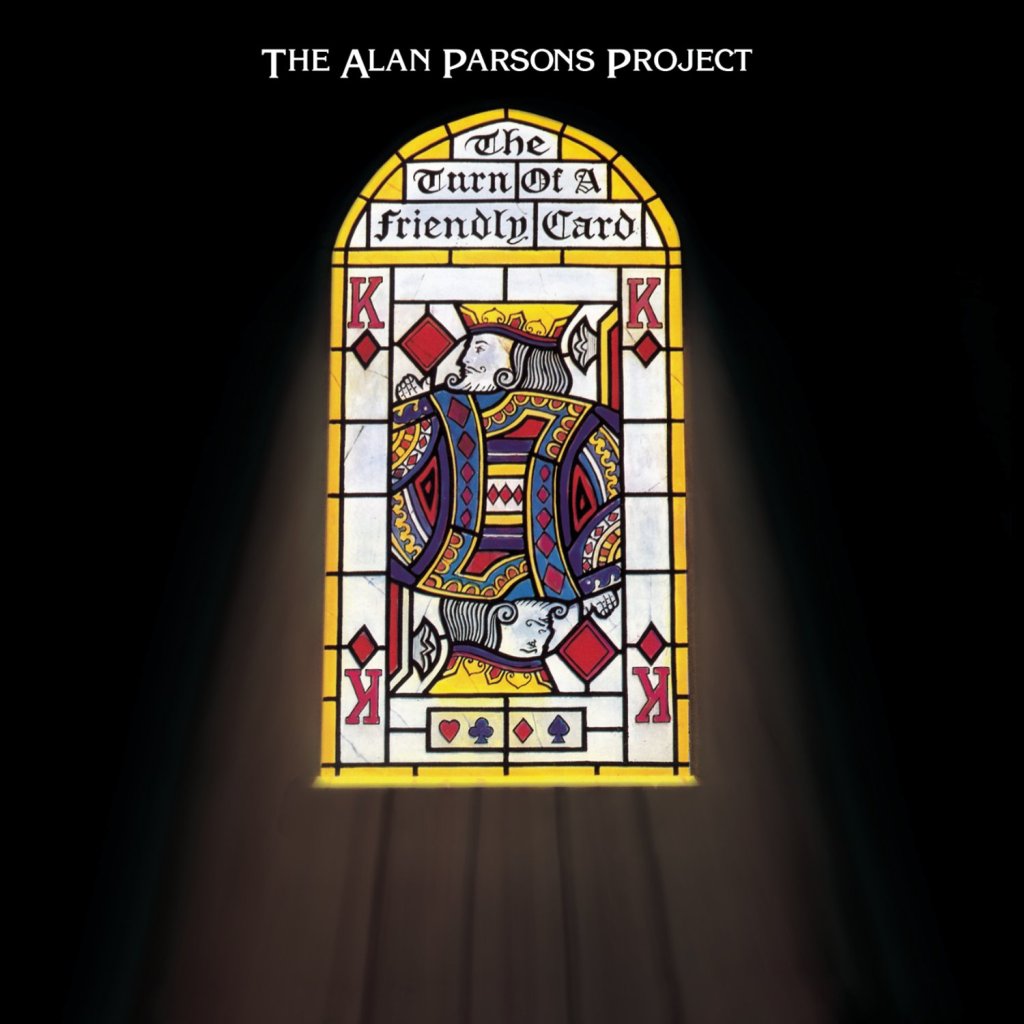
Alan Parsons Project – Turn of a Friendly Card. From the excellent album of the same name.
When I was a teenager I had an 8-track tape of Turn of a Friendly Card, by the Alan Parsons Project, a concept album about gambling. The cover features the King of Diamonds in a stained-glass window.
Comparing a casino to a church… As a Baptist kid I got the metaphor – idolatry for the things of this world, etc. But I’ve only just begun to understand how profound gambling really is.
Motorhead – Ace of Spades. Probably my favorite song about gambling. RIP Lemmy.
There’s something mystical about it. When you gamble, you’re communicating with the universe, whether you know it or not.
I’ve been watching a lot of crime dramas lately – Peaky Blinders, Ozark, Florida Man, Sneaky Pete – shows where people are taking on great risk for a chance to move up.
And I got to thinking, why is gambling so ubiquitous? Why is organized crime always around it and why are governments so keen on making it illegal or controlling it?
Gambling is one of those activities people will continue to do whether you like it or not. Regard it as harmless or call it a sin, it’s as much a part of humanity as drug abuse, prostitution, war or religion.
Evidence for it goes back thousands of years, to the paleolithic and beyond. And, this is something that surprised me even though it shouldn’t have: it started as a form of divination. Somehow the fact that playing cards are derived from the Tarot slipped my mind.
Molly Hatchet – Beating the Odds. This one kept me from missing a trip with the high school band. There was a blackout so my alarm clock was blinking. But this song started playing with the power came on. Woke me up in the nick of time.
So it’s a form of prayer isn’t it? Challenging Fate to let us out of our lot.
The money you put down is an offering. Losing it is a sacrifice. And if you win big when the odds were against you, you get to go “Aha! Proof that life isn’t predetermined.” Unless the universe predetermined that you, specifically, would beat the odds… Then you didn’t really beat the odds.
Unfortunately, the most likely scenario when the odds are against you is, you’re going to lose. Some people can’t accept that and end up like the characters in the Alan Parsons album. Chasing something they can never catch.
I don’t really gamble. I’m too pessimistic. I’ve spent tens of dollars on friendly poker games, and once put a few quarters into a slot machine in Niagara Falls, but I’ve never felt like going to Vegas. (Thought about going to Prince’s nightclub on the off chance he might show up, but I waited too long.)
I mostly don’t care if people gamble. I have friends who do it for fun and don’t lose more than they can afford. My main complaint vs gambling is about the Lotto, which amounts to a poor people tax. Redistribution in the wrong direction.
Let people do it, don’t make them depend on it. Or think they can.
-
China Miéville’s The City and the City: Borders are a matter of belief
Divided cities are an interesting phenomenon. You have cities that grow and merge, and cities that split apart, usually because of politics. They differ in their level of connectedness.
For a while we had East and West Berlin, with a wall in between. Until the 1870s Budapest, Hungary was Buda and Pest, with the Danube River in between.
In America, we have a lot of “twin” cities. In Texas we have the Dallas-Fort Worth Metroplex and Midland-Odessa.
Usually one of the cities in a “twin” relationship is more working class than the other, but when you come down to it, they’re still American. American culture, American social norms.
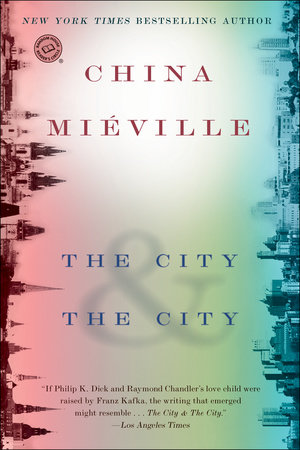
In The City and the City, China Miéville writes about fictitious cities Besz and Ul Qoma. The cities are physically adjacent – they have many “cross-hatched” regions – but their societies are kept strictly separated. This, despite the fact that they share streets, highways and railways,
By mutual agreement of Besz and Ul Qoma, a mysterious entity called Breach keeps citizens from mingling and interacting, on pain of arrest or worse. And you never know if Breach is watching.
The City and the City is a murder mystery that develops into an interesting study of society and law. A body is found in a crosshatched area. Did the crime occur in Besz or Ul Qoma and did anybody “breach”?
And could there be a mysterious third city flying under the radar?
Citizens of both cities have to be trained from childhood to purposely ignore any person or thing not of their city. Citizens learn to “unsee” (and even unsmell!) anything that doesn’t belong in their city. There are unificationist groups in both cities, but they are treated as radicals and suppressed.
It’s crazy when you think about it, how much the concept of a border depends on belief. There may be a fence or a wall or a line on a map, but the earth doesn’t care. It’s people who make borders happen.
I enjoyed the murder mystery and protagonist Tyador’s detective work, but the conceptual stuff was especially interesting. Enforcing a border via psychology.
Unseeing. Pretending you didn’t see to the point that for practical purposes you didn’t. Is that really possible?
It got me thinking of anti-memes – objects, creatures and phenomena that use forgettability as camouflage. qntm’s novel There Is No Antimemetics Division, takes that concept to ridiculous and extremes, but “anti-memetic” does seem to be a thing. Can you describe the last panhandler you saw while driving? Probably not. I can’t.
I actually forgot an entire city. I was talking about twin cities and totally forgot that El Paso, where I live is exactly such a city, or half-city. The Rio Grande officially separates El Paso from Juarez, as well as U.S. from Mexico. But the real separation is cultural.
Borders are imaginary until you make them solid, but still in the most important ways, they’re imaginary. Before it was part of the U.S., Texas has been territory of Spain, France, Mexico, itself, the Confederacy and the territory of various native American peoples.
Who will claim it in 1,000 years? It won’t be more than a claim. The earth doesn’t care about lines on maps.
-
Liminal horror for a liminal age
Several nights ago I spent several hours watching videos involving Valley View Mall, an abandoned mall in Dallas, TX. It has since turned into quite a rabbit hole.
The Oldest View, a DIY horror series on YouTube from teenage CGI whiz kid Kane Pixels, features an abandoned mall modeled on Valley View Mall. And a rolling giant.
I know the mall is modeled on a real place. I believe the giant is based on a real piece of public art.
Kane Pixels is about to have a movie out on A24 based on the Backrooms, a found footage series about an infinite maze of shabby hallways in an aging modern building. You end up there by “no clipping” out of reality.
The other was an urban explorer video by some guys who took an unauthorized tour of the mall shortly before it was torn down.
Naturally I had a nightmare. People either needed help or were out to get me, I had to run in slow motion down dark hallways and I had locked my keys and cellphone in the car.
Malls are an obvious setting for what they call Liminal Horror, creepypasta about the uncanny, places almost but don’t quite make sense. Familiar yet strange. Like empty places that were meant to have lots of people.
The Backrooms is already a cultural phenomenon on YouTube, with other creators expanding on Kane Pixels’ series. They’ve created lore and additional levels. There’s even a video game.
Really entertaining found footage horror series. Soon to be the subject of a movie on A24. Looking forward to seeing what this kid can do.
It seems appropriate that this type of storytelling is popular right now. I think it captures the uncanniness a lot of us feel right now.
Kinda like New Weird, the genre of fiction I’ve been attracted to recently, by the likes of Jeff Vandermeer, Jeff Noon and China Miéville. Stories that combine science fiction with other genres like horror fantasy.
-
What is man that thou art mindful of him?

I just finished watching an astronomy video from one of my favorite science YouTubers, Anton Petrov.
Did you know we’re not just in the Milky Way, but part of of a galactic super cluster called Laniakea? Which is only one of many such super clusters?
Learning how small humans are in the scheme of things can be humbling or it can be humiliating.
I see it as humbling, and at the same time inspiring. How amazing that we’ve learned as much as we have. How far we’ve been able to see into time and space.
It’s as if the creatures I used to look at in the microscope had mapped the inside of my house. Could you imagine? If any extra-dimensional beings are studying us, I think they would have to be impressed.
On a slightly related note, I just thought of Blood Music, a wild science fiction novel by Greg Bear where single-celled life becomes as intelligent as us thanks to carelessness in a lab. It starts as a Horror Story as colonies of cells begin rearranging the earth.
Then it becomes a complete mind-fuck as the microsopic world discovers and learns to communicate with humanity. And the weight of their strange concept of physics begins to change the universe.

-
Take it up with Miss Ferch
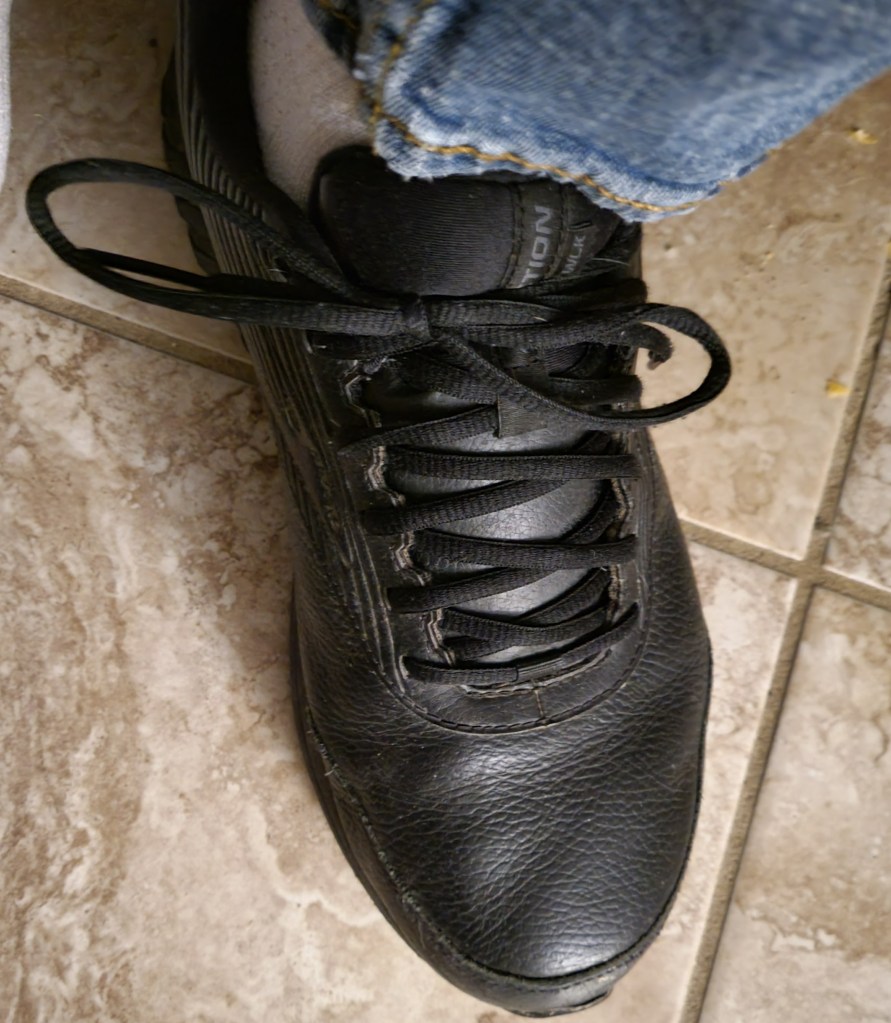
Years ago a friend saw me tie my shoe and said “you’re doing it wrong.” He got me to do it again so he could make fun.
I said what the heck do you mean? The rabbit goes around the tree and gets stuck in a cave. Shoes stay on. What more do I need?
Granted I didn’t bother to learn all the knots in Boy Scouts. I was too busy participating in mischief.
I think I figured it out. I read somewhere that the way you tie your shoes reverses every generation.
Unless the adult who taught you reached around and tied them from behind, you learned a mirror image of how they did it.
So I told my friend to take it up with my kindergarten teacher Miss Ferch.
-
What is a hyperobject?
Interesting this just popped up in my YouTube feed considering what I just posted. Interesting discussion on the nature of the hyperobject, as conceived by philosopher Timothy Morton.
-
Cloverfield and fear of hyperobjects
I just found myself thinking about Cloverfield. It feels relevant for some reason. The movie blew me away when I first saw it. The story had captured something about how it felt to be an American at the time.
A friend told me his Norwegian relative saw the movie in an almost empty theater in Oslo, and said it was the first time he understood how Americans felt on 9-11.
He nailed it. Notice how hard it was to actually figure out what was attacking. You know it’s a monster, but you can’t figure out what kind of monster. First it’s huge, so it’s Godzilla, then it’s a parasite, so it’s Alien. Then it’s got weapons and technology, so it’s War of the Worlds. Nothing quite fits.
The characters in the movie were like people in New York during 9-11. It’s like, you don’t have time to figure out the nature of the threat, you just run your ass off and try to survive.
So what kind of movie monster was the thing in Cloverfield? It’s related to the zombie I think, a thing that defies categories. It’s existentially threatening, but it doesn’t make sense. It’s kind of like the monster in The Thing too, now that I think of it.
It’s not just the physical monster that makes it so scary. It’s the idea. We don’t understand it and it might be the end of the world. Remember when the Statue of Liberty head falls? Pretty strong hint.
Kinda like how 9-11 wasn’t just a terrorist attack, it was so symbolically powerful and beyond comprehension, it became a hyperobject, a frightening idea beyond comprehension.
Also, see 10 Cloverfield Lane if you haven’t. It’s a very different movie than Cloverfield, but it’s excellent. John Goodman should have won an Oscar.
-
Jesus shows you the way to some really trippy cinema
This movie is bonkers. If that’s appealing, you’ll probably like it. If not, you’ll be as confused as my wife was. I love the low-tech way they portray virtual reality. Reminds me of New Order’s music video for “True Faith,” which I totally didn’t pick up on at the time.
Do I have a cult movie for you: Jesus Shows You the Way to the Highway. Cult in the sense that not too many people seem to have watched it. I promise it’s not religious.
It’s a spy movie filled with retrofuturism, Afrofuturism and absurd humor.
Spanish director Miguel Llansó filmed it in Ethiopia with actors from Eastern Europe filling in for Americans. No need to do their parts in English, the dialogue is just dubbed like in a Japanese monster movie.
It has a really unique low-budget representation of virtual reality combining live acting and stop motion animation. They even found a clever back door way to get Robert Redford and Richard Pryor into the movie.
In JSYTWTTH, the Soviet Union Virus threatens to take over the virtual world known as Psychobook. CIA agents are sent inside to stop it. Agent Gagano, a dwarf who dreams about retiring and opening a pizza restaurant, ends up trapped in another virtual world called Betta Ethiopia.
I really wish I could get people to see this movie so I can talk about the ending. I think I understand it, but I could be wrong. it’s an interesting puzzle.
It’s free if you have Amazon Prime.
-
They made another Napoleon movie

Saw Napoleon over the Thanksgiving weekend. Eh… Wasn’t a bad movie, but it wasn’t up to Ridley Scott’s usual snuff.
It’s a small complaint, but I wonder why it was so dim? Kinda reminded me of Ozark. There was a point where someone said the sun had come out and I was like, are you sure it wasn’t the moon?
Main complaint is I didn’t feel like I got much history or learned much about Napoleon. Two and a half hours is pretty long when you have to pee, but maybe it’s still not enough. Should’ve been a series maybe.
We were probably supposed to be more focused on Napoleon and Josephine’s romance, but I would’ve liked a bit more history.
I took a French history class in college and honestly, I think I got a C, but I remember a few things.
Like when Napoleon left Africa without his troops, it wasn’t because Josephine was fooling around. It was because his fleet got its ass kicked by the British. No way to get his army across the Mediterranean, so he just abandoned them.
I remember a few good tidbits about his character, like apparently he was a decent administrator when he wasn’t at war. And apparently he was good at war, until he wasn’t.
There’s a certain romance in the upstart thing, the fact that Napoleon wound up an emperor without any of this divine right bullshit. He was brave, he had ambition and he forced Europe to respect him.
At least he got to retire in the tropics instead of being imprisoned or shot. I guess that shows a certain amount of respect. Pretty hard on soldiers and horses, but I guess he earned it?
Watched Planes Trains and Automobiles that evening. Only Thanksgiving movie I can think of. I liked it a lot better.
-
‘Good guy’ crime stories and corruption
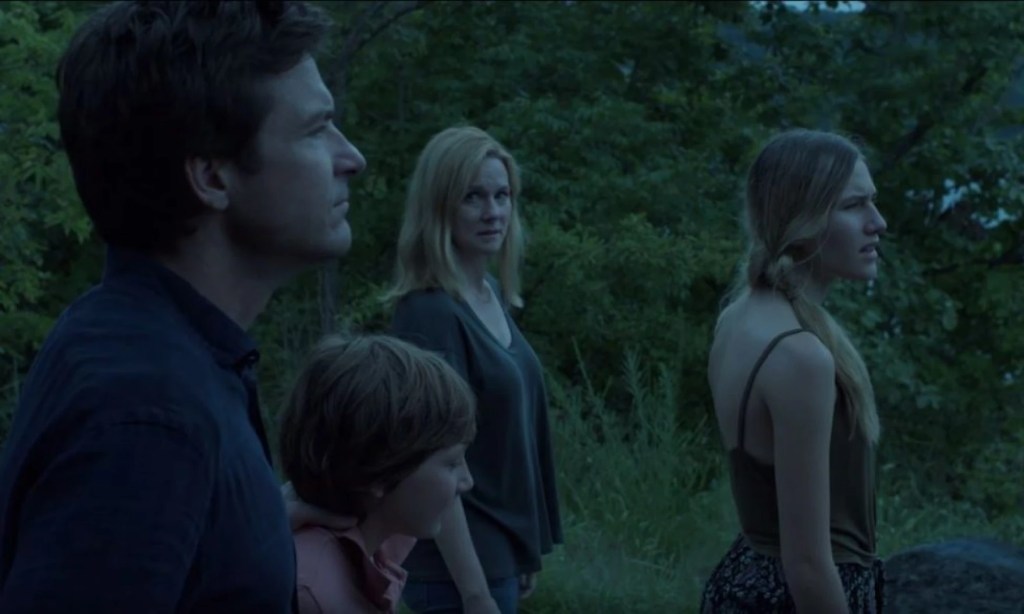
I just realized my favorite streaming shows seem to be of a kind: stories about people operating on the margin between respectable society and the underworld. People committing crime who probably didn’t have to.
Right now I’m in the middle of Ozark, Season 4. That show is making me a nervous wreck, but I can’t look away.
Some of the others I’ve enjoyed were Breaking Bad (of course), Better Call Saul, Peaky Blinders, Ozark, Sneaky Pete, Barry.
They’re all about that stain that comes with making large sums of money illegitimately. Can you have the money without the stain? Once you’ve sold your soul, can you go legit? They all want to go legit, don’t they?
I think the appeal comes down to the economic situation Americans find ourselves in. The middle class hasn’t been doing all that great. Able to buy a house has become able to pay rent. We live in dread of the medical issue that will cast us into poverty.
Maybe we’re making it right now, but wouldn’t it be great to have your own safety net?
In the light of all that, it’s understandable that average everyday Americans would be interested in middle age crime. Would it be possible to just dip my toe into crime and get away with it?
It’s an understandable fantasy.
Wealth means security. Everybody knows that.
Shows like this are forced to take moral stand. What can you get away with and still be a good person? Can you be forgiven?
These shows for the most part are about antiheroes. In most cases I the showrunners and directors are at least trying to be morally responsible and not glorify crime.
Mostly they’re about the awful life you’ll be forced to have when you mess around with dirty money. In most cases the moral seems to be that the payoff won’t be worth what you’ll have to live down even if you do “get away with it.”
It’s a hard concept to grasp. You identify with a character and in your mind he’s you. It’s a problem I seen with a lot of these streaming shows where characters go bad. You justify their sins as the story unfolds just like they do – just like we all do in real life.
I think these shows are good for us in one way: They illustrate the non-duality of sin. Maybe make us more forgiving and less judgmental. There but for the grace of God go I.
These shows also make a good case that we’re all capable of being corrupted.
Like a wise man once told me, “Every man has his price and it’s not always money. Most men are just lucky enough to never find out what their price is.”
-
Subscribe
Subscribed
Have a WordPress.com account? Log in now.


You must be logged in to post a comment.