-
Dune: Power at what price?
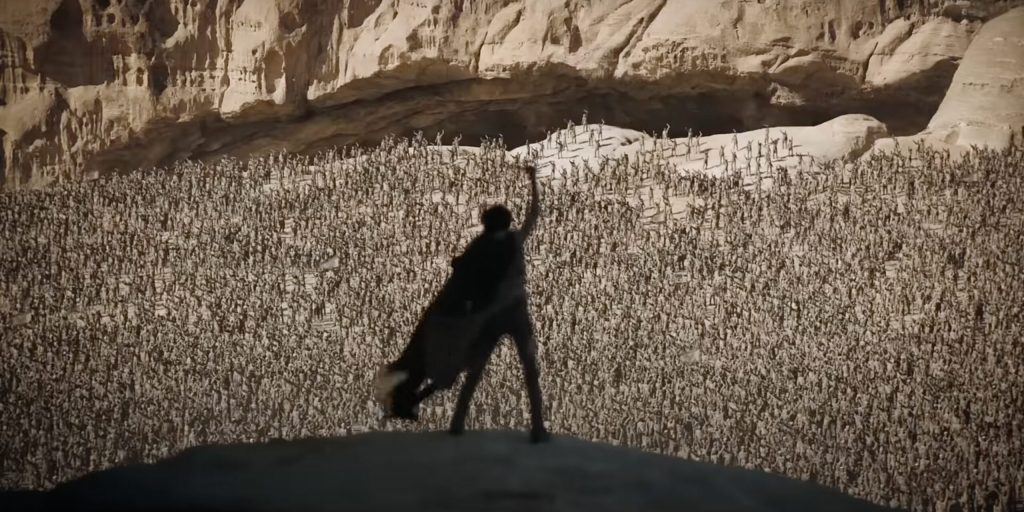
Saw Dune part 2 last night. I liked it and I think maybe I loved it. I still need to absorb what I saw, but it looked amazing. Definitely a spectacle, one that actually means something.
I’ve seen reviewers refer to it as the “Star Wars Killer.” I think that’s overstating the case, but I do hope it becomes a cultural moment for young people.
I was blown away when Star Wars came out. It was so different from what came before. Now, with so many Star Wars “products,” it doesn’t seem quite so special any more. We’re old, we had our turn.
There were a few changes from the original story, but I’d say they served Herbert’s vision.
Villeneuve conveyed a message that I didn’t even get when I read Dune the first time: Paul Atreides isn’t a hero. He’s an anti-hero.
The interaction between Paul and Chani made it very clear. Paul gained a tremendous amount of power, but lost so much that really mattered.
The fact that he didn’t have a choice – it was either win or die – doesn’t make it right. It makes it a tragedy.
The main point I take from that is, why the hell would you want to do all that shit if you DID have a choice? Only for power? How could it possibly be worth it?
I think it’s a message for guys raised on the mono-myth of the hero’s journey who think, “I would love to have that kind of power.” No you fucking wouldn’t.
My wife and I saw Dune at an IMAX theater. Really great seats.
-
IFS: Meeting the people inside your head
Richard Schwartz explains his IFS system.
When I first saw a video in my YouTube feed about Internal Family Systems (IFS), I skipped right past. It’s just me and the missus here and we get along fine.
It wasn’t at all what it sounded like. IFS is actually a kind of therapy for individuals invented by Richard Schwartz.
I’ve watched Schwartz in several interviews and I remain intrigued.The idea is that you have a “family” of parts in your mind that behave like individuals. If you do things to sabotage yourself it’s usually one of those parts trying to protect you from reliving some childhood trauma.
You can talk to them and they answer. If you talk to them properly you can heal the “exile” and get the protector to relax.
It’s the opposite of what they used to teach about multiple personalities, that trauma causes them.
It’s more that you already have them without realizing it, but trauma makes them more noticeable.
Schwartz divides the parts into exiles and protectors, which can be managers or firefighters. Exiles, being the vulnerable parts we try to lock up to keep from reliving their trauma. Managers arrange your life to avoid triggers. Firefighters erupt when you’ve been triggered, to stop you reliving an exile’s traumatic memories. At the heart of it all is Self, which is curious, compassionate and knows how to heal.
The more “Self energy” you bring to the conversations, the more they will trust you. I think of it as the part of the ego that’s most genuine, most connected to the center that Carl Jung calls Self.IFS reminds me of Carl Jung’s active imagination, which I’ve also tried with limited success.
My current thinking is that Jung helps you deal with the stuff in your head that culture puts there, and IFS is for all the people you used to be who are in there suffering.
The idea is to heal them and get them working together.
It sounds so crazy at first, but I’ve played around with it and I swear it works.
As an American, it feels revolutionary. We’re taught to repress our painful parts, not make friends with them.
(more…) -
Godzilla Minus One and more thoughts on hyperobjects
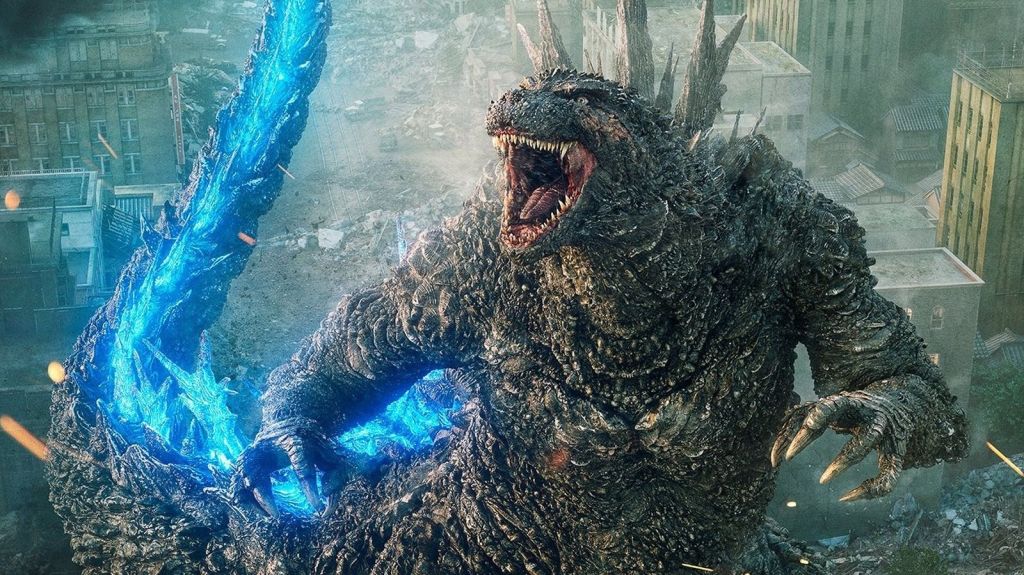
I loved Godzilla movies when I was a kid. I saw Godzilla vs. the Smog Monster (Godzilla vs. Hedora) in the theater. My brother was crazier about Japanese monster movies than I was. “Dear God, please don’t let a giant monster step on my house. Amen.”
Most of those movies were targeted at kids and were a lot of fun. As an adult, Godzilla movies have not impressed me. Until Godzilla Minus One. I didn’t expect to receive so much food for thought.
Setting the story in post-WWII Japan gave the movie an interesting dynamic. Especially since the main character was a failed kamikaze pilot. I cared about the characters and their predicament.
Instead of a disaster movie with a giant lizard, we got a man finding his purpose. Risking his life for his community, regular people dealing with an existential problem the “powers” were too preoccupied to take care of.
I’ve been told Godzilla represents the atomic bomb for Japan, but I think it goes deeper. I think it’s an expression of a hyperobject – something big and amorphous and impossible to ignore. Like global warming or the Cold War.
I’ve just begun reading Timothy Morton’s book about the concept, Hyperobjects: Philosophy and Ecology After the End of the World. I’ll get into it in this space once I’ve finished.
A while back I wrote that the movie Cloverfield is the best attempt I’ve seen to portray a distinctly American hyperobject – the imaginal monster that confronted us during 9-11.
I thought it might be interesting to compare the two hyperobjects based on some of my impressions from Godzilla Minus One. You could sum both imaginal monsters up as “powerful thing that might wipe us out,” but Godzilla has its own character.
Godzilla is Japan specific in a number of ways. For one thing, I feel like there’s an element of punishment. Shintoism has the concept of a Kami, a godlike entity that sends a tsunami when you’ve pissed it off.
Maybe throw in some resentment over how your cities got nuked thanks to the hubris of your leaders. getting nuked over the hubris of your leaders. And anxiety over being caught in the middle of an existential game of chicken.
I thought of that in the movie when the U.S. wasn’t available to help with the monster because it didn’t want to inflame the Russians. When monsters fight you’re bound to get trampled.
America’s “monster” a bit different in that there’s an element of Damocles’ sword. Having the power of a king means having a sword hanging overhead by a hair. America took on the role of a superpower and it still didn’t make us safe.
It isn’t just a king on a throne looking up nervously. It’s the whole country and in fact, the whole world.
Civilian populations are now bargaining chips. Because of us. Maybe it was called for at the time, but in any case, the bomb is one hell of a hot potato. And like the Japanese in Godzilla Minus One, we don’t really enjoy being put in this position.
There’s a sense of waiting for the other shoe to drop.
When I think of it, it’s all the same monster though it shows different faces to different cultures: the thing that shouldn’t exist, can’t be ignored and can’t be defeated.
“History shows again and again how nature points out the folly of man… Godzilla!” Blue Oyster Cult got it.
-
Outlaws and inspiration
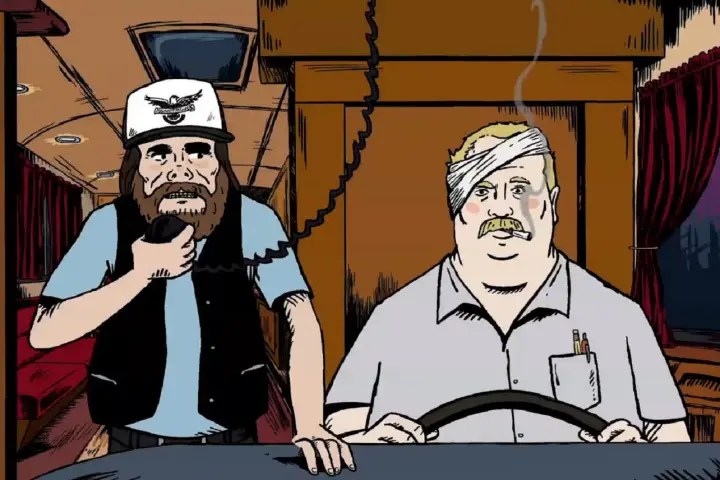
Outlaw country singer Johnny Paycheck, CB’ing truckers for a cocaine hookup. From Tales from the Tour Bus.
I’ve been amazed, learning all sorts of insane lore about various outlaw country artists.
I found out about this series of videos via Bill Burr’s podcast. I’m kinda like he is about it. How did nobody tell me about this?
It’s hilarious.Mike Judge, creator of Beavis and Butthead, King of the Hill and a whole lot of other great stuff, made a series called Tales From the Tour Bus. It’s apparently on Hulu which I’m not gonna get, but I’ve been watching these little shorts on YouTube.
The stories are insane. Of course I’d heard stories about guys like Johnny Cash and Jerry Lee Lewis being into drugs, but I had no idea how crazy the scene got.
You have to watch this one, where George Jones develops multiple personalities, one of which talks like Donald Duck and gets in arguments with his old man personality.
The above two videos are pretty damn crazy. Billy Joe Shaver shoots a guy through the cheek in a bar fight (he lives) and gets away with it in court.
When people call this stuff outlaw country, they mean OUTLAW country. These guys lived like gangsta rappers. It’s barely even a question of whether they were good or bad. They were a mess. Alcohol cocaine mental illness and guns.
And yet I love a lot of these songs. I probably would no matter what I learned. I’m not a huge country fan, but when I hear them I remember the words. They were part of my childhood.
Which got me thinking about the whole “can you separate the art from the artist?” question. I don’t think we have much choice especially once a work of art becomes part of the culture.
You can cancel Michael Jackson but it’s too late to cancel Thriller.
Some things want to be in the culture and they’re going to be in it whether you like it or not.I like how philosopher Timothy Morton refers to songs as entities in this exchange with Bjork. Entities… Not quite alive, but not exactly “things.” Almost spirits, because they can inspire.
Sometimes I feel like art wants to get into the world and it only needs a vessel. I don’t think it has a moral preference as long as it finds one.
-
Beau Is Afraid and the horror of an unlived life
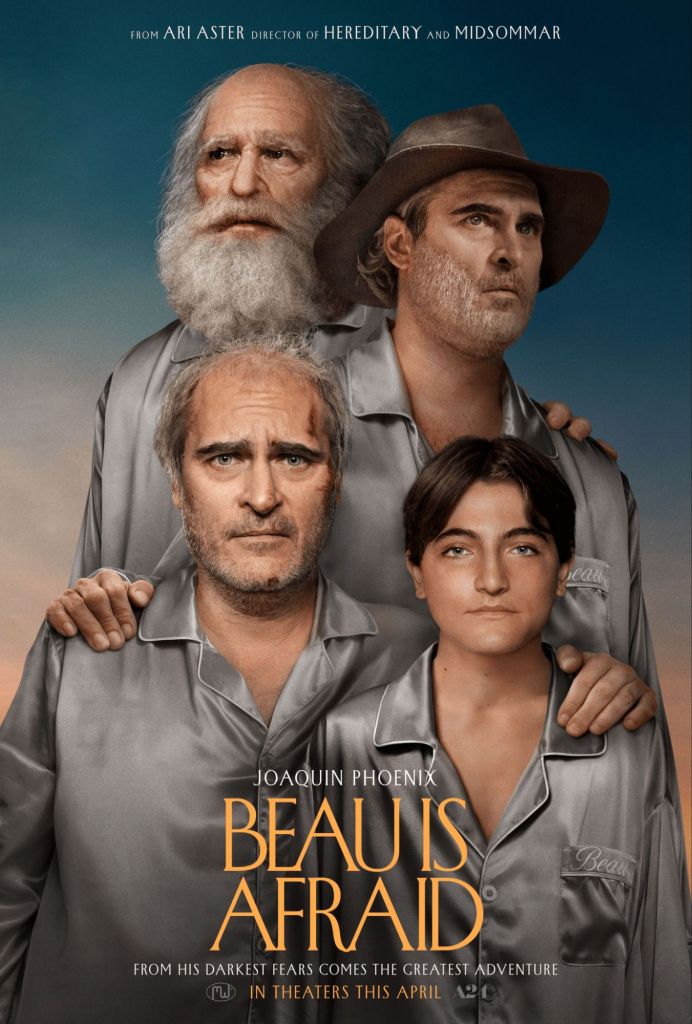
It’s a polarizing movie but those tend to be the important ones.
Beau is Afraid is the best movie out of the ones I’ve seen recently. Not necessarily the most enjoyable, but I couldn’t quit thinking about it, which is what makes it great.
I’ve been obsessively watching director Ari Aster’s interviews and Q&A for days.At this point I think he’s a genius on the level of Tarantino or Scorsese.
It’s fascinating to see how normal and harmless he seems when his films are so disturbing.Beau Is Afraid contains a lot of black humor as well as anxiety and sadness. I had to chuckle when he said he tends find the worst case scenario funny – reminded me of me.
This is yet another movie about family trauma. Aster has been cagey about the nature of it, but judging by Beau Is Afraid and Hereditary (which traumatized me thoroughly), Aster must have had some traumatic family experiences of his own.
People are driving themselves crazy trying to figure out what it all meant, treating it as a puzzle to be solved when it’s not that kind of movie. The events and scenarios that frighten Beau are so over the top that you can’t tell what’s real.
All you need is the theme: The horror of being a man child who isn’t allowed and isn’t able to grow up.
It’s very Freudian. Think of it like a long nightmare that points to a deeper truth. The best way is to just let the dream logic wash over you.
It reminded me of Pink Floyd’s The Wall. Similar theme of the narcissistic mother and the protagonist who attempts to become an authentic person and fails.
Like Pink, Beau is unable to escape his traumas. There is a point where he tries to get over that hump and become his own person, but he fails. Doesn’t have enough juice.It reminds me of the secret message in the Wall – at the very end Pink says “so this is…” and at the very beginning, “where we came in.” It’s a closed loop.
You don’t get to know whether much of what Beau sees is literally true. So much of what happens is a projection of his fears onto the world. But we can draw some conclusions.
His mother is evil or at least a malignant narcissist. That’s pretty clear.
She might not have killed the housekeeper, but it seemed like something she would do. She might not have locked his twin in the attic, but it seemed like something she might have done.
Telling him his father and grandfather died from having sex sounded like something she might have done. A very cruel way to keep him dependent.
Everyone Beau connects with turns out to be on his mother’s payroll, so that there’s no one in the world that he can trust.
His mother used his image to help build her business empire and apparently used him as a guinea pig for new drugs.
Beau was only acceptable as a boy. She apparently had no use for men, even a grown-up son. Growing up means sex, and becoming a man and men are dangerous and unpredictable.
It’s polarizing – not everyone is willing to watch a 3 hour movie where the would-be hero fails. But I think it needed to happen that way. Not every momma’s boy manages to escape.
I think there’s also a larger theme about modern society: How to be a man in a world that has eliminated positive, traditional roles for men.
Beau imagines himself as a farmer who protects his children, but that role is unavailable to him.
If a boy child is made to believe that being a man is inherently bad, the only choices become be a bad man or remain a child forever. We need to normalize the concept of the good man. -
Movie thoughts incoming
For some reason I haven’t been in a writing mood. I’ve been in a movie watching mood – which has me back in a writing mood.
I’ve seen around eight movies since Christmas, some very good, some that at least made me think. Movies that make me think qualify as good even if they make me squirm.
I’ve been watching them differently. Or at least more consciously. I recently discovered Science Fiction YouTuber/Writer/Blogger Damien Walter, who talks about our movies having a mythos – the dreamlife of a culture.
He makes a pretty good argument. There are certain tropes, character types, surprise blockbuster and slow burn classics, that just have to tell us something about what we didn’t know we were thinking.
It’s going to take a while to write down those thoughts, so I’ll start with a list of the ones I feel motivated to write about: Godzilla Minus One, Beau Is Afraid, The Batman, Videodrome, The Colony, Anon.
I also saw The Boy and the Heron, at the theater, but I don’t have much to say about it at the moment. I’ll see it again sometime when I can pause it to the bathroom. Maybe I’ll have more to say then.
I know it’s heresy, but I haven’t really enjoyed Miyazaki’s movies, despite their reputation, except Howl’s Moving Castle. I still want to see Graveyard of the Fireflies if I can find it. I respect him, he just doesn’t speak to me.
-
Having a cold still sucks!
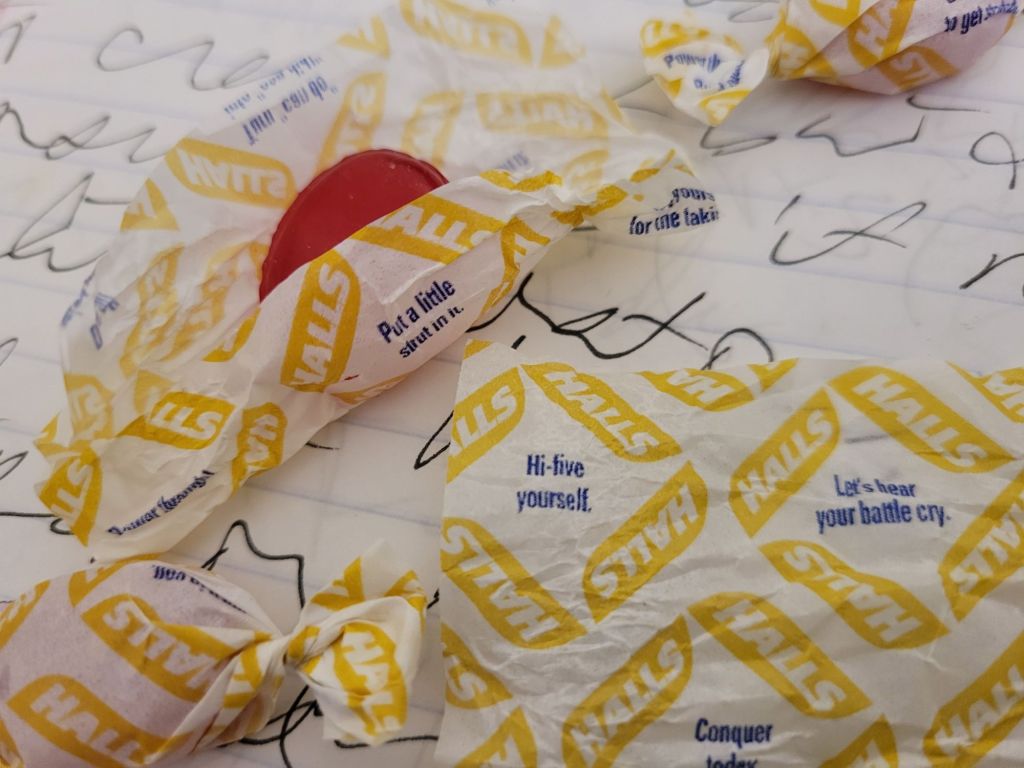
I don’t have much of a battle cry at the moment. High-five yourself, really?
Just got back from Texas with a cold. I live in El Paso but that’s how I think of it, going to Texas. El Paso feels different.
I tested negative for covid, so it’s apparently just a cold. Something that produces lots of ectoplasm.
I’ve been so focused on avoiding the vid that I haven’t had a cold for three years. I forgot about these damn things. They really suck.
Funny how COVID changed our whole attitude about getting sick. It was such a pain in the ass it makes being regular sick kinda nostalgic.
Remember when every sitcom had to have an everyone at the office has the flu episode, played for comedy? And all those cold and flu remedies that were practically little sitcoms.You could have a lively conversation about which brand worked the best or what grandma used to give you (cranberry juice, vinegar, butter and bacon grease).
It was part of the culture.
Yes we knew staying home from work while sick was the polite thing to do. But what was the worst that could happen, someone could catch a cold?
I remember being proud of myself for putting out an issue of the paper while delirious with fever. Some of the stories came out kinda strange.
These days the pep talks on the Hall’s cough drop wrappers ring kinda hollow. “Get through it.” “Be unstoppable.” “High Five yourself.”Can you really high five yourself? I guess that’s the corporate version of “What is the sound of one hand clapping.”
It’s a throwback to the time when the Man wanted you and your snotty nose back in the cubicle pushing papers and it felt like an ethic instead of exploitation
No idea how I’ve gone this long without catching COVID. Must be my magical type O blood. Still glad I don’t have it, but trust me you don’t want this. Having a cold still sucks.
Wear a mask and wash your hands. -
I draw the line at anthrax

I’ve always been cool with New Agers. I can’t vibe with most New Age ideas. My science brain always kicks in and I go “nah.” The channeling thing… Please. But I can’t judge. I’m freak adjacent. People think I’m nuts half the time.
The only time I had a real problem with a New Ager was with this one lady who ran an ad with us every week and in exchange, she got to write a column. She wrote about ear candling. Weird kinds of food that cures anything. A different wacky treatment each week.
I was like, is this woman crossing some kind of ethical line here? But the ad… Without ads, no us.
I had to find a picture to go with each article and some of them looked really weird in the edited space of a newspaper. Ear candling! It was annoying, but I put up with it.
I just hoped people wouldn’t believe all her columns and would know to go to the doctor if they got sick. The last straw happened during the Anthrax scare.
Everyone was scared of getting a letter full of anthrax in the mail and she runs a column about an herbal cure for anthrax. Anthrax! Are you kidding me?
“If you think you caught anthrax,” she said, “don’t take Cipro!” Because the pharmaceutical industry. An herbal treatment for anthrax. Which kills people. Like always.
“That’s it,” I said. “I can’t put my name on a newspaper that has advice like that. My editor agreed and he got the ads and the column nixed.
I think he was afraid she was gonna get us sued if somebody got anthrax. We were both editors, by the way. It’s complicated.
Anyway, I’m mostly cool with New Agers. Or pagans or mystics, or whatever they want to be called. I don’t know if New Age music is them or if it’s just a coincidence.
I tend to experience both whenever I go for a back massage. It mostly sucks — except Vangelis, Jean Michel Jarre and a Robert Rich and a couple of other guys.
On the other hand, people who I at least lump in with New Agers, maybe unfairly, make some bitchin’ dark ambient which I’m obsessed with. As well as weird interesting stuff I don’t even have a name for yet.
I’m just a lone weirdo I guess.
-
Blasting culture into the rock
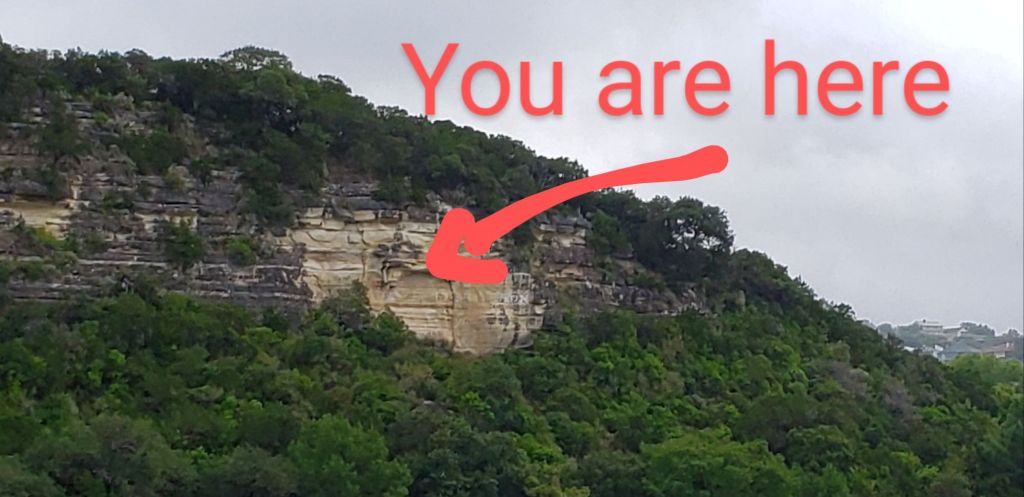
Not right now, but you will be eventually, or someplace like it. We all will. What will the future make of us?
Thoughts and dreams emanate from the human race, crashing into rocks and soil above. Rocks and soil that don’t yet exist.
Most disintegrate on impact. Some are caught between layers of sediment, never to be seen. Some wait, like treasures or bombs, and explode into minds and cultures all over again.
Only to be reentombed after the cultures that found them have had their day.
That image popped into my head when I think about archeology. Particularly discoveries like Plimpton 322, a 3,700 year old clay cuneiform tablet that pushes back the discovery of trigonometry by over 1,000 years.

Plimpton 322, the clay tablet that shows the Babylonians invented trigonometry more than a thousand years before the Greeks.
Babylonian trigonometry used base 60 math, as opposed to our base 10. I find that fascinating, because we didn’t have to dig up base 60. We already use it to tell time and map the globe. They passed the baton and when it was our turn, we grabbed it.
At first I wondered if a 60-fingered alien taught the Babylonians to count, but if you use your thumb to count the segments of your fingers, you get 12 per hand. Count 12 on the five fingers of your other hand and you get 60.
How do we project thoughts and ideas and relics “up” into the future? I think of it like a psychic cannon or a big shotgun, but it’s nothing we do intentionally. We’re just living our lives.
The art we make, the towers, the symphonies, the museums and libraries, the ephemera we leave behind. They’re all part of that energy wave telling the universe “this is who we are.”
Consciously or otherwise, the human race tries to push its way through as many layers of future rock as possible. We’re doing it now. Whether we’ll succeed, we can never know.
But I’m pleased we’re still picking up those transmissions. Maybe we’ll find something else we’ve missed that could help us launch our cultures further into the rock.
-
The earth misses our feet

Texas settlers 1848
You might have royalty in your family tree, but if you go back far enough, they were all just people. People who danced and told stories around the fire, people who hunted with spears and plucked food from the ground.
Their world was full of spirits and the sun and moon were living things.
Modernity has mowed down or absorbed most of the “people of the earth” at this point.
Somewhere along the line, we decided those ancestors were barbarians, savages. How embarrassing.
When I watch them I can’t help but feel like they have something we don’t. We, being the citified folk whose bare feet never touch the ground.
We’re civilized now, don’tcha know. We have running water. We wear shoes. Meat comes from stores, cut into pieces and neatly wrapped. Hunting is only for sport.
There are so many layers between us and the ground we can’t tell what’s real anymore.
I’m mostly thinking city culture and modern living. Losing the idea of the family farm even. These days you never have to touch soil with your bare skin if you don’t want to.
I grew up in the country. I wasn’t surrounded by unspoiled nature, but by farms and ranches. Most of my settler ancestors left that life a long time ago. Still it felt like the land was ours.
We went barefoot in the summer and swam in rivers and stock tanks. We climbed barb wire fences and went fishing in creeks.
Now I’m a city person of sorts. It’s not a large city, but I’m not country anymore. As I got older the culture began to chafe. I felt bored and restricted. I became disillusioned with the religion and politics.
I wanted to be sophisticated and modern. I refused to listen to country music out of spite. It took decades to afford it but I needed to live in a city. And I was right. It’s the closest thing I can get to finding a tribe. But something is missing. I get sadder about it every year. I didn’t understand how much I needed the country. And city people who never had it just know they’re missing something.We gained a lot when we built our civilizations. But it came at a cost and I think we know it.
I’m a native Texan. These days we’re mostly just regular Americans.
But there was a time when we were something else. We had customs, an accent that’s growing less common.
We also used to hand folk songs down the generations. We had family members who could play the fiddle.
We gave most of that up so we could become modern. Nashville reminds us of what we gave up. It’s not the same. But at least now we get to have air conditioning.
I have a Norwegian friend who reads folk tales religiously, reads them to his kids. Some of them are quite dark and they can get nightmares. I have nothing like that and I’m jealous.I suspect that drive explains the rise of New Ageism and practices like neopaganism. We’re trying to reestablish something.
-
Subscribe
Subscribed
Have a WordPress.com account? Log in now.


You must be logged in to post a comment.