I’ve been on a blogging hiatus, writing things in notebooks that I may or may not share. Still not ready to post on the reg, but I felt moved to share this. Seems like the time.
Passed a few fireworks stand and really wanted to buy some, but I don’t know anyone who wants to have a good firecracker fight and tbh I’m too old. So another fireworks season will pass me by.
And I got to wondering how much I care about American Independence Day anymore, now that democracy may be on the ropes.
I wondered if this might be the last Fourth of July I really care about, or if maybe that happened the day Dad died, July 4, 1997.
I’m of two minds I guess…
Which reminds me of a dream I had in October:
I was getting on a bus with some friends.
There was a lot of anger on the bus, because Superman had turned evil. It was all over the news.
The driver wanted to throw us off, because Superman was with us. Sort of.
I apologized to the driver and said “Don’t worry. There’s no way Hollywood is going to let Superman stay evil. There’s too much money in Superman being the good guy.” Superman was represented by an Igloo ice chest that we stowed near the front of the bus.
I said Superman had temporarily been changed into a “sorp.” (I bet that took a LOT of kryptonite.)
I haven’t managed to make a backronym for SORP, but in the dream it meant superposition. Good and evil at the same time. No way to know which until you opened the box. Schrodinger’s Superman.
Superman – in my dream, and in the collective unconscious – symbolizes the USA.
Hollywood meant Hollywood, but not just Hollywood. American culture at large. We live in an empire and we want to be the good guys.
Unfortunately those two conditions might be mutually exclusive. For me, for the time being, I think Superman will remain a Sorp.
It’s a polarizing movie but those tend to be the important ones.
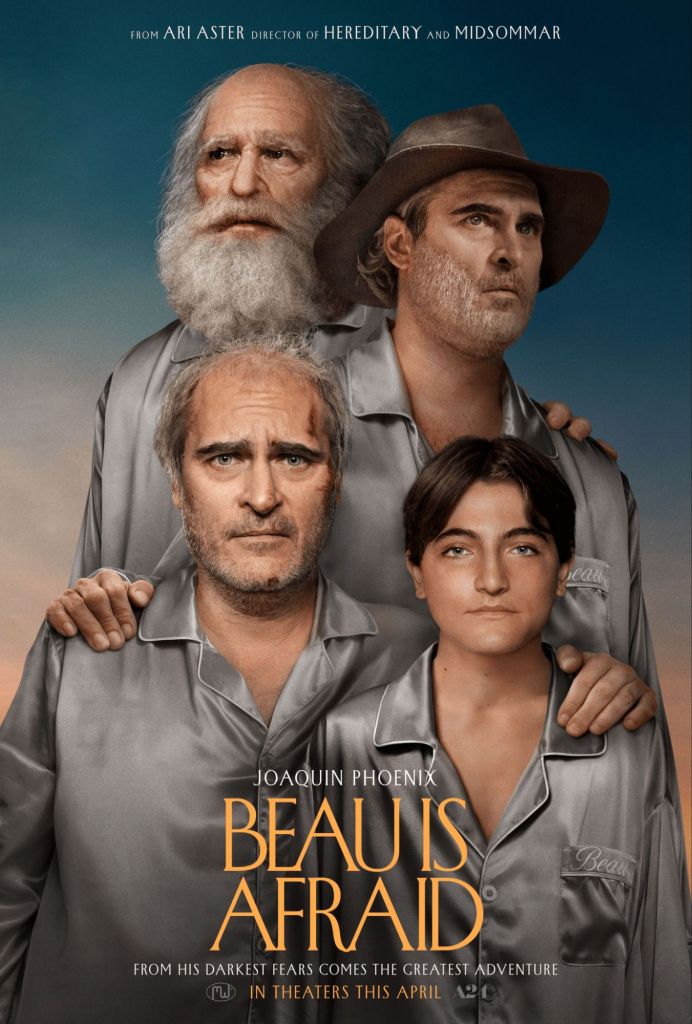
Beau is Afraid is the best movie out of the ones I’ve seen recently. Not necessarily the most enjoyable, but I couldn’t quit thinking about it, which is what makes it great. I’ve been obsessively watching director Ari Aster’s interviews and Q&A for days.
At this point I think he’s a genius on the level of Tarantino or Scorsese. It’s fascinating to see how normal and harmless he seems when his films are so disturbing.
Beau Is Afraid contains a lot of black humor as well as anxiety and sadness. I had to chuckle when he said he tends find the worst case scenario funny – reminded me of me. This is yet another movie about family trauma. Aster has been cagey about the nature of it, but judging by Beau Is Afraid and Hereditary (which traumatized me thoroughly), Aster must have had some traumatic family experiences of his own. People are driving themselves crazy trying to figure out what it all meant, treating it as a puz
zle to be solved when it’s not that kind of movie. The events and scenarios that frighten Beau are so over the top that you can’t tell what’s real. All you need is the theme: The horror of being a man child who isn’t allowed and isn’t able to grow up. It’s very Freudian. Think of it like a long nightmare that points to a deeper truth. The best way is to just let the dream logic wash over you. It reminded me of Pink Floyd’s The Wall. Similar theme of the narcissistic mother and the protagonist who attempts to become an authentic person and fails. Like Pink, Beau is unable to escape his traumas. There is a point where he tries to get over that hump and become his own person, but he fails. Doesn’t have enough juice.
It reminds me of the secret message in the Wall – at the very end Pink says “so this is…” and at the very beginning, “where we came in.” It’s a closed loop. You don’t get to know whether much of what Beau sees is literally true. So much of what happens is a projection of his fears onto the world. But we can draw some conclusions. His mother is evil or at least a malignant narcissist. That’s pretty clear. She might not have killed the housekeeper, but it seemed like something she would do. She might not have locked his twin in the attic, but it seemed like something she might have done. Telling him his father and grandfather died from having sex sounded like something she might have done. A very cruel way to keep him dependent. Everyone Beau connects with turns out to be on his mother’s payroll, so that there’s no one in the world that he can trust. His mother used his image to help build her business empire and apparently used him as a guinea pig for new drugs. Beau was only acceptable as a boy. She apparently had no use for men, even a grown-up son. Growing up means sex, and becoming a man and men are dangerous and unpredictable. It’s polarizing – not everyone is willing to watch a 3 hour movie where the would-be hero fails. But I think it needed to happen that way. Not every momma’s boy manages to escape. I think there’s also a larger theme about modern society: How to be a man in a world that has eliminated positive, traditional roles for men. Beau imagines himself as a farmer who protects his children, but that role is unavailable to him. If a boy child is made to believe that being a man is inherently bad, the only choices become be a bad man or remain a child forever. We need to normalize the concept of the good man.
I just realized my favorite streaming shows seem to be of a kind: stories about people operating on the margin between respectable society and the underworld. People committing crime who probably didn’t have to.
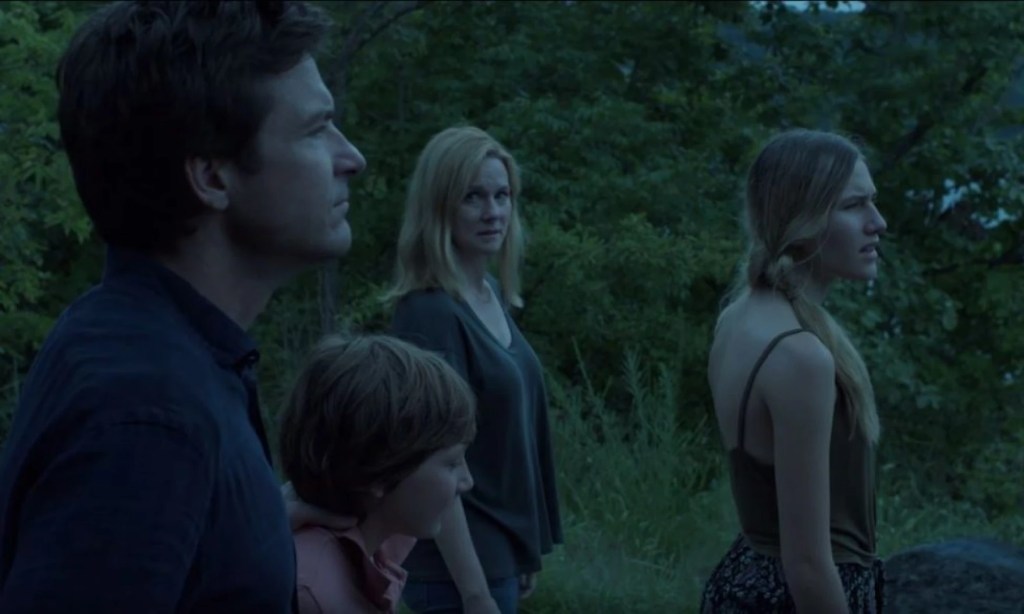
Right now I’m in the middle of Ozark, Season 4. That show is making me a nervous wreck, but I can’t look away.
Some of the others I’ve enjoyed were Breaking Bad (of course), Better Call Saul, Peaky Blinders, Ozark, Sneaky Pete, Barry.
They’re all about that stain that comes with making large sums of money illegitimately. Can you have the money without the stain? Once you’ve sold your soul, can you go legit? They all want to go legit, don’t they?
I think the appeal comes down to the economic situation Americans find ourselves in. The middle class hasn’t been doing all that great. Able to buy a house has become able to pay rent. We live in dread of the medical issue that will cast us into poverty.
Maybe we’re making it right now, but wouldn’t it be great to have your own safety net?
In the light of all that, it’s understandable that average everyday Americans would be interested in middle age crime. Would it be possible to just dip my toe into crime and get away with it?
It’s an understandable fantasy.
Wealth means security. Everybody knows that.
Shows like this are forced to take moral stand. What can you get away with and still be a good person? Can you be forgiven?
These shows for the most part are about antiheroes. In most cases I the showrunners and directors are at least trying to be morally responsible and not glorify crime.
Mostly they’re about the awful life you’ll be forced to have when you mess around with dirty money. In most cases the moral seems to be that the payoff won’t be worth what you’ll have to live down even if you do “get away with it.”
It’s a hard concept to grasp. You identify with a character and in your mind he’s you. It’s a problem I seen with a lot of these streaming shows where characters go bad. You justify their sins as the story unfolds just like they do – just like we all do in real life.
I think these shows are good for us in one way: They illustrate the non-duality of sin. Maybe make us more forgiving and less judgmental. There but for the grace of God go I.
These shows also make a good case that we’re all capable of being corrupted.
Like a wise man once told me, “Every man has his price and it’s not always money. Most men are just lucky enough to never find out what their price is.”
The past may be behind us, but the pain remains. Even if you try to ignore it. I recently watched Ida, from Paweł Pawlikowski, the same director who gave us the incredible tragic love story Cold War. Both movies explore very painful eras in Poland’s history.
One thing Ida made abundantly clear to me was that the violence and scapegoating during World War II left some very deep scars in Europe.
Ida is about a young woman in a convent who learns she is a Jew just as she is about to take her vows. No only is she a Jew but she was left with the nuns during a wave of anti-Semitism in the 40s that left her an orphan.
She meets her last living relative, as well as the people who took her to the convent and now live in her family’s home. She decides not to take them to court over the land, but in exchange, they have to tell what happened to her parents and brother. I won’t go into detail, but it was dark.
What must it be like for those who get caught up in it, once life returns to normal. How do they live with themselves? The people Ida finds living in her lost family’s home took part in terrible crimes, but they were not inhuman.
It got me thinking about fascism. What is it? Why does it keep coming back? Umberto Eco’s 14 Characteristics are a pretty good rule of thumb for diagnosing it, but what causes it?
To me it’s a cultural autoimmune disease, where the body attacks its own tissue. I think it’s triggered when the dominant culture loses faith in the utopian dreams of yesteryear.
If it takes hold, society cannibalizes itself, starting at the bottom and gobbling up every tribe until it’s eaten itself up.
It must be pretty exciting at first. You’re gonna help make heaven on earth and damn anybody who gets in the way. You get carried away and sacrifice your soul for the cause.
But at some point you have to return to “normal” life. In the heat of one of those what they call “historical moments,” people will commit acts they never dreamed of committing. Some can live with their memories just fine, but most humans aren’t naturally that mean. They have to be lured or goaded into it.
Diseases like fascism always burn out eventually – people have to do business and raise their kids – but they inflict a lot of pain not just on the scapegoats of a society but upon those who take part in it.
I like that Schwartzenegger doesn’t just write these guys off. He sees them as people who can change. Hopefully, before they ruin a bunch of lives including their own.
I used to dream of post-scarcity solar system-wide and galaxy-wide human societies, like the one in Star Trek. I wanted to be Captain Kirk as a kid. I at least wanted to be on the Starship Enterprise and not wear a red shirt. But these days I have a hard time envisioning a future that resembles a sci fi world I’d want to live in.
What happens in the future is anybody’s guess. But I mostly read “hard” science fiction, which to me just means the story seems somewhat plausible, at least for the time they wrote it. “If this goes on…” etc.
Those books got me in the habit of running scenarios – or “catastrophizing” as my wife calls it. Not that I don’t enjoy utopia stories. “And Then There Were None” about a society based on Gandhi’s philosophy, is a pretty good example of that. Gave me a chuckle.
Supposing I had a dream that felt like a prophesy and I happened to be right? (Carl Jung did that, kind of). Would it matter?
As much as I don’t want it to be, the Rapture Machine dream I had way back in college, might have been very close. That was many years before I was able to accept what it was really telling me.
If an asteroid was headed for the planet, I bet we’d pull together, figure out what to do, put some resources into it. Instead, we’re worried about zombie apocalypses and don’t trust our neighbors anymore. We’re arguing about whether climate change is real, based on team affiliation.
Meanwhile extreme weather is about to cook us or wash us away. Time for the teams to have a pow wow. Not that I see that happening soon. If I could make it happen I would.
Another reason for the “Late” in Late Boomer. Now I see things a little clearer than I used to, but man I overslept. I certainly wish I’d grok-ed the system before I got old and decrepit.
I think it’s time to get realistic and admit we’re in a pull our ass out of the fire situation on planet earth, economically, politically, culturally, and climate-ly. Trying to figure out who gets to control the future is seriously putting the cart before the horse.
We all have a lot of work to do to fix this planet and we haven’t been working together. Too busy dishing out sick burns, as if that mattered. Time to stop demonizing and start talking. Lead with what music are you into, your pets, etc. instead of your tribe sucks.
It’s been one hell of a coke binge so far hasn’t it? Smart phones, social media wars, Silicon Valley tyrants rearranging our lives as they try to squeeze out every last second of our attention. When will it end?
I don’t know about anyone else, but I’m feeling rather strung out at the moment.
There’s a phenomenon scuba divers have to watch out for called nitrogen narcosis. Below certain depths, the nitrogen in your body becomes an intoxicant.
Rapture of the Deep, they call it. You can get so out of it, you’ll try to offer your regulator to a fish, swim down, when you need to swim up, etc.
Not that I ever went scuba diving, but I think it’s comparable to what we’re all doing here on land. Doomscroll Narcosis. Rapture of the Screen. You’re in too deep, but you just keep diving deeper and forget to come up for air.
I’m as guilty as anyone. I tear myself away from the phone, take icons off the home screen, set alarms and rules, try to instill a little self-discipline then I find myself doing it again. From content to content, switching between Facebook, YouTube, Mastodon and back again.
By the time I snap out of it, half the day is gone and I can’t string words into a coherent sentence.
“This is your brain on technology… Any questions?”
I am seeing some signs that we might overcome this mess. I’m seeing some really substantive YouTube channels that seem to be growing, slowly.
All this dopamine seeking behavior isn’t giving any of us the meaning we seek.
I have a hope that enough people have enough of the mindlessness and go looking for the real deal. The stuff that helps us figure out who and what we are, that make a hard life worth putting up with.
People like John Vervaeke with his Awakening from the Meaning Crisis series on the development of Western philosophy, Damien Walter with his thoughtful critiques of science fiction storytelling.
I think they’re onto something. It takes effort to explore their work, but it’s worth it. There’s spiritual food to be had online from people not obsessed with overnight success. Eventually people will quit binging on internet candy and go looking for it.
Just watched all seasons of Peaky Blinders and it occurs to me: Society and the criminal world are really mirror images of one another. They have a symbiotic relationship, all of it to do with avoiding the tax man.
The underworld tries to transform dirty money into wealth, and the system tries to make sure dirty money stays dirty and wealth stays at the top.
Where people can’t find jobs, there will be dirty money. If the only money you have is dirty, the only way you can build wealth is by washing it. You can’t buy property if you can’t pay taxes.
That’s why organized crime exists. Organized criminals are better able to wash their money through seemingly legitimate ways and get away with it. It allows them to turn dirty money into wealth. Witness all those glass towers in Miami.
Peaky Blinders is set in England, but it puts me in mind of Gangs of New York. Different factions of the underworld fighting over slices of the pie. I think just about every ethnic group in America has had some kind of mafia.
The mainstream and its favored tribes are less likely to need a mafia because it has the police and the law. The legitimately wealthy get to use police to fight their battles with the ambitious poor and keep the illusion of clean hands.
Gangsters tend to get themselves killed or thrown in prison and don’t get to taste the aristocrat’s life for long, but as long as their operations are running successfully, they’re paying the guy who took the deal and that business hires people.
That’s where the real trickle down happens. The slow conversion of dirty money into small amounts of clean money.
People have been gambling, paying for sex and doing drugs for as long as anyone has kept track. People at the top, and just below the top, and every level below the top will find a way to get those things no matter what the law says.
Where there is dirty money, there will be laundering. Where there is laundering, the system will try to stop it. By cracking down harder or by seizing the means of corruption. Then all that vice starts with clean money and produces clean tax money.
It may capture the means and turn it into something taxable. That’s why we have state lotteries instead of the numbers racket. It’s why Vegas and all those mini-Vegases exist.
It’s why everybody uses plastic now, instead of folding money. The system got tired of all that papermoney disappearing off the grid and producing wealth outside the system.
But capitalism’s evil shadow always finds a way. Now we have cryptocurrency, so the black market can convert those digital ones and zeros into clean currency.
The system can “declare war” and crack down harder, but that raises the price, which just makes it easier to bribe people. With enough money and potential for violence, every means of enforcement can be corrupted.
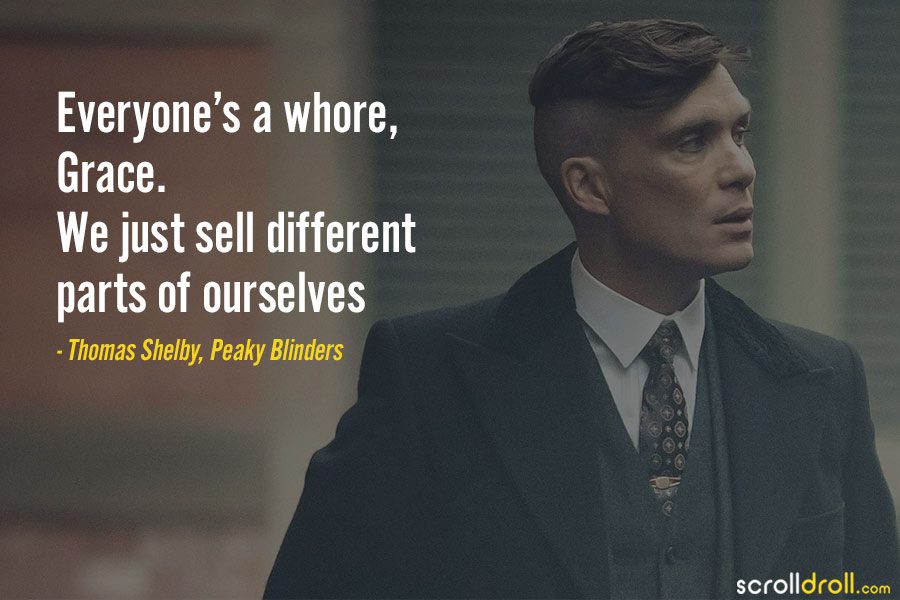
Like Tommy Shelby says in Peaky Blinders, “Everyone is a whore, we just sell different parts of ourselves.” Some people sell their bodies, some sell their integrity.
Why wouldn’t it go that way? These are our values. Wealth trumps everything. We don’t mind when billionaires thumb their noses at the law and get away with it. They’re our heroes. We watch them on TV.
We don’t want to stop them. We want to be them.
Which is why capitalism’s shadow won’t go away no matter how strict our society gets. All that wealth stuck behind that logjam at the top. All the rest of us who can observe that with a good work ethic, you’re lucky to pay the rent, much less get wealthy.
All that mess is exactly what Jesus was talking about when he said “money is the root of all evil.” We’ve made the act of getting rich into a virtue in itself, so what else should we expect?
….
BTW, if you think the above is a conspiracy theory about a shady cabal making all that happen, you don’t have enough imagination. I’m way crazier than that. I’m saying the system has a mind of its own. I’m saying it’s alive. And we live inside it.
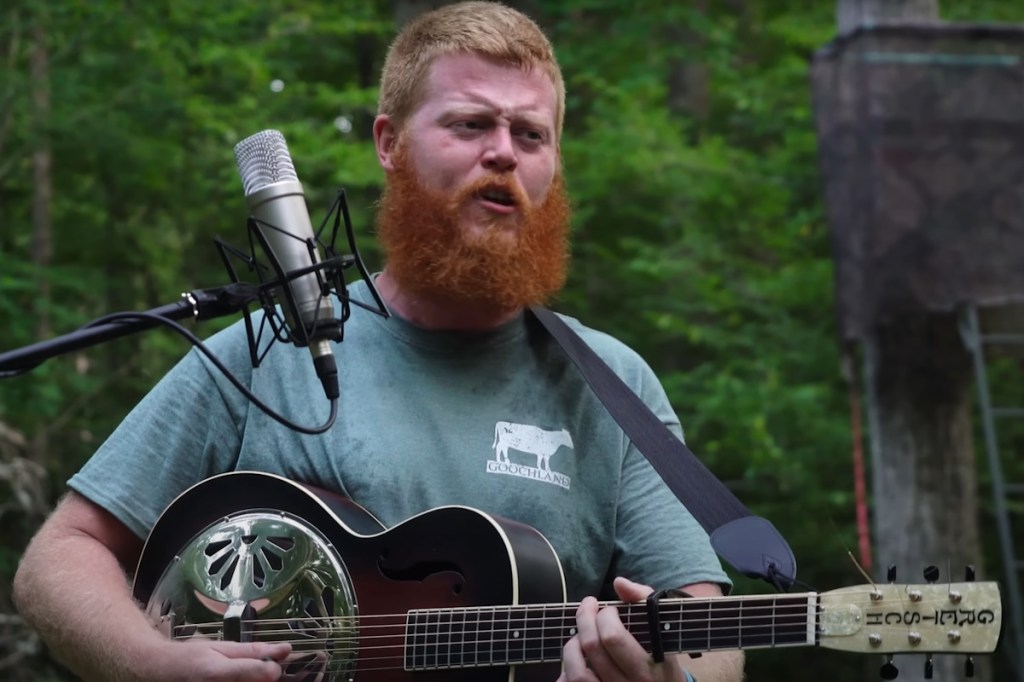
The internet squabble over Oliver Anthony’s song “Rich Men North of Richmond” really got under my skin. I already wrote about him, but I wasn’t done. I couldn’t write about anything else until I got it out of my system.
I’ve always been a contrarian. Sometimes I stick up for the wrong people and get egg on my face. Maybe it’ll happen again. But I’d rather be a contrarian for undeserved empathy than undeserved cruelty. I hate having to choose between mobs.
“I Want to Go Home” really gets me in the feels, with that line about the grandkid selling the family farm and seeing “only got concrete growin’ around.” People in the country do get attached to the land. The system doesn’t like that.
Instead of dwelling on what Oliver Anthony’s agenda was, I decided to take a deeper dive and see what I thought of him as a musician. I’m a fan of his type of music. Based on the dozen or so very good song he’s been uploading for the past three years, I don’t see an agenda. As far as I can tell he’s just been following the muse and got caught up in other peoples’ fight.
This comment on his Facebook page doesn’t sound something a would-be culture warrior would say: “I HATE the way the Internet has divided all of us. The Internet is a parasite, that infects the minds of humans and has their way with them. Hours wasted, goals forgotten, loved ones sitting in houses with each other distracted all day by technology made by the hands of other poor souls in sweat shops in a foreign land.”
I can’t help but notice he’s Appalachian. A culture that has influenced a lot of America, but doesn’t seem to get much respect. There are reasons why he and his fans think the way they do.
She talks about exploitation by the timber, mining and pharmaceutical industries.
What I found interesting was her explanation of how money-based economies and governments try to urge people from land-based cultures into the city, and how that has resulted in a superiority complex among city dwellers and internalized shame among country folk.
Oliver Anthony – Rich Man’s Gold. I like the tone of this song. “You weren’t born to just pay bills and die…”
As for those lines about welfare… I watched his Joe Rogan interview and he said something interesting about “Rich Men North of Richmond.” He didn’t think it was his best song and was only half-finished when Radio WV chose it. He finished the second half in a hurry.
So I think he meant what he said, though not necessarily with any ill intent. It’s pretty much middle of the road thinking where he lives. I had similar views as a rural Texan, and I was a lot more liberal than the average Republican.
Why don’t people from Oliver Anthony’s demographic find progressives convincing?
It comes down to something Kingsolver said. “We will only take information from people we trust…. so if you open a conversation with ‘you bonehead’ the conversation is over.” In other words, they don’t trust the the messenger, so they don’t trust the message.
City culture is the mainstream culture of America. Most of our media comes from cities. But that’s not the only culture. People in the countryside don’t feel like city people aren’t on their side.
So they don’t trust what the mainstream says. That’s how the rich men north and south of Richmond are able to fool them. They pretend to care. If those rich men won’t lift a finger to help, at least they’re on the correct “side.”
What would it look like if progressives actually did care?
In the South, there is a custom where you want to have a little conversation first, before you get down to business. You talk about your kids, your dogs, your favorite music. Anything to establish a connection. I think that custom would come in very handy on social media.
If you dislike the messaging in “Rich Men North of Richmond,” and you find someone who likes it, what if you tried to make a connection instead of writing them off? You liked his voice, or maybe you like some of his other songs? Start there and maybe they’ll care what else you have to say.
Oliver Anthony – Ain’t Got a Dollar. I can vibe with this song. There is value in living on the land near where you grew up, instead of moving all over to chase a dollar.
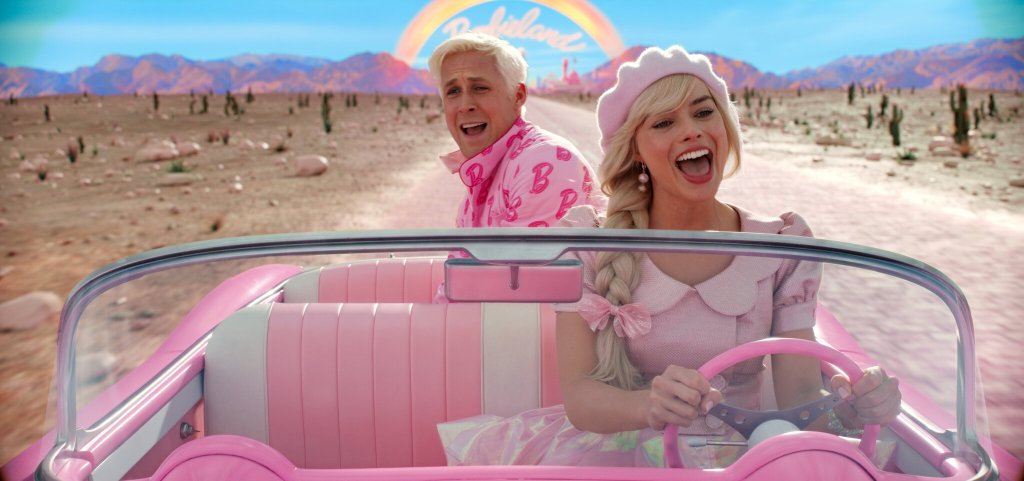
I missed out on the whole Barbenheimer experience when everyone was so psyched about it, but I finally saw Barbie. I wanted to see what all the fuss was about. (Really liked Oppenheimer as well, for different reasons. Don’t make me pick.)
I thought it was very witty, a good piece of art. I’m surprised Mattel let Greta Gerwig make so much fun at their expense. Pregnant Barbie? A Barbie with a TV in her back? A dog that poops candy? All those ridiculous dolls really existed… What were they thinking?
I didn’t feel particularly attacked. The fact that nobody ever played with Ken has been a running joke for as long as I can remember. It was obviously targeted at women who have grown up and are realizing society has rules it expects you to follow. They are often unwritten and contradictory. It can leave you paralyzed just trying to be yourself.
I think you could almost flip it around and make it about men, except there isn’t a comparable toy for us. I had a GI Joe and my brother had an Action Jackson when we were kids, but neither of us cared much about them. We were mostly out playing in the mud.
As any guy who’s not getting any will tell you, it’s pretty damn difficult to be a man also. You have traditional roles (aka “peer pressure from dead people.”) and modern roles. Also contradictory and hard to live up to.
I’d sum it up by saying it’s damn hard to be a human being in general. But it’s life, it’s real. When Barbie had a chance, she picked life. Messy, difficult, exciting, real, and a lot more rewarding than the version where everything is predictable and perfect.
A few days ago I noticed the YouTube reaction channels talking about this red-haired country singer, Oliver Anthony. Just a guy and his guitar, singing his heart out. I was moved as a lot of the reactors were moved.
Oliver Anthony – Rich Men North of Richmond
Then a few days go by and suddenly my feed is swamped with “reactions” by some of the worst people on the Internet.
It seems the right wing had snatched him up as one of their own and were using him to sow division.
Sounds genuine to me. Hoping for the best.
Then the left wing creators started giving their takes. He’s punching down on welfare recipients, he might be anti-Semitic, he’s an industry plant, etc. So I second-guessed myself.
I thought great, something else to fight over. I finally see someone who seems like they might be able to get Americans talking again – and wham! They’re fucked right out of the gate.
Oliver Anthony – Ain’t Gotta Dollar. I like this one. Puts me in mind of bluesmen like Robert Johnson and Mance Lipscomb.
But there was something about that song. It felt genuine. We’re not used to genuine these days. Go for the cynical take straightaway and you don’t get disappointed. But maybe he was the real deal after all?
Sure enough, he popped up with a clarification. He didn’t much appreciate getting “adopted” by the Republican party and having his lyrics misconstrued. His line about welfare might have come across like a right wing talking point, but I don’t think he meant it that way.
He comes across to me as an independent country conservative, basically me, 30 years ago. I had a heart for the poor back then, but I might’ve said similar things about welfare. I just wasn’t able to see the big picture back then.
I see where he turned down a record deal by some folks who apparently wanted to promote him as something he was not. So maybe he’ll do the YouTube thing like Ren and make it that way. Integrity? Could it be?
Billy Bragg – Rich Men Earning North of a Million. I never grew up around unions. Texas is a “right to work” state. But this country needs unions. The world needs unions. I’ve never been as sure of that as I am now.
I did kinda like the way English activist and folks singer Billy Bragg handled it, putting out a pro-union version, “Rich Men Earning North of A Million.” Most of us non-billionaires can agree on the problem. So why not respond with a possible solution.
I hope Oliver Anthony meant what he said in that video, because I’m tired of watching my favorite tribes fight.

 Late Boomer's Den
You must be logged in to post a comment.