-
Civilization vs. Entropy… Who’s taking bets?
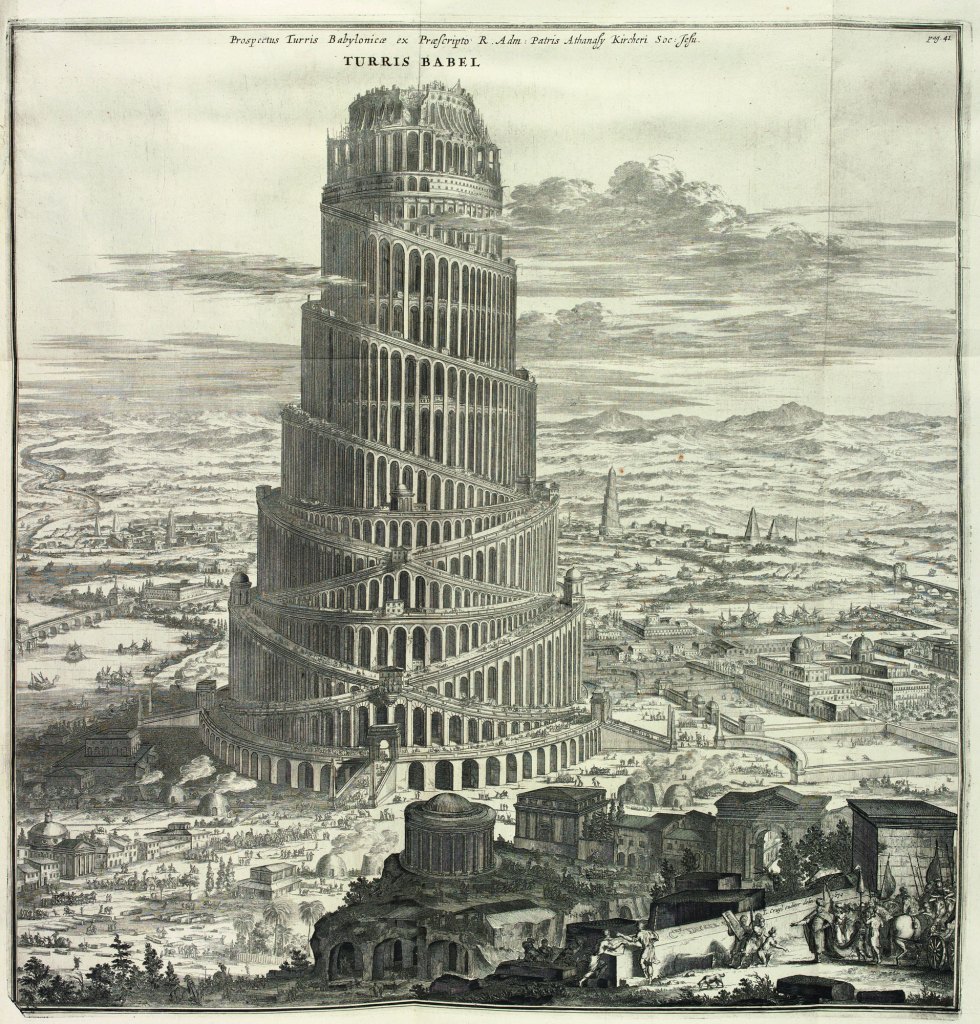
Is there any real difference between a civilization and an empire? I hated that question when I first thought of it. I grew up thinking, “civilization good, empire bad.”
If you’re “civilized,” you’re nice. You’re polite. You don’t behave like a barbarian. If you’re an “imperialist,” you’re dominating, taking more than your fair share. Who could be more evil than Caligula, or the Emperor Palpatine?
Civilization has to be a good thing, doesn’t it? You don’t let yourself think otherwise if you live in one, do you? After all, my life depends on it. I take prescription medicines. I’ve had life-saving surgery. Take away all that stuff, I won’t last long.
But when you boil it down, you’re still talking about one thing: A vain attempt to defeat entropy. To grow forever and last forever. I didn’t want to believe that when I first thought of it.
Doesn’t matter what I think though. All towers fall. All systems fail. Build it too high, it will fail spectacularly.
That’s the true meaning of the Tower of Babel myth. It’s not where all the languages of the world originated. It’s a warning about hubris and entropy. Nobody could talk to each other, so the building project stopped.
Kinda like how it is online right now isn’t it? Ever notice how we seem to talk right past each other? How we can’t agree on basic definitions? The arguments I see might be mostly in English, but as citizens of a civilization we’re supposed to be building together, it kinda seems like we’re all speaking different languages doesn’t it?
-
Insomnia videos
There’s a certain kind of video on YouTube I cannot get enough of. The specifics change, but there’s something in common: They help me pass the time when I wake up at 3 a.m. and can’t get back to sleep.
It can’t be news or politics or I’ll never go to sleep. Nothing “serious” aka, anything that’ll make me think.
The latest thing has been custom paint jobs. No idea why. I don’t care about sports cars. Just give me something non-descript that will get me where I want to go.
But the videos are hypnotic. Yes I do want to see what a holographic rainbow hypershift looks like.
I don’t watch the whole thing, I just watch them stir the paint with all the sparkly stuff which looks really trippy, then skip to the end. Then I judge them, hmm not bad, or eh, coulda sparkled harder.
Before this it was woodturning videos. Especially the ones where they start with big funky burl or root ball and turn it into a vase or what not. I’m like, yesss, stroke that shiny wood.
It was kinda funny talking to my wife about it, because she immediately admitted she does the same thing when she’s awake at 3 a.m. Hers are origami videos and makeup tutorials.
-
The reality generator
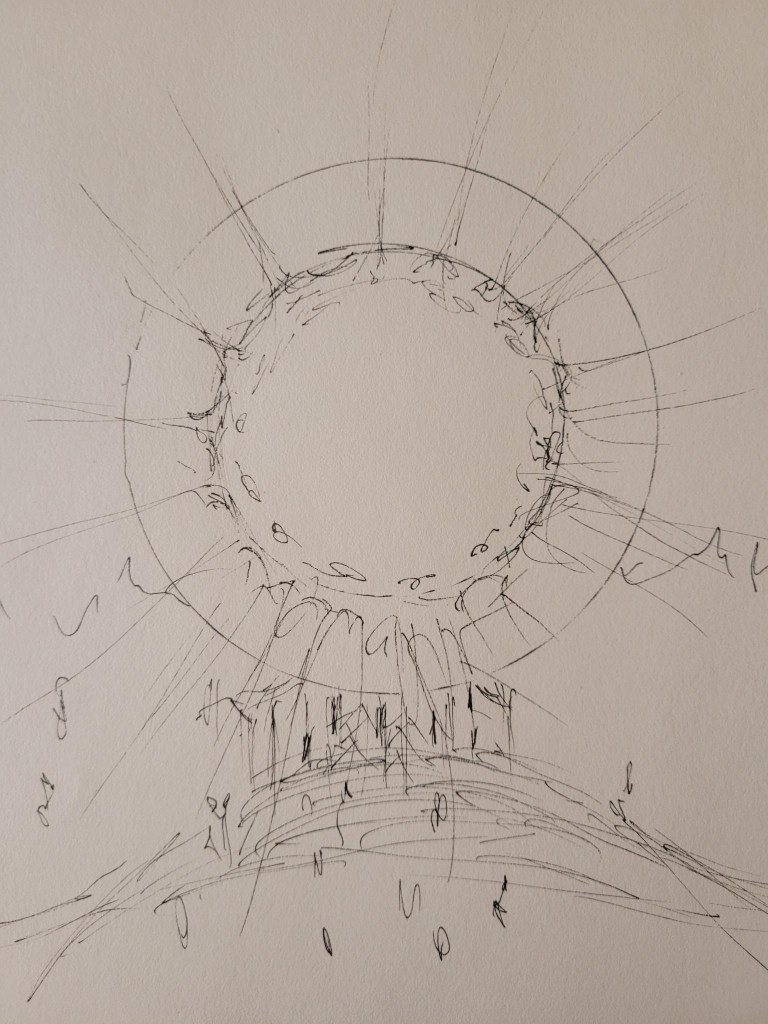
I’ve made a habit of writing down my dreams when I can remember them. I figure it might help me be a little more creative. I’ve had a few “hits,” ones I’ll remember for a while, but to be honest they can be a bit repetitive.
I’ve noticed a pattern over the last several weeks: dreams that feature a “reality generator.” Pretty derivative really. They one I remember most clearly looked like a big metal donut, mounted on the back of a military vehicle.
I had helped create it, but was I was now unsure if that was a good thing. It was designed to project a worldview on the population. I was told there had been other versions, but this one was more powerful and worked on more people.
Pretty sure the donut shape was a ripoff of the “Everything Bagel” in Everything Everywhere All At Once. One day they’ll find a way to sue you for dream plagiarism, but we’re not there yet. Anyway mine looked more like a steel washer.
Last night I dreamed about a “reality generator” that at least didn’t plagiarize anybody’s design. This one consisted of steel poles planted in a circle with bends at the top, pointing inward. It replaced a less effective version that had been planted by a crooked cop.
The purpose of this “reality generator” was to eliminate suspicion and allow criminal activity to go unnoticed. Obviously inspired by Ozark which I watched last night. (No spoilers. I’m still in season 3.)
I have about figured out what these dreams are actually about. Perception, the only reality we humans know. You can’t make a reality generator, but a perception generator? We’re using one right now.
Propaganda, misdirection, dots connected every which way, like new constellations in a sky with too many stars. That’s what the Internet is giving us. A simulation that can look like literally anything.
Fortunately you carry a reality generator in your head. If you can resist all the “realities” blasting into your eyeballs, you might get close to the one that machine can’t touch.
-
Obsolete newspaper technology
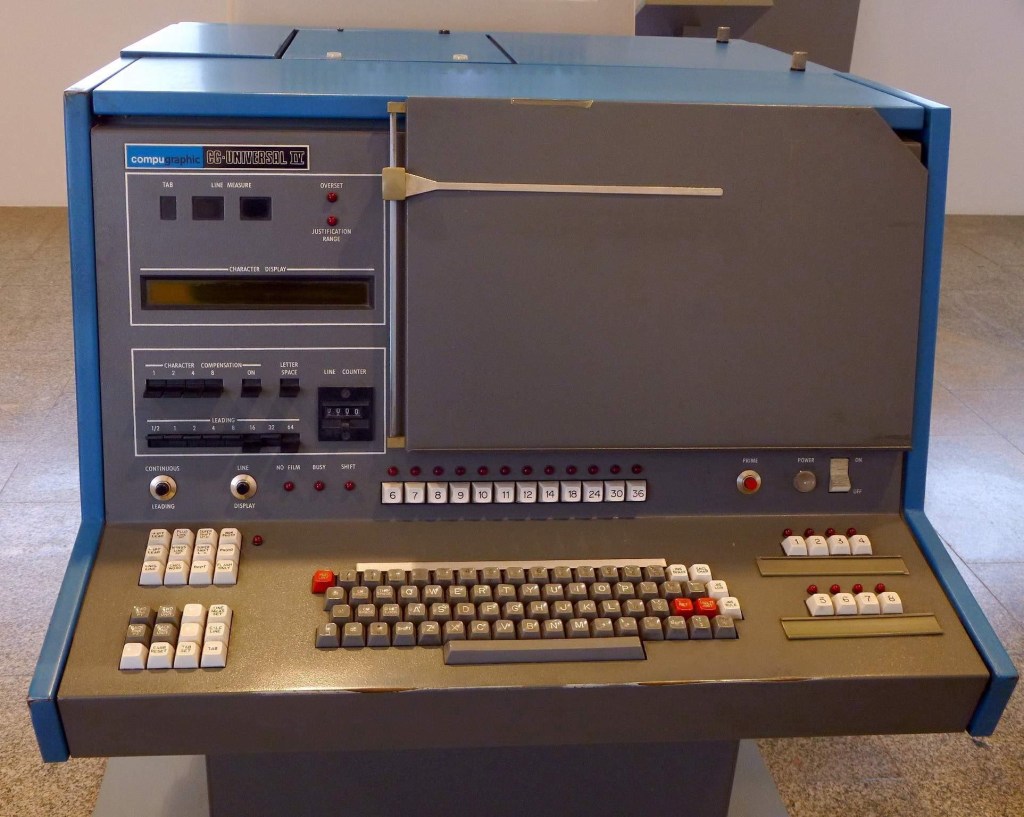
Never thought to take a picture of the Compugraphic machine the typesetter used back in the early newspaper days, but I found one online that looks a lot like it.
One thing I regret about my early days in the paper business was not taking any photos of all that obsolete tech. Although they’d be in black and white and I probably would’ve lost them by now.
There was the big blue Compugraphic machine used by the typesetter, a lady who turned your copy into column-wide strips that printed out on Kodak paper. They came out smelling of photochemicals and you had to dry them out before you could paste them up.
The typesetter could only see half a column at a time. If she messed up, that section had to be done again and pasted onto the rest of the copy.
There was the machine where you typed in your headlines. In a few pre-set fonts and sizes. Biggest size was 72 points. My editor back then called that the “Second Coming of Jesus font.”
There was the waxer. You fed copy and photos through it it and coated the underside with wax, so you could stick them down on the layout sheets – newspaper sized paper, with a light blue grid on it. We used light blue pens to circle errors to be corrected. Blue wouldn’t photograph at the press.
I got so sick of having sticky hands on press day. A friend’s band once made a song about that called “wax on my ass.”
There was the big camera in the dark room we used to make half-tones – the photos with dots. If you tried to put a regular pic in the paper, it came out looking Xeroxed.
There were all the little tools you took for granted: border tape (black tape in different widths, used to put a black boxes around ads), sizing wheel (to help figure out the settings on the dark room page camera. “Where there’s a wheel there’s a way.”).
There were the layout tables, tilted at an angle. Underneath were shelves full of clip art books the ad production people used. The art had to be cut out with an X-acto knife and stuck to the page – with wax. I used to help them from time to time. I was really good at cutting the border tape straight. (Cut through the corners at a diagonal.)
I remember the tables in the back, where we had to insert (rectangular) circulars into the papers when they came back from the press.
We made a little assembly line. All hands on deck till we got it done. “You know they can train monkeys to do this shit,” was my usual joke. Your hands would be black at the end of the day.
There was a machine at the press that could do it automatically, but it broke and they didn’t want to pay the guy who knew how to run it. Kind of ironic when I think about how technology affected newspapers in the long run.
Change came quickly and slowly at once. We got computers, learned PageMaker and QuarkXpress, In Design for the folks who really stuck it out. Some tools you just used a bit less till next thing you knew, they’d be covered in dust, forgotten until the next cleanup day.
And gradually, I noticed I was almost by myself in the newsroom. Lot of jobs you just really didn’t need to run a small newspaper anymore.
It’s crazy to remember how not-advanced the tech was back then, how we got it done, and how many friends I had in the newsroom at the beginning.
-
Frank Herbert on what makes an anti-hero
I like the idea of the hero’s journey. Joseph Campbell’s book got me through some rough times. But the idea of being a hero has some pitfalls as well. Of course everyone is the main character in their story, but I don’t think it’s everyone’s purpose to be the hero.
Maybe you’re meant to be support staff. Nothing wrong in that. Not to mention, you have to slay a dragon to earn your hero badge – dragons being a metaphor for troublesome people – and if everyone is a hero, everyone is also a dragon.
Dune author Frank Herbert has a great quote about that. “The difference between a hero and an anti-hero is where you stop the story.”
If you think about it, that has to be true. The story goes on after the hero wins the prize. Especially with a scale as epic as the Dune series. So the hero wins and now he has a ton of power. You expect him to stay the fresh-faced innocent from the beginning of the story?
Herbert said part of Dune’s message is to show the difference between morals and ethics and how they can come into conflict. Morals being the rules of a culture, which are imposed and which can change. Ethics being the higher values of what is proper regardless of the law.
“It’s an exercise in showing the fallacy of absolutism,” Herbert says.
In Dune, Paul Atreides’ ethical norms are challenged by moral necessity. He has to destroy his enemies to survive and has to adapt to another culture’s morals, which arose of necessity in a desert culture.
Dune is also about ecology. The way the Imperial system impacts the environment of Arrakis. (The inverview above shows how progressive he was about the environment. He was already concerned about plastic pollution in 1965.)
Dune was born out of an ecological study he conducted for the U.S. Forest Service. His findings led him to study desert cultures including Arabs, Navajo and people of the Kalijari, and they way they husband their water supplies.
Ecology, he said, is the science of understanding consequences. “The book is about the consequences of inflicting yourself on a planet.”
-
There is no Antimemetics Division, or is there?
I just read a wild book about an organization that protects us all by dealing with with monsters that don’t want to be remembered.
There Is No Antimemetics Division, by qntm (“quantum”), aka Sam Hughes came from a regular on the SCP Foundation Wiki. The SCP Foundation (Secure Contain Protect) is an online collaborative writing project about a shadowy organization that battles and locks up “anomalies” that would drive people insane if they knew.
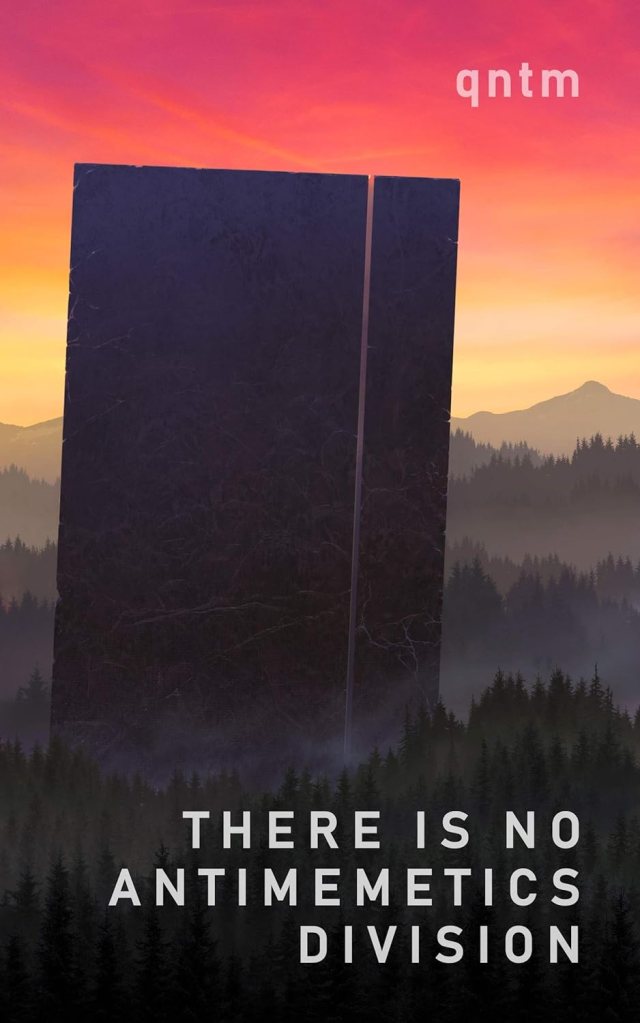
The Antimemetics Division is a barely-remembered part of the SCP Foundation tasked with protecting the world from anomalies that can steal or modify memories, and monstrous creatures that can’t, or shouldn’t be remembered.
It reminds me of Christopher Nolan’s Memento, but with a bit of sardonic humor. Memory loss is so existentially disturbing, and this is a horror book as well as imaginative science fiction, but qntm manages to find the humor in it.
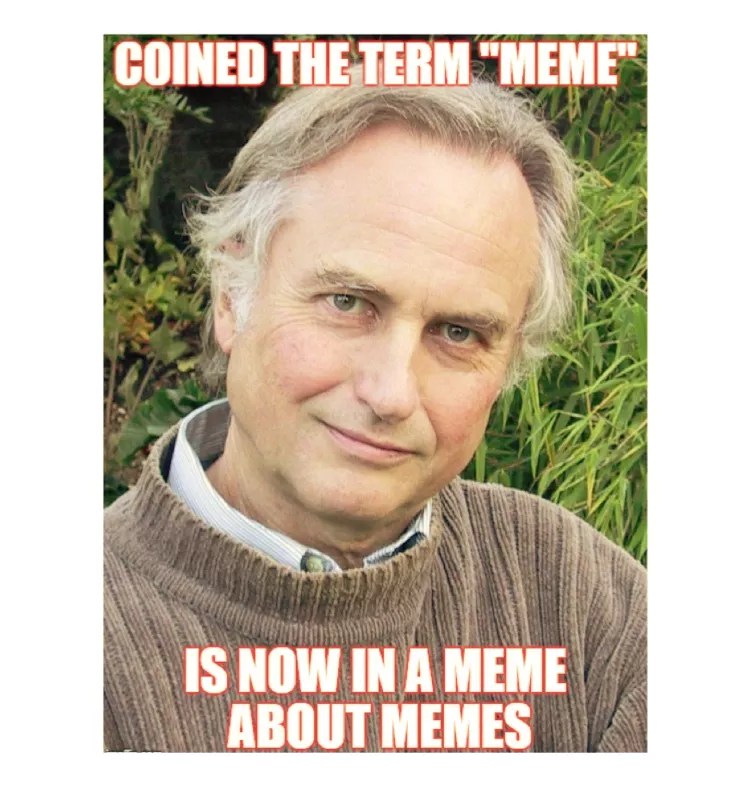
An anti-meme is the opposite of a meme, a term coined by evolutionary biologist Richard Dawkins to describe any idea that spreads through a culture.
An anti-meme resists spreading. Anti-memes are real, by the way. Dirty secrets, passwords, strings of random numbers. That includes the memory-thieving variety.
The smartphone should be an SCP if it isn’t already. Think how many phone numbers you forgot.
So much of this book has blown my mind. The degree to which memory determines what we think of as existence, the SCP from another universe changing everyone’s reality, the SCP that they have to “contain” OUTSIDE a hermetically sealed box.
There’s even a kind of afterlife that consists of self-aware memories. Craziness.
Most if not all of this book can be found on the SCP Foundation Wiki or in video format on YouTube, but I paid for the book, cuz I think this guy deserves it. Very imaginative stuff!
Maybe this will whet your appetite:
We Need to Talk About Fifty-five (SCP Orientation)
-
Everything is a metaphor (or is it a simile?)
I while back I talked about how “the map is not the territory,” about the fact that you can’t capture reality in words or in art.
It just occurred to me that it’s even deeper than that. Everything is a metaphor. Everything a human being can experience at any rate. Your reality consists of metaphors, not just in the words you think, but in what you see, smell, feel and taste.
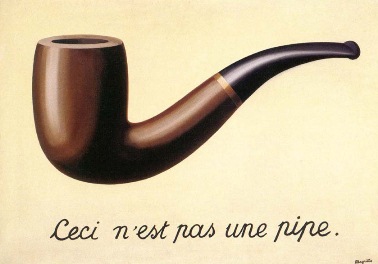
It is not a pipe. And the flower you saw in real life was only an approximation of a flower.
When you look at a flower, you don’t see a flower. You see a simile. Something that is very much like a flower. A simulation in other words. Actual reality is a lot bigger than a person could experience, so our minds give us approximations.
We experience an approximation of the world we actually live in. How accurate the approximation depends on more than your eyesight. It depends on what you think is important enough to notice, and what it would you think it means.
All of those filters depend on what you’ve been taught, by your parents, in school and through your culture. Cultures don’t always get it right. They change their minds. At one time the sun went arount the earth. Now we know it’s the other way around.
That’s why if you want to get as close as you can to actual reality, it’s good to question your assumptions.
-
Ida and regrets you can’t bury
Ida Official US Release Trailer (2014)
The past may be behind us, but the pain remains. Even if you try to ignore it. I recently watched Ida, from Paweł Pawlikowski, the same director who gave us the incredible tragic love story Cold War. Both movies explore very painful eras in Poland’s history.
One thing Ida made abundantly clear to me was that the violence and scapegoating during World War II left some very deep scars in Europe.
Ida is about a young woman in a convent who learns she is a Jew just as she is about to take her vows. No only is she a Jew but she was left with the nuns during a wave of anti-Semitism in the 40s that left her an orphan.
She meets her last living relative, as well as the people who took her to the convent and now live in her family’s home. She decides not to take them to court over the land, but in exchange, they have to tell what happened to her parents and brother. I won’t go into detail, but it was dark.
What must it be like for those who get caught up in it, once life returns to normal. How do they live with themselves? The people Ida finds living in her lost family’s home took part in terrible crimes, but they were not inhuman.
It got me thinking about fascism. What is it? Why does it keep coming back? Umberto Eco’s 14 Characteristics are a pretty good rule of thumb for diagnosing it, but what causes it?
To me it’s a cultural autoimmune disease, where the body attacks its own tissue. I think it’s triggered when the dominant culture loses faith in the utopian dreams of yesteryear.
If it takes hold, society cannibalizes itself, starting at the bottom and gobbling up every tribe until it’s eaten itself up.
It must be pretty exciting at first. You’re gonna help make heaven on earth and damn anybody who gets in the way. You get carried away and sacrifice your soul for the cause.
But at some point you have to return to “normal” life. In the heat of one of those what they call “historical moments,” people will commit acts they never dreamed of committing. Some can live with their memories just fine, but most humans aren’t naturally that mean. They have to be lured or goaded into it.
Diseases like fascism always burn out eventually – people have to do business and raise their kids – but they inflict a lot of pain not just on the scapegoats of a society but upon those who take part in it.
I like that Schwartzenegger doesn’t just write these guys off. He sees them as people who can change. Hopefully, before they ruin a bunch of lives including their own.
-
Escaping the ‘god of the house’
Dreams can tell you a lot about yourself. If you decipher them correctly.
In fact, I think the unconscious gives us some best guesses about the big questions from time to time. And some of its guesses are pretty good. Unfortunately it’s damn hard to figure out what it’s saying.
I don’t think guides or charts are any help either.
Some dream symbols are probably common enough. I always considered tornadoes to mean, “chaos ahead.” I looked it up on some dream interpretation website and it said something close to that.
But I’m a weirdo. I read a lot of weird shit. I think a lot of weird shit. I like science fiction and trippy movies. The trippier the better. So you never know what my brain is going to throw at me.
I had a bizarre one years ago that I think I understand now.
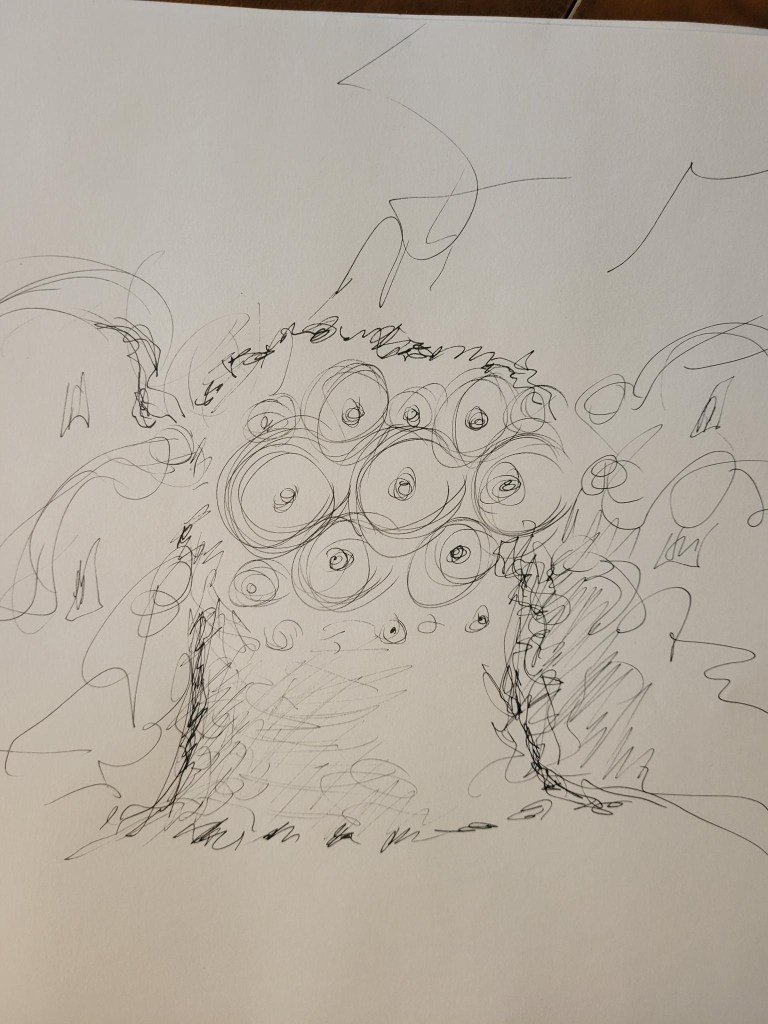
I was in the kitchen of a house that I wanted to leave. But in the living room was a creature I was told was “the god of the house.” It was around three feet tall, with a gray body shaped like the base of a sea anemone.
I think it may have been sitting on top of a table.
Around it was a blur of tentacles, whipping around the room faster than I could see.
I had to go past it to get to the front door. Its tentacles could touch every book, every piece of furniture in the house. And it could see my every move.
When I stared at the god of the house, its eyes proliferated. When I looked away, they diminished. I don’t know how many eyes it had. I just got the impression of “too many.”
Someone said, “It has no power outside. It is all-powerful in the house.”
I was afraid to run past this thing. Its tentacles might grab me if I tried to leave. In the dream I stayed in the kitchen, but in real life, I did leave, bit by bit.
I think the house was me, and the “god of the house” represented identity. You know, the “you” that you’re proud to show off, to yourself and others. I think it must have been one of those times in my life when I was becoming a different person.
If you’ve ever been through a big change, losing your religion, changing your worldview, you know how scary it can be. Can you leave that part of you behind? If you do, will you be anybody at all?
The “god of the house” must have been the part of me that didn’t want me to change. As long as I remained the same, it could control me. When I became somebody else, it could not.
-
Getting old is weird
Sometimes I have to check myself and go, “remember you’re an old man.” At 58, I’m old enough to be a grandpa, but sometimes I still forget.
In my head I’m still somewhere around my mid-30s, even thought I can’t back it up. I’ll be talking to someone I think of as a peer and suddenly it hits me: They think I’m old.
I realize I’ ve been talking for 10 minutes about things I thought everyone knew, only to realize, they weren’t even alive yet.
Sometimes you get the idea they’re just humoring you, like you did when your grandpa told his “back in my day” stories.
Other times you realize they’re taking your bullshit WAY too serious, looking up to you even. You think I’m a wise old man? I have no freaking idea what I’m doing!
It’s even funnier when young people act so amazed at the stuff I took for granted as a kid. It’s like hey, this guy is doing an archeology!
Sometimes it scares me when I realize my parents probably felt exactly like I do when they were raising me. “How the hell is this gonna work?”
-
Subscribe
Subscribed
Have a WordPress.com account? Log in now.


You must be logged in to post a comment.