I think Internet’s troubles began when the boss got online. At first you knew your boss barely knew how to get online. Wasting the boss’s time was kind of an ongoing joke for years.
In the mid-90s, only one computer at my newspaper was connected. That was the boss’s computer and he only used it when someone from the head office demanded.
He hated the Internet, said it was a waste of time and he didn’t want to hear about it. You could get fired if you got caught using it. We had a newspaper to get out.
When smartphones came along and it became apparent that we were having too much fun at the boss’s expense, the boss’s boss, or the boss’s boss’s boss, thought “Hmm. Those peons aren’t just employees wasting company time. They’re a piggy bank we haven’t cracked yet. Maybe we can make back some of the money we have to pay them?”
Now every time I get online, I get a deluge of people trying to sell me something. Everything that used to be free, they’re telling me, “upgrade to premium! It’s just a few dollars a month!”
Now the Internet is a money-making machine and we’re both the product and the customer… Maybe the Internet is the boss and the company store all rolled into one?
Vlad Vexler on why it’s so difficult for someone to let go of an identity they’ve created for themselves even when it no longer makes sense – it feels like death.
Why do people become so extreme and resistent to change? Why do they not say, “enough!” when their leaders and role models go rogue? In a word: identity.
An identity is very hard to let go. I’ve been through that process more than once, and each time it was as if somebody died. Because they kind of did. Or more accurately, they melted into the rest of me.
But it was traumatic and I grieved. Suddenly I didn’t know who I was anymore or who my friends were. Ultimately, those changes made me a better, more whole person, but it’s a scary prospect. Too scary for many.
As we became more isolated in the real world, people began looking to the internet for a sense of identity and belonging. Social media algorithms naturally promote the most extreme positions, because they get the most engagement.
If you’ve attached your sense of self to a group of people who become convinced to follow an extreme ideology, you’re likely to go along.
I can go on an on about how the West seems to have lost its ability to think critically, but Vlad nails it so succinctly in the above video. In case you think I’m talking about the MAGA phenomenon, I am, sort of. But it’s not just about Trump. It’s about everyone.
I’ve seen this dynamic affect the left wing as well. Witness the drama and infighting over the last few years among progressive YouTube creators. I respect a lot of them for their ideas, but I’ve learned not to let them or their communities decide who I am. That’s not up to them.
I can’t let myself get pinned down by groups that become dogmatic or that violate my principles, because then I can’t grow. There were times in my life when I thought I reached my final form, but that always turned out to be an illusion. I’m 58 years old, but I have not stopped growing, and I don’t intend to.
Charles Platt’s 1979 interview with Phillip K. Dick
Phillip K. Dick is a fascinating figure for me. Terribly unstable yet visionary. He said several profound things during the above interview by Charles Platt. I was especially intrigued by the part about how someone with a powerful psyche can invade the psyches of others.
He admits to being easily persuadable. While undergoing “attack therapy” he found himself agreeing with statements about himself he knew to be false. Exactly the same mechanism used to extract false confessions and create cults and totalitarianism.
It gave me an image: Comic book thought bubbles, floating around invisibly, taking form in the actions of people.
It’s interesting to think about political and cultural changes not as people & countries making decisions, but more like clouds of psychic energy, traveling through the airwaves, through the Internet, through advertising and political campaigns.
Battling it out and making alliances. Merging and splitting apart. Some more powerful than others. Many small ones, gradually absorbed into larger ones.
I’m not a New Ager. I don’t believe in “psychic energy” per se. It’s mostly a metaphor, but a hell of a strong one.
You know how everyone gets to define God however they want? Here’s a definition I’ve been toying with: Boss God of the Gaps.
That’s an amusing thought, because it is kind of a cop out to just say “God” whenever you don’t understand something. So many “unexplainable” things have already been explained by science that it seems pointless.
But what if it’s true, just not the way science deniers think? What if you take it all the way? Maybe God is the last unknowable thing.
Maybe it’s way more important than all those things we can discover, as mind-blowing as some of them are. Perhaps it’s reality itself, the glue that holds everything together.
Would that imply any kind of consciousness? Who knows? It’s unknowable, just like consciousness.
I have a problem with pronouns. Sometimes I say “them” when I mean “us” or “us” when I mean “them.” I can’t tell these days. But the hardest ones of all are “him” and “I.”
That thing I did 30 years ago, was it me or him? It sure feels like it was me, but what about the things that I would never do? That had to be somebody else…
Change your singular pronouns and you also change your plural ones. It gets really confusing.
Few people get to see your true face. Sometimes you don’t even see it yourself. The one you show the world is usually a mask, a persona.
You kinda know it’s not really you, but it’s your “Sunday go to meeting” face, your “go along to get along” face. You take it off when you get home.
(Interesting how not wearing a mask can also be a mask.)
Identity is trickier. That’s the mask you show yourself. It might look like a “go along to get along” face, but you’ve been getting along so well, it doesn’t feel so much like a mask. Until it does.
But as you live and learn, something changes.
One day you the mask doesn’t feel like an “I” anymore. It becomes “him” (or her or they or it, but for me it was “him”).
The people you considered “us” tell you it’s beautiful, but you no longer love it and it’s heavy and it chafes and you want to take it off, but you know they won’t let you.
Gradually “us” turns into “them.” Which is rough, because in your dreams, you’re always “me” and the people you love are always “us.”
All day, every day, we are judged for the masks we wear and judged if we don’t wear mask – especially then. Mask salesmen abound, telling us “this is the last one you’ll ever need,” if you can afford it.
Jeff Noon, the most psychedelic sci fi writer since Rudy Rucker, wrote an interesting novel called Mappalujo about a mysterious land where masks play a major role. I didn’t understand the symbolism when I read it the first time, but I do now.
I’ve worn many masks over the years. I identified so strongly with some of them, I refused to believe that’s what they were, even as they began slipping off. But sooner or later I had to admit it. This is not who I am.
When enough “I’s” turned out to be “hims,” the message started to sink in: They’re all masks.
Though it still hurts like hell when you take them off. Especially when you have no idea what’s underneath, and people you considered “us” suddenly become “them” to you. That’s the pronoun problem I wish I could solve, because I like my people like I like my music – eclectic and all over the world.
I swear I’m a music lover, not a music snob. All snobs do is turn people off. Sure it feels lonesome being the only one who knows or likes a band and having no one to discuss it with, but taste is subjective. If you wanna listen to K-pop, listen to K-pop.
Mr. Bungle – Air Conditioned Nightmare
Unfortunately there’s a little asshole in my brain I call Mr. Hipster. He’s one of the Jungian shadows I try to ignore. Every now and then he comes out like Mr. Hyde and sneers at somebody for liking something “objectively bad.”
“You have a right to your wrong opinion,” he says to my wife, who just rolls her eyes. (She doesn’t like The Beatles, which doesn’t compute for Mr. Hipster.)
He’s usually right, but he’s damn annoying. He made dating so difficult.
Mr. Bungle – California, full album. Listen to it however.
I was listening to Mr. Bungle a little bit ago and wanted to make sure my friend knew how awesome their album California was in case I forgot to mention it, and nag him until he listened to it. I do that to people (in my defense, he does it too).
That article killed me. For one thing, the feud was way more ridiculous than I remembered.
For another, Greg Gutfeld at Fox going off on the Chili Peppers because he was a rabid Faith No More fan, was just too much.
If you’re gonna have a strong opinion about something, better it be about an ancient feud between musicians.
Mr. Bungle cover Under the Bridge while pretending to be the Red Hot Chili Peppers – to mock them. Note how many comments sound just like Gutfeld and Mr. Hipster.
“Nothing personal,” says Mr. Hipster. “But how anyone could listen to Mr. Bungle’s California album and still give a shit about the Red Hot Chili Peppers is a legitimate question.” That’s how he talks.
Oh, and he would also like to add, “Flea is still awesome.”
If I’m serious, Mr. Bungle is an acquired taste. If you want to acquire it, start with California.
Their albums Disco Volante and the self-titled debut were kinda rough to listen to at first, though now I can’t figure out why I had a problem with them.
There are a couple of fan-made Mr. Bungle videos I wanted to include, for “Pink Cigarette” and “Retrovertigo,” but they’re really violent. They’re also really creative and kind of funny in a dark way. I think the guy who made them has Hollywood Horror movie potential.
Secret Chiefs 3 – Exodus
Incidentally, I may be MORE of a fan of Mr. Bungle guitarist Trey Spruance’, after discovering’s band Secret Chiefs 3. It’s as unique as Mr. Bungle.
They rock with a Sufi/Bollywood vibe, but they’ll throw in any style including death metal. They’ve made some incredible albums and they’ll come up again on this blog. Mr. Hipster insists.
Definitely going to check this podcast out. I have a ton of respect for this guy. He’s actually a damn great bass player and a real intellectual.
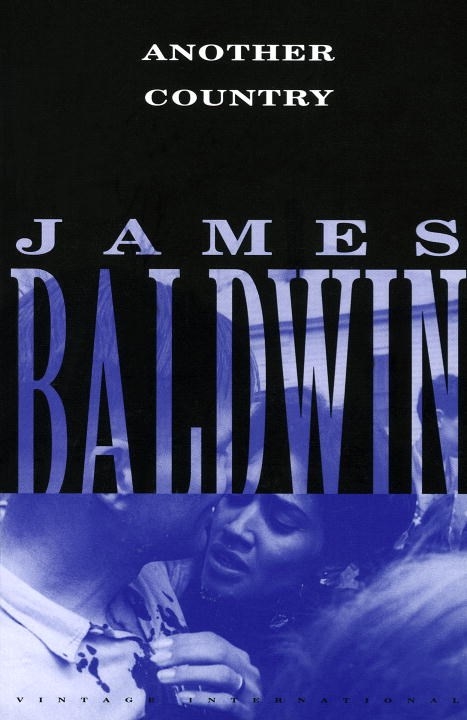
James Baldwin changed my life. Reading “Another Country” taught me more about America than anything I learned in college. If they taught this book in high school civics classes, we would iron this country out in no time.
And I got in on a whim. I thought, I am such a voracious reader why haven’t I read any black literature? I couldn’t think of a reason, I just hadn’t gotten around to it.
Mainly because I was a sci fi nerd. I loved literature, but I was more likely to read a Peter Hamilton space opera if given a chance. But I wanted to know what I was missing.
I had heard Baldwin’s name thrown around a lot. Apparently respected for speaking out in the ’60s.
The book I started with was Another Country. Since then, I’ve come to depend on him for perspective on race in America.
Another Country taught me how the systems of power really work in America. The system of white supremacy that is invisible to us white people. This is true in both our liberal and conservative classes.
As sharp as his critiques are, I love Baldwin because he actually gave a shit about us white folks, when he had plenty of reason not to.
Some of the lessons I took from Another Country:
A white woman can always use race to get her way in an argument. You know the “Karen” thing that recently switched from “I’m calling the manager” to, “Do you have your papers?” Excuse me, “Do you live in this neighborhood?”
A woman, including a black woman, can try to use sex to obtain power over a man, but if that man is white and rich, he’s usually going to win in the end.
That honesty with yourself may be painful, but it’s still the best policy. Things tend to go better if you’re honest with yourself and others.
When I was an editor at small town papers, you could always get a feature story in a pinch by asking for a tour of a local factory. I could fill a lot of column inches in a hurry. I knew they would hook me up.
I didn’t really mind, to be honest. I got to geek out. Factories have a lot of science-y stuff in them. You just asked how everything worked, took a lot of notes and wrote up your story. Easy peasy.
I learned what the Venturi effect was in one of those, a factory that made gizmos for moving material around in factories. They also made a device that fired confetti at football games.
At another factory, I learned that a wedge of Styrofoam inside a box of wine will help you get every drop. I had a curious mind and it was all very interesting.
And these factories hired a lot of people in town. It felt like a public service. Anything to help your local companies succeed, and not un-coincidentally – advertise. I still believed in Trickle Down theory back then and I thought: company does good, local economy does good.
The towns I worked in tended to be at or just above broke. There were honest to God poor people in my coverage area and there’s no poor like country poor – no services, no nothing.
I developed a really Chamber of Commerce-y attitude. If it brought in jobs, I was for it. I didn’t know what else to dol I saw some of the pressures these towns were under. If a company closed up shop, people had to work in the city and commute. They spent their money elsewhere and everyone lost.
Amon Tobin – Esther’s
If a town depends on a company – especially if it advertises – the newspaper will be a friend of that company.
One of my favorites was a tour of a brick factory. It was a long building with lots of coal burning inside long kilns. The ovens were black on the outside smelled like a fresh-baked bread. The men at the plant carried on around us, working very hard. Many were immigrants, all of them were poor.
I saw them working the assembly lines, moving huge loads of around, sweat pouring off, and I respected them. I couldn’t lift a fraction of that weight, even once. They had to do it all day. It was obviously a hard life, but what other work was there?
After I saw the whole process of clay to brick, the guys in management pointed at the “new” factory in the field next door. Everything would be automated. I wondered how those hard-working men felt, seeing the new factory spring up next door at the place that paid their rent.
I couldn’t help but think that company owed those men something. Still the company also had a side. They were automating because their competitors were automating. They’re caught up in the machine like everybody else.
I did what I always did, filled up all the white space, got the paper out, started working on the next one. But that brick plant gave me an eerie feeling. It wasn’t going to stop with factories. I was online constantly, but I knew the internet was about to eat my lunch. Technology was coming for us.
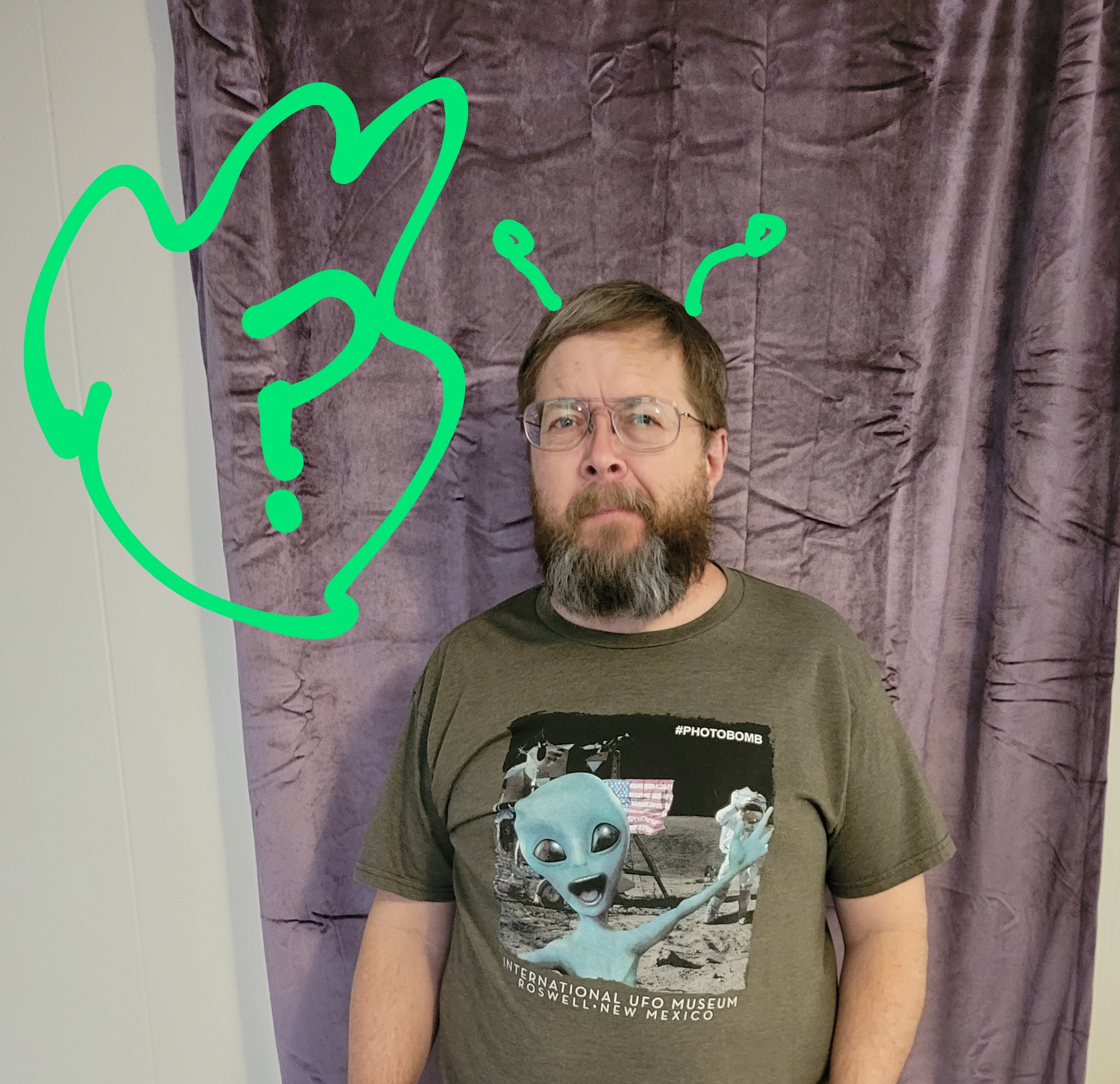
I am an alien. I don’t know how I got here. I arrived when a mousetrap snapped my 2-year-old finger.
Humans laughed at me. This made me very angry, but that’s when I became a human.
I don’t remember what I was before. But I knew my mission: learn how to be human.
Who the hell is this weirdo?
Sometimes I think I understand, I know what being human is, then I realize I don’t get it at all. Like I said, I’m an alien.
Joe Satriani – Surfing with the Alien
I report my findings often. I do it by thinking and words, as I did not arrive with a better method.
Many of my reports have been inaccurate and inconclusive, but I have found many clues. I update with corrections when I can.
Patti Smith – Birdland
This will be an open letter. Please cc the HR department.
To whom it may concern,
Humans have a practice called Yelling At Clouds. They yell by yelling and they yell by writing. They do it to complain about their mission. I believe they have the same mission as mine, but I could be wrong.
When they believe others are impeding their mission, they Yell at Clouds. Like me, they must not have a better way of contacting mission headquarters.
I am now Yelling at Clouds because I have struggled to complete the mission but have not received necessary support. Do I have to do all this by myself?
My complaints are as follows:
Impossible assignment: Learning to be human is exhausting and these units don’t function long enough to complete the mission!
No instructions: Humans give very different instructions when I ask how to be a human. I hope I’ve chosen the right ones, but their instructions keep changing! Who is handing out these assignments?!
No feedback: The mousetrap appears to have been a message from the team, but since then I’ve received nothing. My queries are never answered.
Your inbox must be overflowing with complaints, but I would like a response. I am committed to the mission.
If there’s anything science fiction and fantasy have taught me it’s that magic forces are dangerous. Think of what happened in The Sandman when the wrong guy got hold of that ruby.
Last night as I was drifting off, I had the weirdest vision. I was in a dark cavern with a ceiling so high and broad it looked like a sky. A dark red membrane of a sky. Above that ceiling, I knew, was the “real” world.
Down from that ceiling flew a murmuration of blackbirds – or what looked like blackbirds, patterns shifting and disappearing into the dark. “This is where the ideas live before we catch them,” I thought sleepily.
Bjork – All the Modern Things
Where DO the ideas live before they take shape? Do we fill that realm with blackbirds or do we catch them and drag them into this one?
Clarke’s Law is still true in the modern age. It takes mines and factories and communication networks, but ideas involving technology do kind of seem like magic.
If you have the right math, science and materials, you can pluck computers, bombs, particle accelerators out of thin air. If you don’t look at the pollution, the illusion holds.
When a powerful thought comes through that membrane, we always seem to turn it into a way to kill lots of people. The conjurers never seem to worry. “Look what it can do! Let’s give it to the world. Whee!”
Michael Crichton used to annoy me. “There are some things man was never meant to know. Dun dun dunnnnn” seemed to be the theme of all his books. That was no fun. I wanted as many dinosaurs as I could get.
But I’ve been coming around to his point of view. People who haven’t read Destination Void have unleashed technology that comes disturbingly close to passing the Turing Test. I was afraid of nuclear war, but I’m more afraid of this. At least they didn’t put a nuke in everybody’s pocket.
The only thing that’s kept us from blowing up the world so far has been threatening to blow up the world. I don’t know how long that’s gonna hold.
Why do the war monkeys known as humans have to turn every important idea into a way to kill one another? I wish we could put more resources into answering that question.


 Late Boomer's Den
You must be logged in to post a comment.