Just watched another zombie movie last night, Zombieland. Not an extremely serious movie as most of them are not.
I’ve seen some genuinely good zombie stories and shows, played for camp or otherwise – Last of Us, 28 Days Later, Sean of the Dead, Return of the Living Dead.
But mostly Zombie movies were just silly fun for me. Night of the Living Dead cracked me up, not sure if intentionally. “They’re coming for you Barbara!”
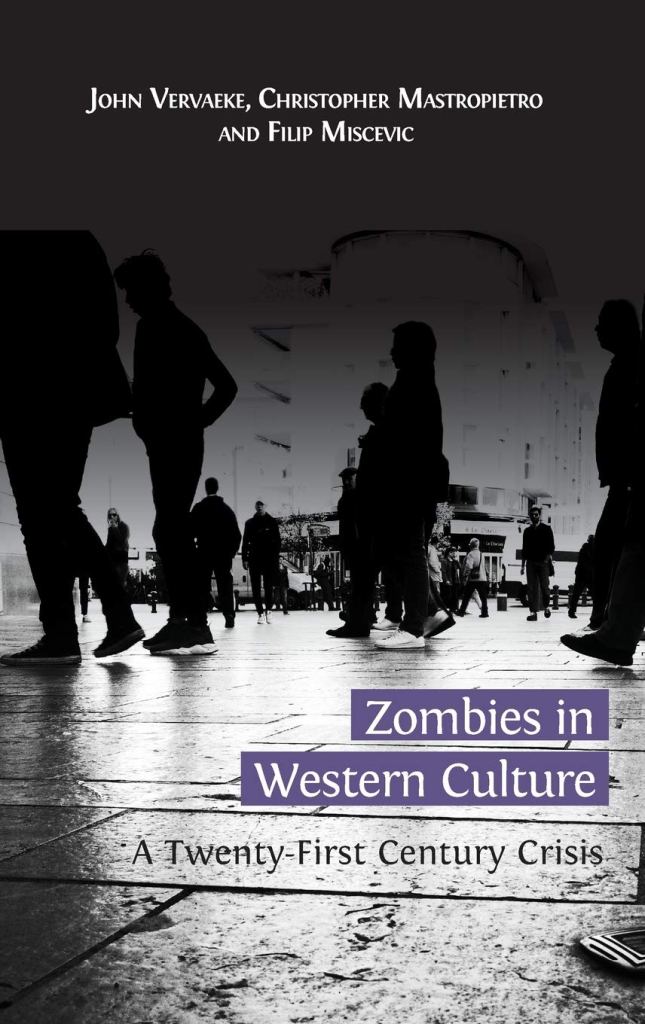
Philosopher and cognitive scientist John Vervaeke has taught me to look at zombies in a more serious light. The fact that they’ve been so prevalent tells us that Western culture is undergoing a meaning crisis.
Zombies in Western Culture A Twenty-First Century Crisis, by John Vervaeke, Christopher Mastropietro and Filip Miscevic laid out the case pretty well.
The zombie is a mythical creature that represents meaninglessness. They don’t make sense, but it doesn’t matter you have to escape them. They shouldn’t exist and yet they do. They’re mindless. The wander about without purpose or agency.
And what do zombies eat? Brains. Interesting symbology. They have no minds of their own, but consume and destroy the minds of others. Pointless. Like trying to learn by eating a book.
They’re also a perversion of the Resurrection, which seems to signal a loss of belief that Christianity can explain the world. They rise from the grave, but they’re still dead. It’s an apocalypse where the world ends, but nothing is revealed.
I think it’s a good diagnosis for what’s wrong with the world. So many incompatible world views, arguments over definitions, unable to agree on what’s right or wrong, good or bad.
It might be a prescription for how to fix it. I’ve discovered several people on YouTube who seem to be working on the problem, reverse engineering Western Culture to find useful wisdom paths, from the likes of Socrates that may have been lost.
They’ve been having discussions they call Dialectic into Dialogos to tease out deeper levels of truth from one another. They’re fascinating to watch. Kind of like something we all used to do called have conversations, but collaborative.
This is an example of how Dialectic Into Dialogos works. I’m not sure what will come out of what they do, but I respect them for trying. At the very least, I find their discussions enlightening and inspiring.
 Late Boomer's Den
You must be logged in to post a comment.