Is there any real difference between a civilization and an empire? I hated that question when I first thought of it. I grew up thinking, “civilization good, empire bad.”
If you’re “civilized,” you’re nice. You’re polite. You don’t behave like a barbarian. If you’re an “imperialist,” you’re dominating, taking more than your fair share. Who could be more evil than Caligula, or the Emperor Palpatine?
Civilization has to be a good thing, doesn’t it? You don’t let yourself think otherwise if you live in one, do you? After all, my life depends on it. I take prescription medicines. I’ve had life-saving surgery. Take away all that stuff, I won’t last long.
But when you boil it down, you’re still talking about one thing: A vain attempt to defeat entropy. To grow forever and last forever. I didn’t want to believe that when I first thought of it.
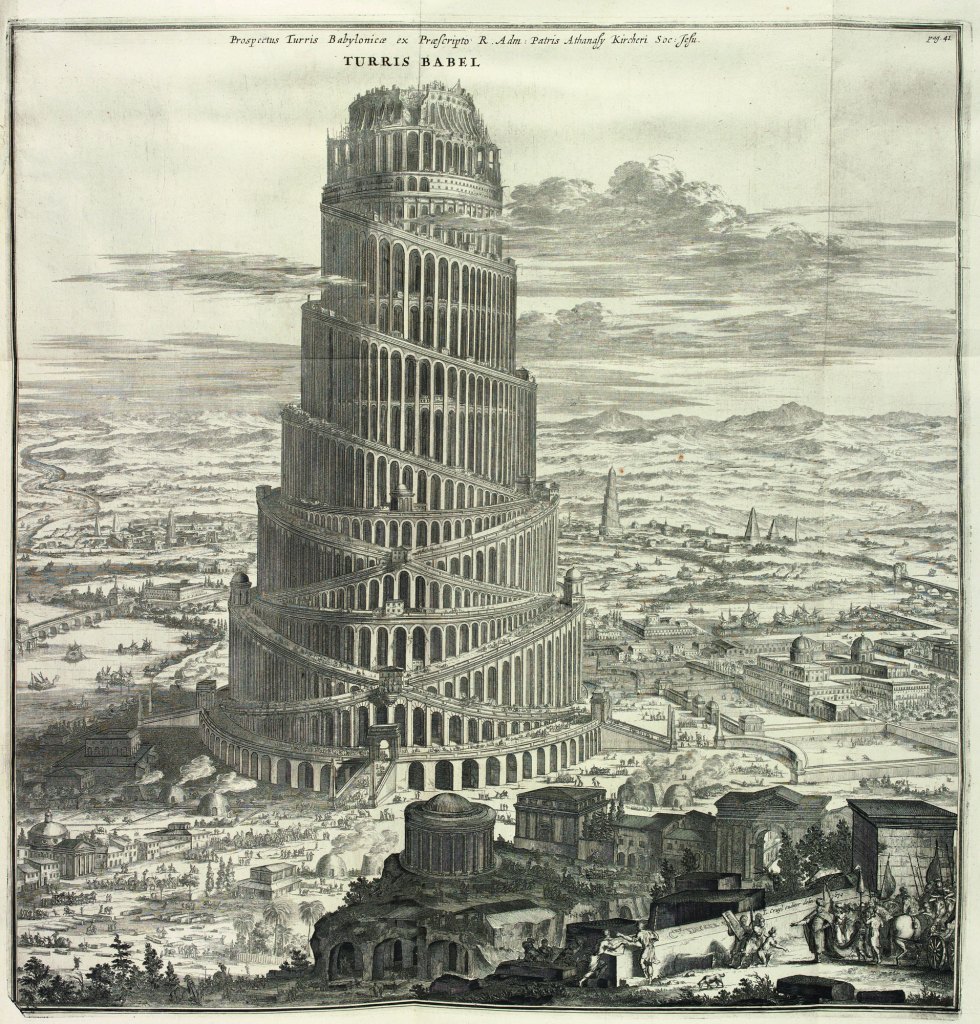
Doesn’t matter what I think though. All towers fall. All systems fail. Build it too high, it will fail spectacularly.
That’s the true meaning of the Tower of Babel myth. It’s not where all the languages of the world originated. It’s a warning about hubris and entropy. Nobody could talk to each other, so the building project stopped.
Kinda like how it is online right now isn’t it? Ever notice how we seem to talk right past each other? How we can’t agree on basic definitions? The arguments I see might be mostly in English, but as citizens of a civilization we’re supposed to be building together, it kinda seems like we’re all speaking different languages doesn’t it?
So when my Unitarian church said nobody was lined up to do a sermon this week, I raised my hand and went “me me me me!” I could talk about Socrates!
Only to realize I’d bitten off more than I could chew. I’ve only read a few of Plato’s Dialogues and watched a handful of videos. I had to cram and write at the same time.
It went OK. And I learned a few things.
I was surprised to learn how much of a role the Oracle of Delphi and the temple of Apollo played in his life. For another, just how rooted his rationalism was in his religious faith.
Socrates’ guiding principles were right there on that temple at Delphi. One column had inscriptions that read, “know thyself,” “nothing in excess” and “surety brings ruin.”
Socrates was shocked when he learned the Oracle had told his friend “No one is wiser than Socrates.” Seemingly a clear statement, when they were typically riddles.
Instead of gloating, Socrates’ treated it as yet another riddle to be solved. The meaning appeared obvious, and yet that warning: surety brings ruin.
Socrates was knew he wasn’t wise. There were so many questions he couldn’t answer, but he believed Apollo could never lie. So he began searching for anyone wiser than himself to prove he wasn’t wise, so he could go to the Oracle and ask what Apollo meant.
But time and time again, people who claimed or were thought to be wise, revealed under Socrates’ questioning that they had no idea what they were talking about. Which we all know landed Socrates in a lot of trouble after he pricked too many tender egos.
Another thing I didn’t realize was how many chances Socrates had to get out of it. He could have chosen exile and could have escaped. Instead he drank hemlock to show his dedication to Apollo. He cared about his mission that much.
Socrates’ method outlived him and changed the world. To me that shows that it doesn’t really matter if a god is real in a material sense. If enough people think it exists, they’ll make very discernable changes to the material world on its behalf. So it might as well exist.
Just watched another zombie movie last night, Zombieland. Not an extremely serious movie as most of them are not.
I’ve seen some genuinely good zombie stories and shows, played for camp or otherwise – Last of Us, 28 Days Later, Sean of the Dead, Return of the Living Dead.
But mostly Zombie movies were just silly fun for me. Night of the Living Dead cracked me up, not sure if intentionally. “They’re coming for you Barbara!”
Philosopher and cognitive scientist John Vervaeke has taught me to look at zombies in a more serious light. The fact that they’ve been so prevalent tells us that Western culture is undergoing a meaning crisis.
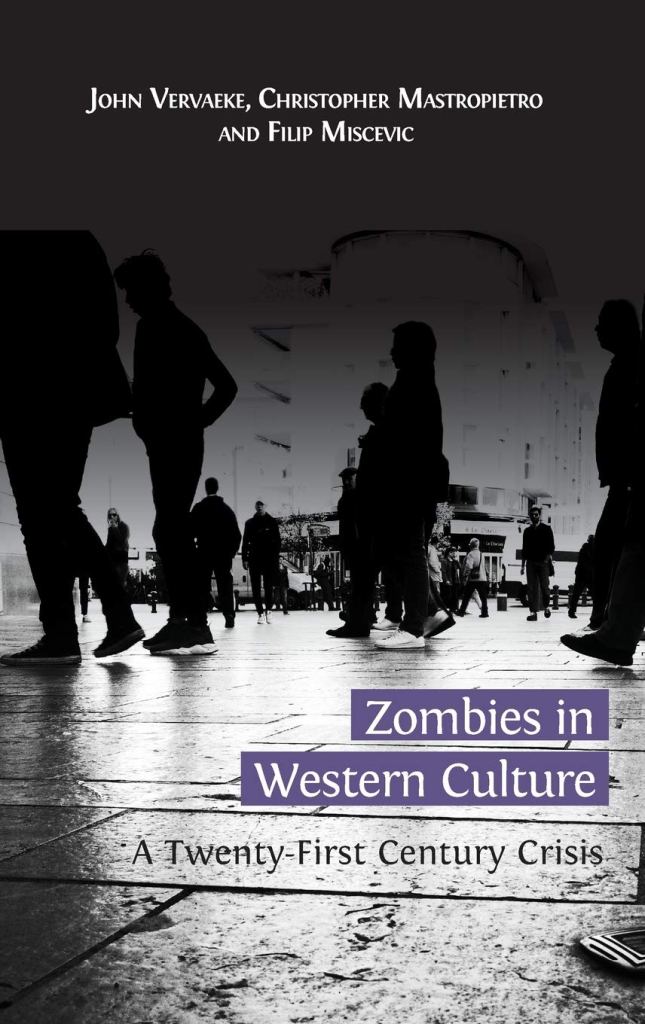
Zombies in Western Culture A Twenty-First Century Crisis, by John Vervaeke, Christopher Mastropietro and Filip Miscevic laid out the case pretty well.
The zombie is a mythical creature that represents meaninglessness. They don’t make sense, but it doesn’t matter you have to escape them. They shouldn’t exist and yet they do. They’re mindless. The wander about without purpose or agency.
And what do zombies eat? Brains. Interesting symbology. They have no minds of their own, but consume and destroy the minds of others. Pointless. Like trying to learn by eating a book.
They’re also a perversion of the Resurrection, which seems to signal a loss of belief that Christianity can explain the world. They rise from the grave, but they’re still dead. It’s an apocalypse where the world ends, but nothing is revealed.
I think it’s a good diagnosis for what’s wrong with the world. So many incompatible world views, arguments over definitions, unable to agree on what’s right or wrong, good or bad.
It might be a prescription for how to fix it. I’ve discovered several people on YouTube who seem to be working on the problem, reverse engineering Western Culture to find useful wisdom paths, from the likes of Socrates that may have been lost.
They’ve been having discussions they call Dialectic into Dialogos to tease out deeper levels of truth from one another. They’re fascinating to watch. Kind of like something we all used to do called have conversations, but collaborative.
This is an example of how Dialectic Into Dialogos works. I’m not sure what will come out of what they do, but I respect them for trying. At the very least, I find their discussions enlightening and inspiring.
Science fiction helped keep me sane when as a kid. Whatever troubles might be going on in my life, I could dive into a book and be halfway across the galaxy.
But science fiction is more than just an escape, or it can be. The wild adventures and mind-bending scenarios can actually make you better.
If you let them.
I really enjoyed the above discussion by John Vervaeke and Damien Walters about ways science fiction can be a framework to help us find meaning.
I had to chuckle at the last part, starting around 1:13. They could have been talking about 20-year-old me. That isn’t me anymore. But I remember the mindset.
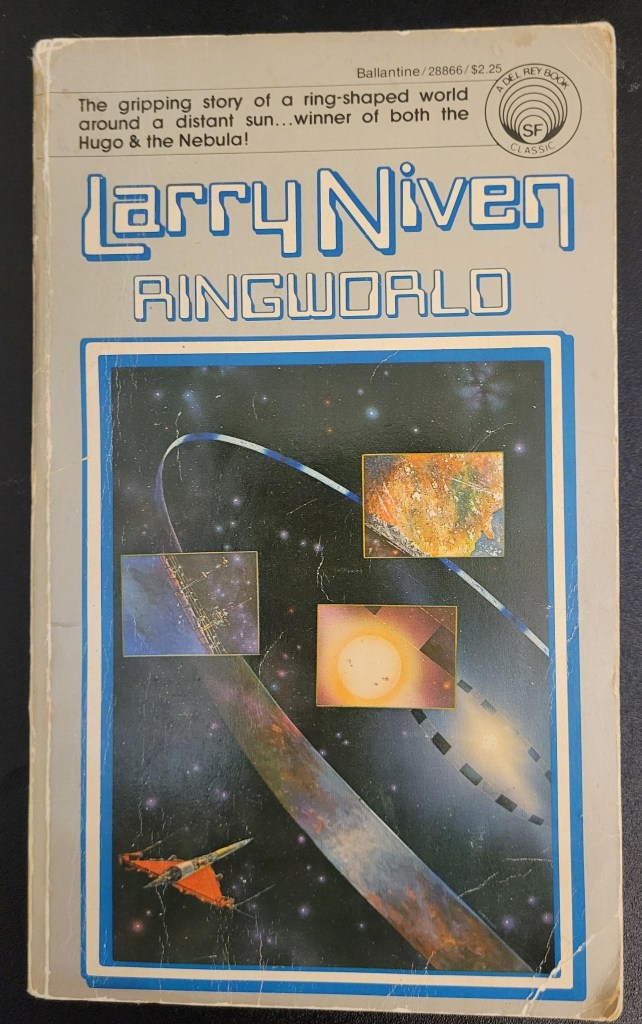
Ringworld – the quintessential “hard SF” novel.
For a long time, “hard science fiction” was almost all I read. (Think Andy Weir’s The Martian, or Jurassic Park.)
Back then I thought all fantasy other than Lord of the Rings was a waste of time. That shelf space could be better filled by the likes of Larry Niven and Poul Anderson, I figured.
Obvious science mistakes pissed me off. Han Solo “made the Kessel Run in less than 12 parsecs”? Please. Parsecs are a distance measurement.
Which gets to the heart of my snobbery about hard SF.
I wanted the science to WORK. I wanted to believe the adventures I read about were at least possible.
Walters and Vervaeke get into the Hugo Awards controversy. The Sad Puppies, protectors of the old guard, battled it out with writers and fans who wanted to expand the definition of science fiction.
There was a time when I would’ve rooted for the Sad Puppies. Walters was close to the mark when he speculated that the fight is really about personal fantasies.
I had a personal fantasy that I was almost unconscious of. Science fiction helped me deal with existential angst.
I might not get to be the adventurer in that somewhat scientifically accurate sci fi novel, but one day someone would.
A lot of people are mad at John C. Wright over his role in the Hugo Awards fight, but his Golden Ocumene trilogy is pretty damn good. I’ve read it and I got my mother to read it.
It bothered me to know the sun would swallow the earth one day. I coudn’t handle the idea of human extinction, even billions of years in the future. I thought, why not colonize the stars and outlive the sun?
Good Christian or not, I kept that possibility in my back pocket just in case. I wanted to go to heaven. But failing that, I thought maybe science would give us a kind of immortality.
The reason I never got laid in college.
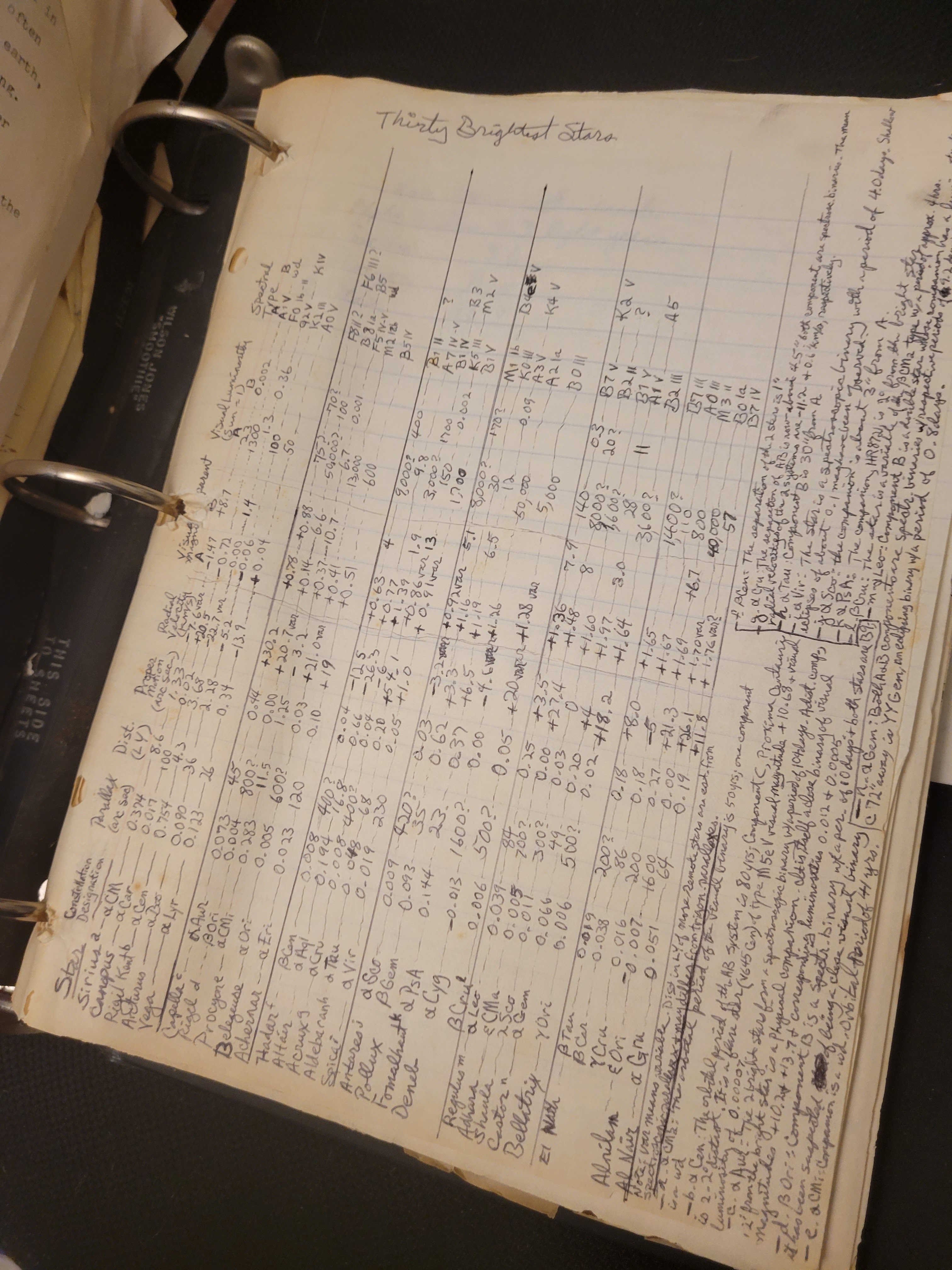
A few stars seemed to be within reach. When I took Astronomy in college, I made a little chart of some of the likely candidates. Anti-matter might not take us as far as it took the Enterprise, but 3 or 4 light years ought to be doable. Right?
And once we had a couple of nearby stars under our belts, who knew what we might accomplish. I still have to scratch that itch sometimes. Movies and shows that do that for me are far too few.
Movies like Ex Machina, Interstellar and series like The Last of Us and Westworld kind of do it for me. I also enjoy watching videos by futurist Isaac Arthur, who explores those massive engineering feats that might be possible if we put resources and effort into them.
Futurist Isaac Arthur digs into one of my favorite concepts: the space elevator, something I think humanity could, and should pull off. If there’s one thing I haven’t changed my mind about, it’s that: we must continue to fund space technology.
When it comes to science fiction novels, I’m a lot less interested in the scientific rigor than I used to be, especially now that I understand how hard it is to separate perception from reality.
Phillip K. Dick is more my speed these days when it comes to sci fi. I figure if we can’t figure out the human mind and tame our irrational behavior, there isn’t much chance of accomplishing those grand projects anyway.
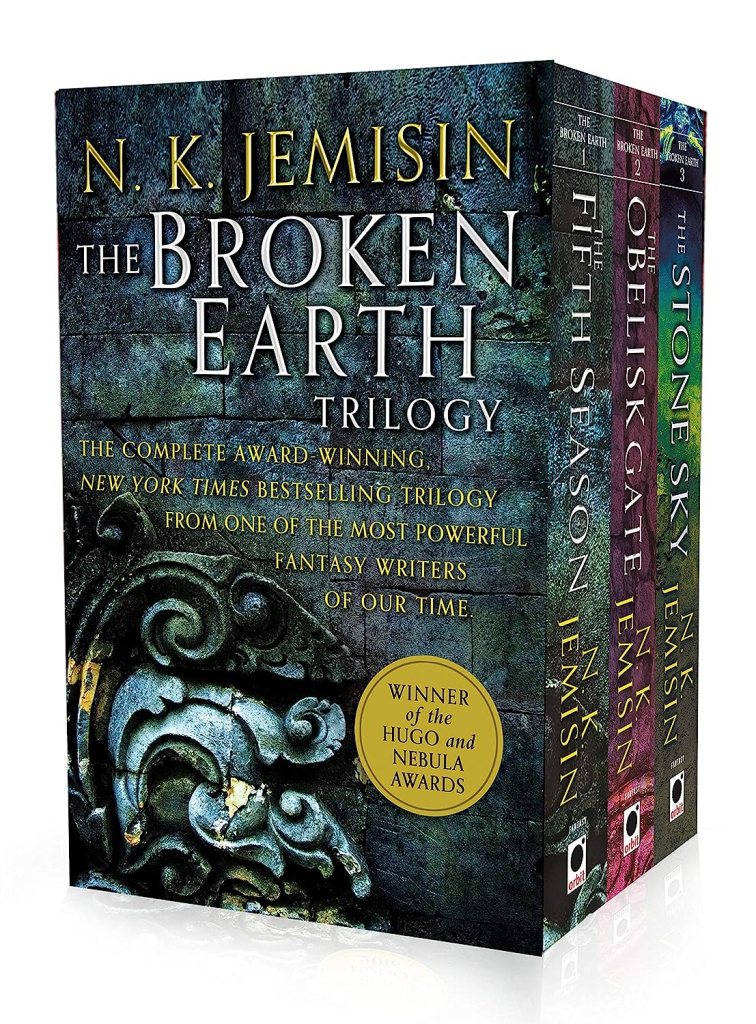
I’m no longer particular about how I define science fiction. I really enjoyed N.K Jemisen’s Hugo Award-winning Broken Earth Trilogy, which contained a lot of fantasy elements. (The world-building was incredible.)
New Weird also does for me what science fiction used to do, with elements of science fiction, fantasy and horror.
Annihilation, from Jeff Vandermeer’s Southern Reach trilogy is a good example. Perdido Street Station by China Mieville is another. They seem rather appropriate for the times we’re in. How to deal with the world when it makes no sense…


 Late Boomer's Den
You must be logged in to post a comment.