Interesting this just popped up in my YouTube feed considering what I just posted. Interesting discussion on the nature of the hyperobject, as conceived by philosopher Timothy Morton.
Tag: #John Vervaeke
-
Just watched another zombie movie last night, Zombieland. Not an extremely serious movie as most of them are not.
I’ve seen some genuinely good zombie stories and shows, played for camp or otherwise – Last of Us, 28 Days Later, Sean of the Dead, Return of the Living Dead.
But mostly Zombie movies were just silly fun for me. Night of the Living Dead cracked me up, not sure if intentionally. “They’re coming for you Barbara!”
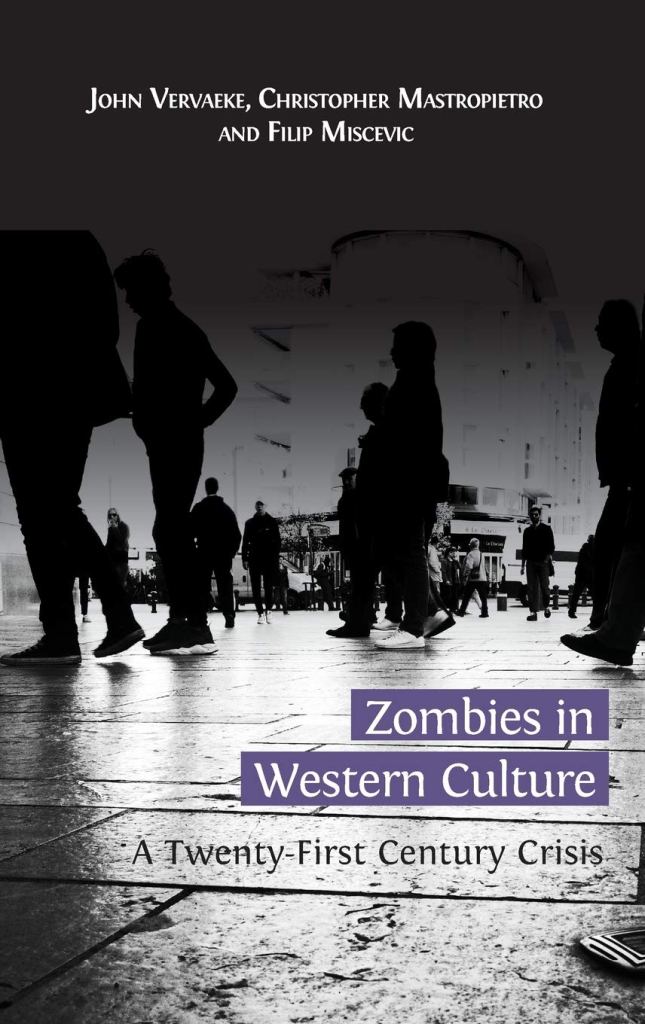
Philosopher and cognitive scientist John Vervaeke has taught me to look at zombies in a more serious light. The fact that they’ve been so prevalent tells us that Western culture is undergoing a meaning crisis.
Zombies in Western Culture A Twenty-First Century Crisis, by John Vervaeke, Christopher Mastropietro and Filip Miscevic laid out the case pretty well.
The zombie is a mythical creature that represents meaninglessness. They don’t make sense, but it doesn’t matter you have to escape them. They shouldn’t exist and yet they do. They’re mindless. The wander about without purpose or agency.
And what do zombies eat? Brains. Interesting symbology. They have no minds of their own, but consume and destroy the minds of others. Pointless. Like trying to learn by eating a book.
They’re also a perversion of the Resurrection, which seems to signal a loss of belief that Christianity can explain the world. They rise from the grave, but they’re still dead. It’s an apocalypse where the world ends, but nothing is revealed.
I think it’s a good diagnosis for what’s wrong with the world. So many incompatible world views, arguments over definitions, unable to agree on what’s right or wrong, good or bad.
It might be a prescription for how to fix it. I’ve discovered several people on YouTube who seem to be working on the problem, reverse engineering Western Culture to find useful wisdom paths, from the likes of Socrates that may have been lost.
They’ve been having discussions they call Dialectic into Dialogos to tease out deeper levels of truth from one another. They’re fascinating to watch. Kind of like something we all used to do called have conversations, but collaborative.
This is an example of how Dialectic Into Dialogos works. I’m not sure what will come out of what they do, but I respect them for trying. At the very least, I find their discussions enlightening and inspiring.
-
Julian Cope – Saint Julian
I’ve been thinking back on the “edgy online atheism” phase I went through in the early ’00s and why I quit doing it. Not that I became religious again, but spiritual isn’t a dirty word for me anymore.
In fact, some form of spirituality could be very healthy.
The angry phase lasted for a few years after I completely lost my religion. I had already abandoned my cognitively dissonant fundamentalism and was hanging onto the idea that God had a plan and I was in it.
Then life circumstances walloped me upside the head and made that impossible. Sometimes a tragedy is just a tragedy and no “mysterious ways” argument can ever justify it. Disasters happen because the world and the universe have no morals.
So I went hard on the atheism. I spent way too much time virtue signaling to other atheists online. I got into people like Richard Dawkins and Matt Dillahunty.
Whatever you think of him, Dawkins deserves a lot of credit for coining the term “meme”, long before anyone ever made one online. Funny how memes as we think of them now illustrated his point about the replication and evolution of ideas.
Back then I had that edgy online thing going. I thought I was so smart. I had figured it all out (again). I was in my 30s, too old for that kind of attitude. But I realize now I was just angry. Not “angry at God.” Angry because I’d been lied to.
Angry because I was grieving.
It’s a phase you have to go through when your worldview gets yanked out from under you. Pissed off and betrayed. You want everyone to know what horseshit it all was.
But ultimately the fire burned itself out. I support and agree with atheists most of the time, but that can’t be my tribe. I needed to move on. Atheist felt like a description, not an identity.
That’s all it really was. Grief.
You probably know about DABDA, the stages of grief. Denial, Anger, Bargaining, Depression and Acceptance. You don’t always go through it in order, but I went through all of that when I left Christianity.
If you can make it to the last stage of grief – Acceptance, you can maybe acknowledge it wasn’t all horseshit. You probably got something of value out of it or you wouldn’t have grieved over it. That’s where I am now. I don’t believe it, but I’m not angry. If anything I’m sad.
It occurs to me that grief could also explain why Christians seem to be angry these days. Why get so angry when others won’t believe what you do? Why do you wish so hard that they would just STFU?
Could be because they’re in the first stages of grief: Denial. Deep down, maybe it’s not as meaningful as it used to be. They’ve got some causes and some firebrand preachers to whip them into a frenzy, but maybe it’s not enough.
Folks who weren’t raised religious might not understand, but having your world view ripped out from under you is a terrifying prospect. Even if you know deep down it’s something you have to face if you want the truth.
I’m beginning to understand that science and rationality, while important, are not enough to hold a society together. Westerners – Americans in particular, are suffering from a lack of meaning and it shows.
I’ve been afraid to read Nietzsche because of his fans (adding him to the list), but now I understand what he was trying to warn us about. Christianity was the glue holding Western Civilization together.
I’m never going to back, but I no longer want Christianity to disappear. After all it’s where I got my values. I want it to change, into something that plays well with others and still provides a sense of meaning and community.
Perhaps go look at some of the early Christian sects, when the influence of Neoplatonism was stronger, see what might have been discarded that could be brought back.
Lately I’ve been a big fan of Canadian cognitive scientist and philosopher John Vervaeke. He’s been talking to a variety of thinkers in various fields. He hasn’t disappointed me yet.
He published a 50-episode YouTube series, “Awakening from the Meaning Crisis” where he goes through the psychological developments that underpin Western Civilization. I’ve already learned a great deal. Not even halfway through yet, but I’ll get there.
He also has some interesting and frankly ominous things to say about Artificial Intelligence and the massive ways it could impact our society.
-
Science fiction helped keep me sane when as a kid. Whatever troubles might be going on in my life, I could dive into a book and be halfway across the galaxy.
But science fiction is more than just an escape, or it can be. The wild adventures and mind-bending scenarios can actually make you better.
If you let them.
I really enjoyed the above discussion by John Vervaeke and Damien Walters about ways science fiction can be a framework to help us find meaning.
I had to chuckle at the last part, starting around 1:13. They could have been talking about 20-year-old me. That isn’t me anymore. But I remember the mindset.
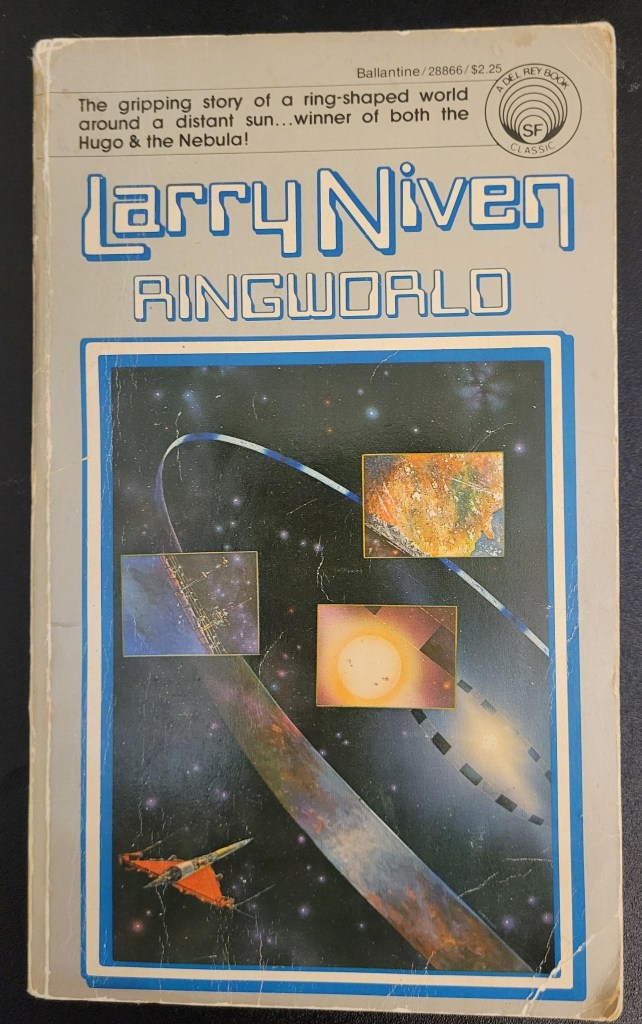
Ringworld – the quintessential “hard SF” novel.
For a long time, “hard science fiction” was almost all I read. (Think Andy Weir’s The Martian, or Jurassic Park.)
Back then I thought all fantasy other than Lord of the Rings was a waste of time. That shelf space could be better filled by the likes of Larry Niven and Poul Anderson, I figured.
Obvious science mistakes pissed me off. Han Solo “made the Kessel Run in less than 12 parsecs”? Please. Parsecs are a distance measurement.
Which gets to the heart of my snobbery about hard SF.
I wanted the science to WORK. I wanted to believe the adventures I read about were at least possible.
Walters and Vervaeke get into the Hugo Awards controversy. The Sad Puppies, protectors of the old guard, battled it out with writers and fans who wanted to expand the definition of science fiction.
There was a time when I would’ve rooted for the Sad Puppies. Walters was close to the mark when he speculated that the fight is really about personal fantasies.
I had a personal fantasy that I was almost unconscious of. Science fiction helped me deal with existential angst.
I might not get to be the adventurer in that somewhat scientifically accurate sci fi novel, but one day someone would.

A lot of people are mad at John C. Wright over his role in the Hugo Awards fight, but his Golden Ocumene trilogy is pretty damn good. I’ve read it and I got my mother to read it.
It bothered me to know the sun would swallow the earth one day. I coudn’t handle the idea of human extinction, even billions of years in the future. I thought, why not colonize the stars and outlive the sun?
Good Christian or not, I kept that possibility in my back pocket just in case. I wanted to go to heaven. But failing that, I thought maybe science would give us a kind of immortality.

The reason I never got laid in college.
A few stars seemed to be within reach. When I took Astronomy in college, I made a little chart of some of the likely candidates. Anti-matter might not take us as far as it took the Enterprise, but 3 or 4 light years ought to be doable. Right?
And once we had a couple of nearby stars under our belts, who knew what we might accomplish. I still have to scratch that itch sometimes. Movies and shows that do that for me are far too few.
Movies like Ex Machina, Interstellar and series like The Last of Us and Westworld kind of do it for me. I also enjoy watching videos by futurist Isaac Arthur, who explores those massive engineering feats that might be possible if we put resources and effort into them.
Futurist Isaac Arthur digs into one of my favorite concepts: the space elevator, something I think humanity could, and should pull off. If there’s one thing I haven’t changed my mind about, it’s that: we must continue to fund space technology.
When it comes to science fiction novels, I’m a lot less interested in the scientific rigor than I used to be, especially now that I understand how hard it is to separate perception from reality.
Phillip K. Dick is more my speed these days when it comes to sci fi. I figure if we can’t figure out the human mind and tame our irrational behavior, there isn’t much chance of accomplishing those grand projects anyway.
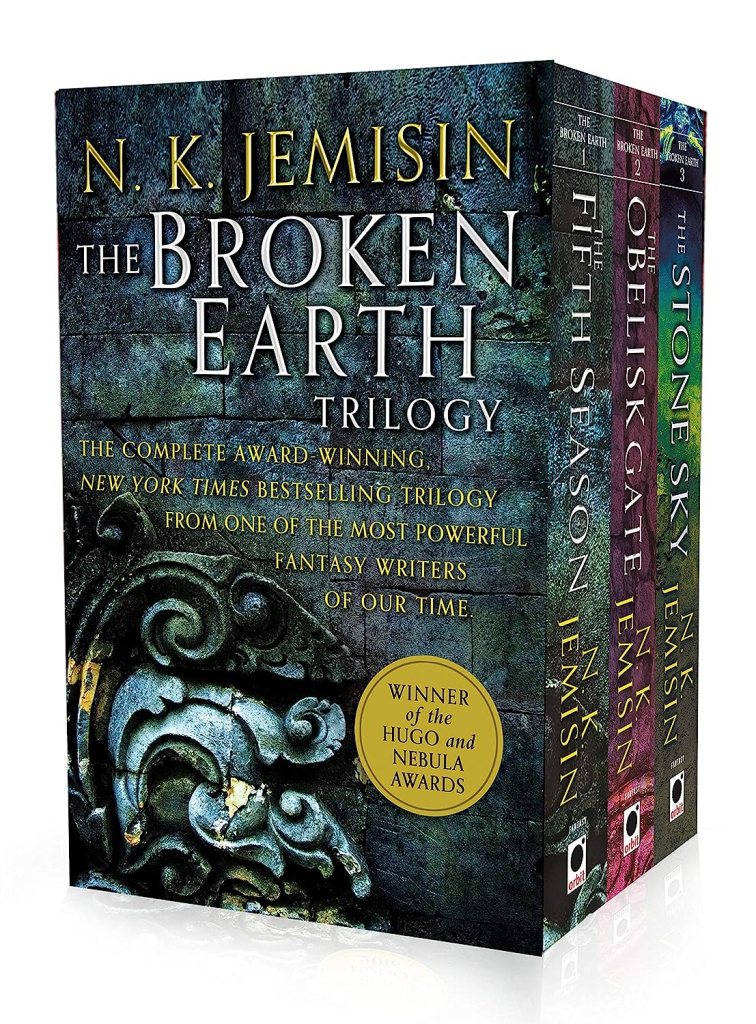
I’m no longer particular about how I define science fiction. I really enjoyed N.K Jemisen’s Hugo Award-winning Broken Earth Trilogy, which contained a lot of fantasy elements. (The world-building was incredible.)
New Weird also does for me what science fiction used to do, with elements of science fiction, fantasy and horror.
Annihilation, from Jeff Vandermeer’s Southern Reach trilogy is a good example. Perdido Street Station by China Mieville is another. They seem rather appropriate for the times we’re in. How to deal with the world when it makes no sense…
 Late Boomer's Den
You must be logged in to post a comment.