My dad spent a lot of time outdoors and knew a lot about the wildlife of Texas, including the kind of critters most folks just step on or ignore.

Each of those white spots on the lower pad are hiding cochineal bugs, source of an important red dye.
Dad knew which ones were harmful, which ones were useful. He loved seeing ladybugs and praying mantises in the garden. He taught me to be curious.
Once he scraped some white web-like stuff from the pad of a prickly pear cactus with a stick. “Inside each one of those spots is an insect called a cochineal bug. Indians used to get red dye from it.”
Dad didn’t like to squish bugs willy-nilly and neither do I – I’m the kinda guy who rescues insects from scared ladies – but that was a pretty neat discovery.
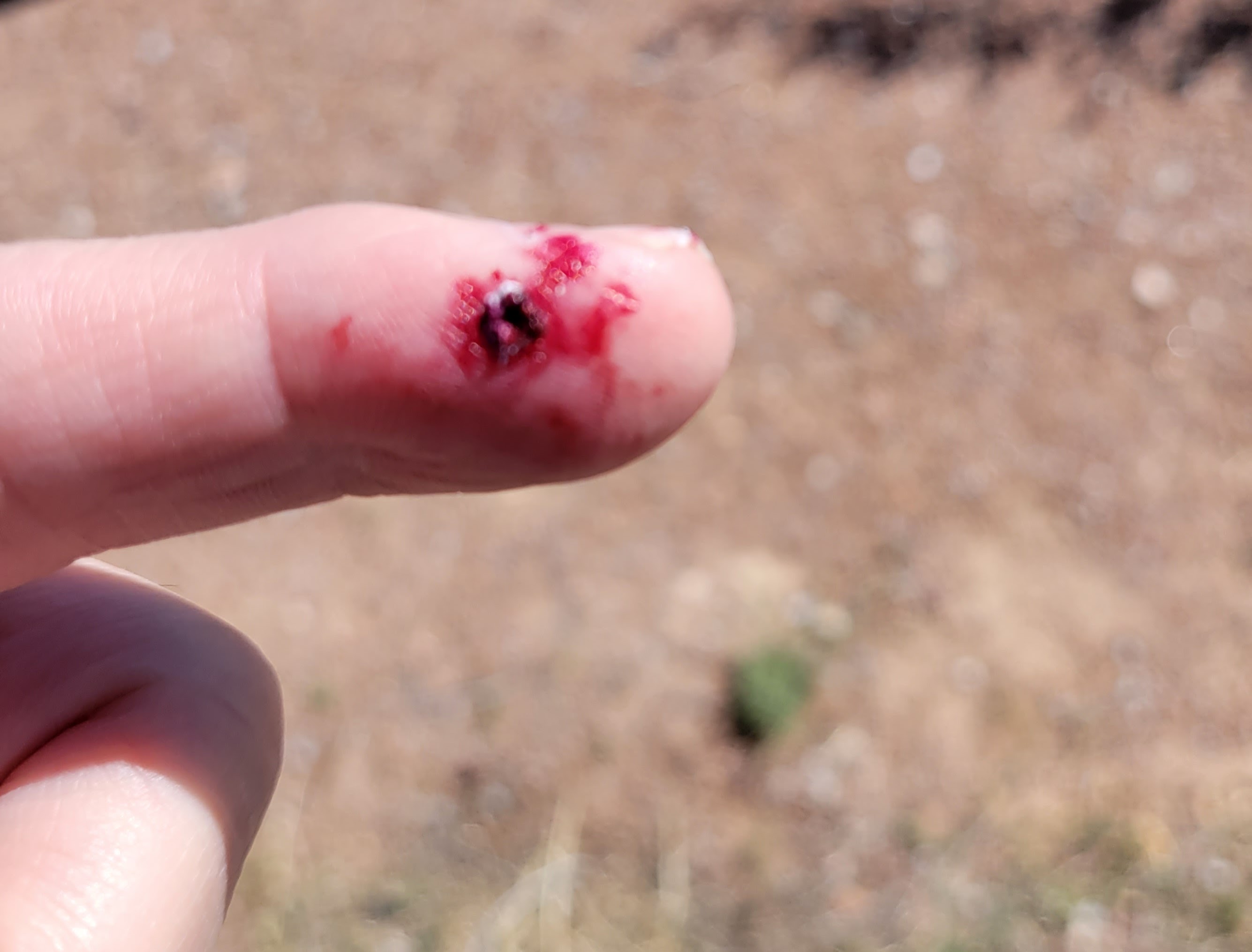
Sorry little bug. I promise I won’t do it again.
Now when I see those white spots on the pads of a prickly pear, I know what they are. And they’re not just a curiosity. Cochineal bugs are still important.
They’re the source of the natural dye carmine. You probably ate or drank some of it today.
It’s been a source of income in Mexico for a long time apparently. It’s a tradition I hope they can keep alive. Apparently that’s up in the air at the moment.
Interesting video about how cochineal bugs are cultivated in Mexico to produce the natural food dye known as carmine.
 Late Boomer's Den
You must be logged in to post a comment.