I’ve been on a blogging hiatus, writing things in notebooks that I may or may not share. Still not ready to post on the reg, but I felt moved to share this. Seems like the time.
Passed a few fireworks stand and really wanted to buy some, but I don’t know anyone who wants to have a good firecracker fight and tbh I’m too old. So another fireworks season will pass me by.
And I got to wondering how much I care about American Independence Day anymore, now that democracy may be on the ropes.
I wondered if this might be the last Fourth of July I really care about, or if maybe that happened the day Dad died, July 4, 1997.
I’m of two minds I guess…
Which reminds me of a dream I had in October:
I was getting on a bus with some friends.
There was a lot of anger on the bus, because Superman had turned evil. It was all over the news.
The driver wanted to throw us off, because Superman was with us. Sort of.
I apologized to the driver and said “Don’t worry. There’s no way Hollywood is going to let Superman stay evil. There’s too much money in Superman being the good guy.” Superman was represented by an Igloo ice chest that we stowed near the front of the bus.
I said Superman had temporarily been changed into a “sorp.” (I bet that took a LOT of kryptonite.)
I haven’t managed to make a backronym for SORP, but in the dream it meant superposition. Good and evil at the same time. No way to know which until you opened the box. Schrodinger’s Superman.
Superman – in my dream, and in the collective unconscious – symbolizes the USA.
Hollywood meant Hollywood, but not just Hollywood. American culture at large. We live in an empire and we want to be the good guys.
Unfortunately those two conditions might be mutually exclusive. For me, for the time being, I think Superman will remain a Sorp.
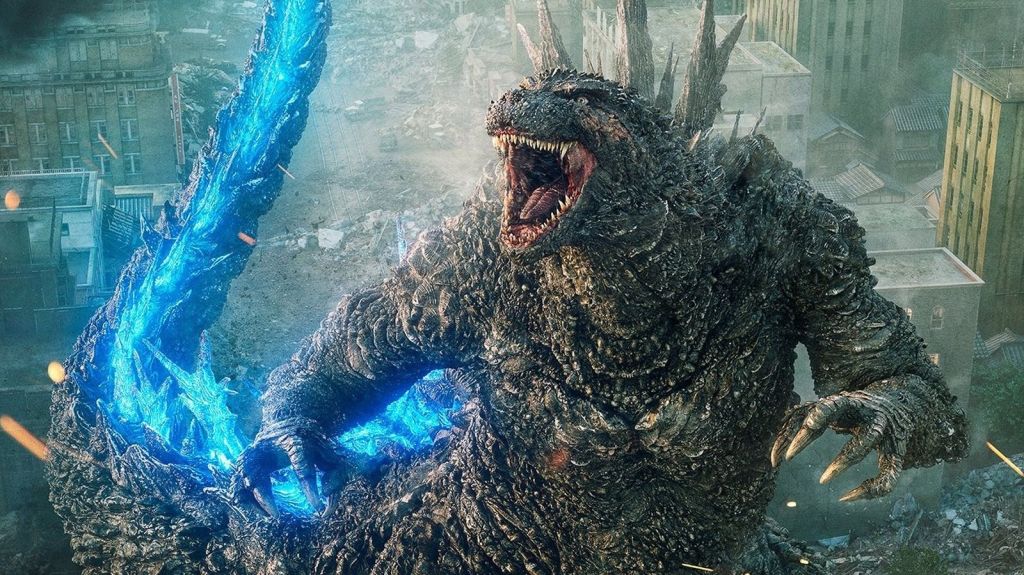
I loved Godzilla movies when I was a kid. I saw Godzilla vs. the Smog Monster(Godzilla vs. Hedora) in the theater. My brother was crazier about Japanese monster movies than I was. “Dear God, please don’t let a giant monster step on my house. Amen.”
Most of those movies were targeted at kids and were a lot of fun. As an adult, Godzilla movies have not impressed me. Until Godzilla Minus One. I didn’t expect to receive so much food for thought.
Setting the story in post-WWII Japan gave the movie an interesting dynamic. Especially since the main character was a failed kamikaze pilot. I cared about the characters and their predicament.
Instead of a disaster movie with a giant lizard, we got a man finding his purpose. Risking his life for his community, regular people dealing with an existential problem the “powers” were too preoccupied to take care of.
I’ve been told Godzilla represents the atomic bomb for Japan, but I think it goes deeper. I think it’s an expression of a hyperobject – something big and amorphous and impossible to ignore. Like global warming or the Cold War.
I’ve just begun reading Timothy Morton’s book about the concept, Hyperobjects: Philosophy and Ecology After the End of the World. I’ll get into it in this space once I’ve finished.
A while back I wrote that the movie Cloverfield is the best attempt I’ve seen to portray a distinctly American hyperobject – the imaginal monster that confronted us during 9-11.
I thought it might be interesting to compare the two hyperobjects based on some of my impressions from Godzilla Minus One. You could sum both imaginal monsters up as “powerful thing that might wipe us out,” but Godzilla has its own character.
Godzilla is Japan specific in a number of ways. For one thing, I feel like there’s an element of punishment. Shintoism has the concept of a Kami, a godlike entity that sends a tsunami when you’ve pissed it off.
Maybe throw in some resentment over how your cities got nuked thanks to the hubris of your leaders. getting nuked over the hubris of your leaders. And anxiety over being caught in the middle of an existential game of chicken.
I thought of that in the movie when the U.S. wasn’t available to help with the monster because it didn’t want to inflame the Russians. When monsters fight you’re bound to get trampled.
America’s “monster” a bit different in that there’s an element of Damocles’ sword. Having the power of a king means having a sword hanging overhead by a hair. America took on the role of a superpower and it still didn’t make us safe.
It isn’t just a king on a throne looking up nervously. It’s the whole country and in fact, the whole world.
Civilian populations are now bargaining chips. Because of us. Maybe it was called for at the time, but in any case, the bomb is one hell of a hot potato. And like the Japanese in Godzilla Minus One, we don’t really enjoy being put in this position.
There’s a sense of waiting for the other shoe to drop.
When I think of it, it’s all the same monster though it shows different faces to different cultures: the thing that shouldn’t exist, can’t be ignored and can’t be defeated.
“History shows again and again how nature points out the folly of man… Godzilla!” Blue Oyster Cult got it.
I just found myself thinking about Cloverfield. It feels relevant for some reason. The movie blew me away when I first saw it. The story had captured something about how it felt to be an American at the time.
A friend told me his Norwegian relative saw the movie in an almost empty theater in Oslo, and said it was the first time he understood how Americans felt on 9-11.
He nailed it. Notice how hard it was to actually figure out what was attacking. You know it’s a monster, but you can’t figure out what kind of monster. First it’s huge, so it’s Godzilla, then it’s a parasite, so it’s Alien. Then it’s got weapons and technology, so it’s War of the Worlds. Nothing quite fits.
The characters in the movie were like people in New York during 9-11. It’s like, you don’t have time to figure out the nature of the threat, you just run your ass off and try to survive.
So what kind of movie monster was the thing in Cloverfield? It’s related to the zombie I think, a thing that defies categories. It’s existentially threatening, but it doesn’t make sense. It’s kind of like the monster in The Thing too, now that I think of it.
It’s not just the physical monster that makes it so scary. It’s the idea. We don’t understand it and it might be the end of the world. Remember when the Statue of Liberty head falls? Pretty strong hint.
Kinda like how 9-11 wasn’t just a terrorist attack, it was so symbolically powerful and beyond comprehension, it became a hyperobject, a frightening idea beyond comprehension.
Also, see 10 Cloverfield Lane if you haven’t. It’s a very different movie than Cloverfield, but it’s excellent. John Goodman should have won an Oscar.
Too bad this movie came out during the Pandemic. More people should’ve seen it. I discovered it at just the right time for me.
I was walking in a little park with my wife not long after the Great Texas Freeze of 2021. Just a well-kept park with grass and a few trees. The city was recovering and the weather was nice again. The sun was setting and it was glorious.
Suddenly I felt like I was in the movie Coco. Everything felt very Mexican, then very Aztec. There were hidden symbols everywhere. I was a white guy in a quiet neighborhood – and an Indian from Mexico on a sacred quest.
The shrooms were kicking in. Time to head home.
The ghost of some graffiti the city had power-washed off the sidewalk popped out in 3-D. It reminded me of a goat, with a fish tail, like a mermaid. It meant something, I couldn’t figure out what.
About halfway home, a couple approached on the sidewalk, which made me nervous. Covid and the street violence on TV made me leery of people. They were Indians from India, out for a walk.
When we passed they smiled and I thought, good, they’re from a friendly tribe.
As we crossed a bridge, the sky darkened and so did my mood. I noticed how polluted and full of trash the creek was and I thought, “Blasphemy. How can we do that to our Mother?” I felt sick.
Then I wept because I wasn’t an Indian at all, or really anything. I was a white man from the country, living in a city full of concrete and asphalt. I didn’t have a tribe. I liked the culture of the city, but I didn’t belong. I missed the trees. I missed the wildlife. My wife grew up in the city and didn’t understand.
And I thought, how was that not a tribe? If you look at it that way, I’ve belonged to several over the years – rural, suburbanite, city dweller, conservative, liberal, progressive. Or anyway I tried to belong.
I hated seeing all the tribes of America at each other’s throats – when as Americans, especially white Americans, we’re all faced with the same difficult question: Who the hell are we?
I had just watched News of the World, the Tom Hanks movie about Texas during Reconstruction. Captain Kidd, Tom Hanks’ character, earns a living riding treacherous roads from town to town, reading newspaper articles to war weary citizens.
Kidd agrees to take on a twice orphaned German girl. Her parents were killed by Kiowa, who adopted her. They were then killed by Union soldiers who were busy running the Native Americans off their land. He takes her to her German relatives, but it doesn’t work out. She’s not one of them anymore.
There’s a scene where the girl wails at the Kiowa to come back as they ride across the Red River on their way to Oklahoma. But they can’t. The river is flooding. That part of her life was over forever. I felt that little girl’s pain. She had lost her connection to the earth. She’d become like us.
Those of us who come from settlers-on-other-peoples’-land have a little bit of that suffering in our hearts, whether we admit it or not. Not just because of guilt over the things our ancestors did, over slavery, over the Indians, but because of loss.
The continent modernized and towns became cities. Folks left their farms and got work in factories. They fought in modern wars. They became modern people, and they lost the earth.
The process continues as the cities devour our little towns, as the stores shutter and the populations plummet. Cities are important, the engines of our civilization. We need their culture. They’re a sanctuary for some of us. But if you ever lived outside a city you know: cities eat towns.
Leaving a town for the city wasn’t the leap that it was for settlers who left the frontier. We had running water and electricity after all. A lot of us went to college. But we lost the places where it felt like we mattered. And we’re that much further from the earth.
Some of us try to compromise, move to the suburbs, buy big trucks, listen to country music and pretend it’s about us, but we know deep down it isn’t, or the trucks wouldn’t be so big. The country is not our world anymore.
The machine ate us.
It wasn’t the mushroom trip I would have chosen. I wouldn’t call it fun. My wife certainly didn’t. But it was exactly what I needed.
Somehow remembering the Tom Hanks movie made me feel better. Captain Kidd was the Mister Rogers of the West, I thought. He couldn’t fix the world’s pain or his own, but reading those stories reminded people about life, about being human. It helped.
Not to be naive. Humans can be evil. Some of us have been leaning into it, but it’s good to be reminded of the other side of humanity: the humor, the art and the music, the way we push on when things get rough. You can always find the humanity if you look for it.
My father died on this day in 1997. On the Fourth of July. Does that spoil the holiday for me? Not exactly. I’ll just say it’s complicated.
It wasn’t always. July Fourth was a time to reminisce about Dad, who one of the most patriotic people I ever knew. He was literally buried in a casket with a flag under the lid.
He was a soldier musician – a clarinetist in the National Guard band with a sharpshooter medal .
Independence Day was his holiday.
He liked to celebrate with fireworks, as did I. Mom would send him out to stop us kids from blowing each other up and next thing you knew he’d be tossing them in the air, saying “here’s how you do it.”
He grew up playing with cherry bombs, which can totally blow your hand off, so Black Cats and pennyrockets didn’t faze him in the slightest.
I inherited that from him. I’d be in a firecracker war right now if I could.
But now on the Fourth I just wonder what Dad would make of America if he was still around. I’m kind of glad he didn’t live to see it now.
I used to see myself as a patriot and I guess I still do. I was in Boy Scouts. I learned how to raise and lower the flag, how to fold it, how to display it.
These days I don’t think much about the flag unless I see it in public. I have one in the house somewhere, but I can’t find it.
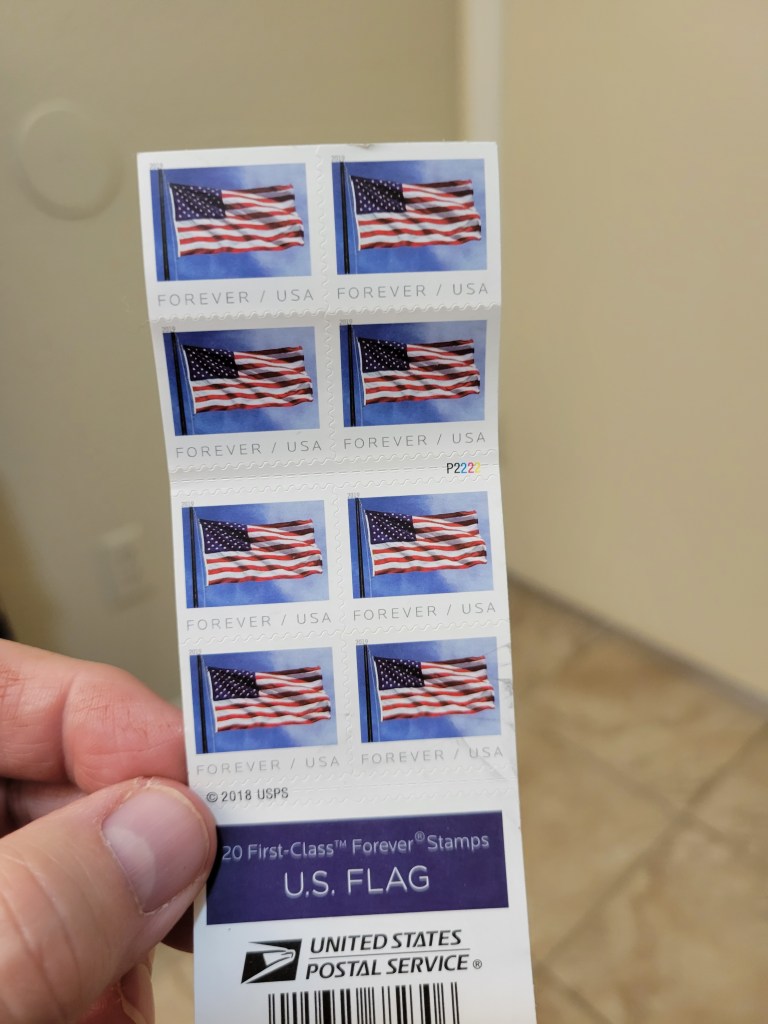
I know how I used to feel about the American flag, but how am I supposed to feel now that I’ve seen it carried next to Nazi flags and Confederate Battle Flags? Now that I’ve seen someone beaten nearly to death with one on TV?
Now I’m kind of afraid to display the flag. I have to wonder what it will say about me to others who saw those same images. I wish I didn’t have to feel that way.
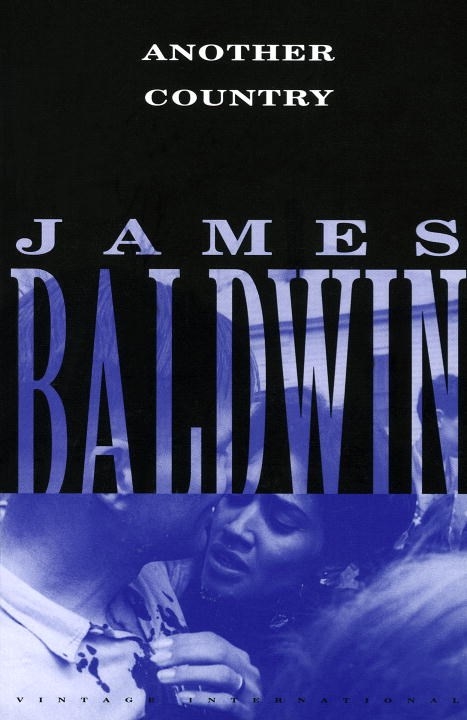
James Baldwin changed my life. Reading “Another Country” taught me more about America than anything I learned in college. If they taught this book in high school civics classes, we would iron this country out in no time.
And I got in on a whim. I thought, I am such a voracious reader why haven’t I read any black literature? I couldn’t think of a reason, I just hadn’t gotten around to it.
Mainly because I was a sci fi nerd. I loved literature, but I was more likely to read a Peter Hamilton space opera if given a chance. But I wanted to know what I was missing.
I had heard Baldwin’s name thrown around a lot. Apparently respected for speaking out in the ’60s.
The book I started with was Another Country. Since then, I’ve come to depend on him for perspective on race in America.
Another Country taught me how the systems of power really work in America. The system of white supremacy that is invisible to us white people. This is true in both our liberal and conservative classes.
As sharp as his critiques are, I love Baldwin because he actually gave a shit about us white folks, when he had plenty of reason not to.
Some of the lessons I took from Another Country:
A white woman can always use race to get her way in an argument. You know the “Karen” thing that recently switched from “I’m calling the manager” to, “Do you have your papers?” Excuse me, “Do you live in this neighborhood?”
A woman, including a black woman, can try to use sex to obtain power over a man, but if that man is white and rich, he’s usually going to win in the end.
That honesty with yourself may be painful, but it’s still the best policy. Things tend to go better if you’re honest with yourself and others.

 Late Boomer's Den
You must be logged in to post a comment.