Science fiction helped keep me sane when as a kid. Whatever troubles might be going on in my life, I could dive into a book and be halfway across the galaxy.
But science fiction is more than just an escape, or it can be. The wild adventures and mind-bending scenarios can actually make you better.
If you let them.
I really enjoyed the above discussion by John Vervaeke and Damien Walters about ways science fiction can be a framework to help us find meaning.
I had to chuckle at the last part, starting around 1:13. They could have been talking about 20-year-old me. That isn’t me anymore. But I remember the mindset.
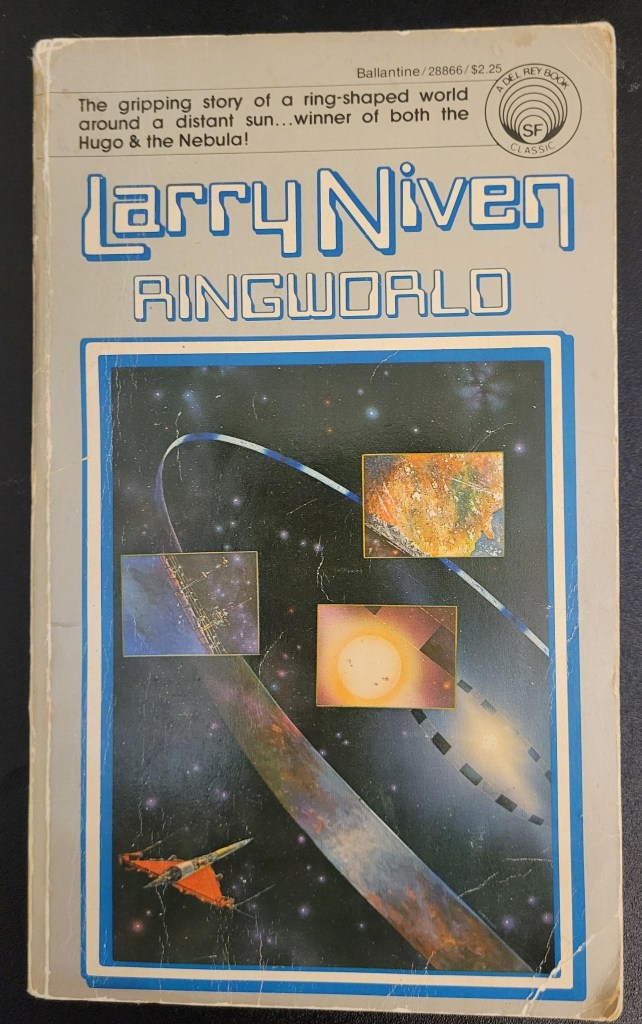
Ringworld – the quintessential “hard SF” novel.
For a long time, “hard science fiction” was almost all I read. (Think Andy Weir’s The Martian, or Jurassic Park.)
Back then I thought all fantasy other than Lord of the Rings was a waste of time. That shelf space could be better filled by the likes of Larry Niven and Poul Anderson, I figured.
Obvious science mistakes pissed me off. Han Solo “made the Kessel Run in less than 12 parsecs”? Please. Parsecs are a distance measurement.
Which gets to the heart of my snobbery about hard SF.
I wanted the science to WORK. I wanted to believe the adventures I read about were at least possible.
Walters and Vervaeke get into the Hugo Awards controversy. The Sad Puppies, protectors of the old guard, battled it out with writers and fans who wanted to expand the definition of science fiction.
There was a time when I would’ve rooted for the Sad Puppies. Walters was close to the mark when he speculated that the fight is really about personal fantasies.
I had a personal fantasy that I was almost unconscious of. Science fiction helped me deal with existential angst.
I might not get to be the adventurer in that somewhat scientifically accurate sci fi novel, but one day someone would.

A lot of people are mad at John C. Wright over his role in the Hugo Awards fight, but his Golden Ocumene trilogy is pretty damn good. I’ve read it and I got my mother to read it.
It bothered me to know the sun would swallow the earth one day. I coudn’t handle the idea of human extinction, even billions of years in the future. I thought, why not colonize the stars and outlive the sun?
Good Christian or not, I kept that possibility in my back pocket just in case. I wanted to go to heaven. But failing that, I thought maybe science would give us a kind of immortality.

The reason I never got laid in college.
A few stars seemed to be within reach. When I took Astronomy in college, I made a little chart of some of the likely candidates. Anti-matter might not take us as far as it took the Enterprise, but 3 or 4 light years ought to be doable. Right?
And once we had a couple of nearby stars under our belts, who knew what we might accomplish. I still have to scratch that itch sometimes. Movies and shows that do that for me are far too few.
Movies like Ex Machina, Interstellar and series like The Last of Us and Westworld kind of do it for me. I also enjoy watching videos by futurist Isaac Arthur, who explores those massive engineering feats that might be possible if we put resources and effort into them.
Futurist Isaac Arthur digs into one of my favorite concepts: the space elevator, something I think humanity could, and should pull off. If there’s one thing I haven’t changed my mind about, it’s that: we must continue to fund space technology.
When it comes to science fiction novels, I’m a lot less interested in the scientific rigor than I used to be, especially now that I understand how hard it is to separate perception from reality.
Phillip K. Dick is more my speed these days when it comes to sci fi. I figure if we can’t figure out the human mind and tame our irrational behavior, there isn’t much chance of accomplishing those grand projects anyway.
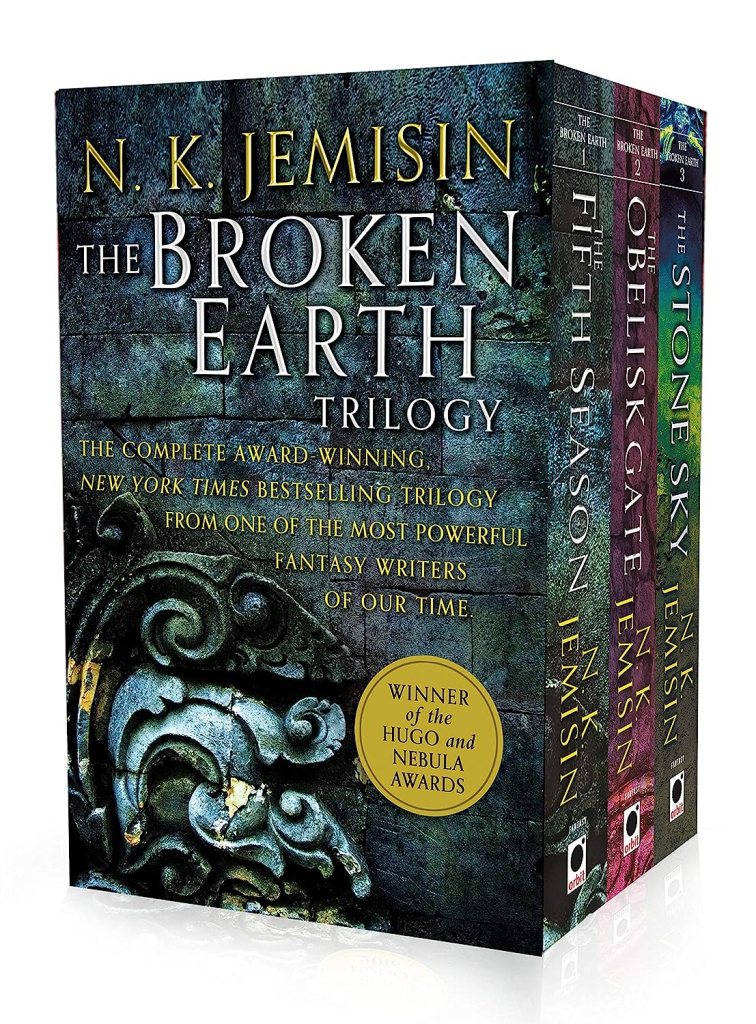
I’m no longer particular about how I define science fiction. I really enjoyed N.K Jemisen’s Hugo Award-winning Broken Earth Trilogy, which contained a lot of fantasy elements. (The world-building was incredible.)
New Weird also does for me what science fiction used to do, with elements of science fiction, fantasy and horror.
Annihilation, from Jeff Vandermeer’s Southern Reach trilogy is a good example. Perdido Street Station by China Mieville is another. They seem rather appropriate for the times we’re in. How to deal with the world when it makes no sense…





 Late Boomer's Den
You must be logged in to post a comment.