I like the idea of the hero’s journey. Joseph Campbell’s book got me through some rough times. But the idea of being a hero has some pitfalls as well. Of course everyone is the main character in their story, but I don’t think it’s everyone’s purpose to be the hero.
Maybe you’re meant to be support staff. Nothing wrong in that. Not to mention, you have to slay a dragon to earn your hero badge – dragons being a metaphor for troublesome people – and if everyone is a hero, everyone is also a dragon.
Dune author Frank Herbert has a great quote about that. “The difference between a hero and an anti-hero is where you stop the story.”
If you think about it, that has to be true. The story goes on after the hero wins the prize. Especially with a scale as epic as the Dune series. So the hero wins and now he has a ton of power. You expect him to stay the fresh-faced innocent from the beginning of the story?
Herbert said part of Dune’s message is to show the difference between morals and ethics and how they can come into conflict. Morals being the rules of a culture, which are imposed and which can change. Ethics being the higher values of what is proper regardless of the law.
“It’s an exercise in showing the fallacy of absolutism,” Herbert says.
In Dune, Paul Atreides’ ethical norms are challenged by moral necessity. He has to destroy his enemies to survive and has to adapt to another culture’s morals, which arose of necessity in a desert culture.
Dune is also about ecology. The way the Imperial system impacts the environment of Arrakis. (The inverview above shows how progressive he was about the environment. He was already concerned about plastic pollution in 1965.)
Dune was born out of an ecological study he conducted for the U.S. Forest Service. His findings led him to study desert cultures including Arabs, Navajo and people of the Kalijari, and they way they husband their water supplies.
Ecology, he said, is the science of understanding consequences. “The book is about the consequences of inflicting yourself on a planet.”
I just read a wild book about an organization that protects us all by dealing with with monsters that don’t want to be remembered.
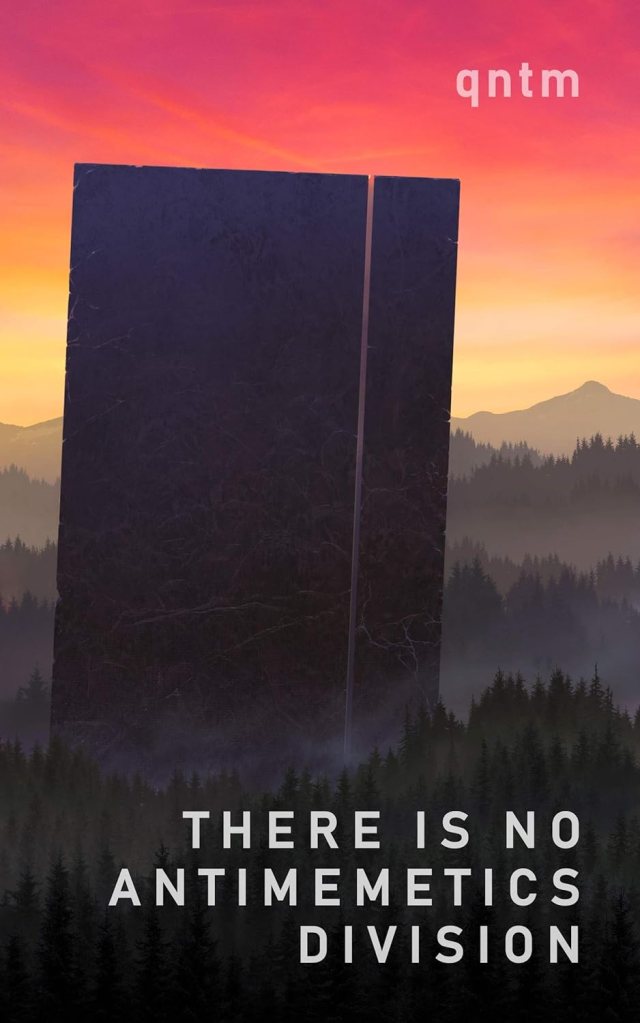
There Is No Antimemetics Division, by qntm (“quantum”), aka Sam Hughes came from a regular on the SCP Foundation Wiki. The SCP Foundation (Secure Contain Protect) is an online collaborative writing project about a shadowy organization that battles and locks up “anomalies” that would drive people insane if they knew.
The Antimemetics Division is a barely-remembered part of the SCP Foundation tasked with protecting the world from anomalies that can steal or modify memories, and monstrous creatures that can’t, or shouldn’t be remembered.
It reminds me of Christopher Nolan’s Memento, but with a bit of sardonic humor. Memory loss is so existentially disturbing, and this is a horror book as well as imaginative science fiction, but qntm manages to find the humor in it.
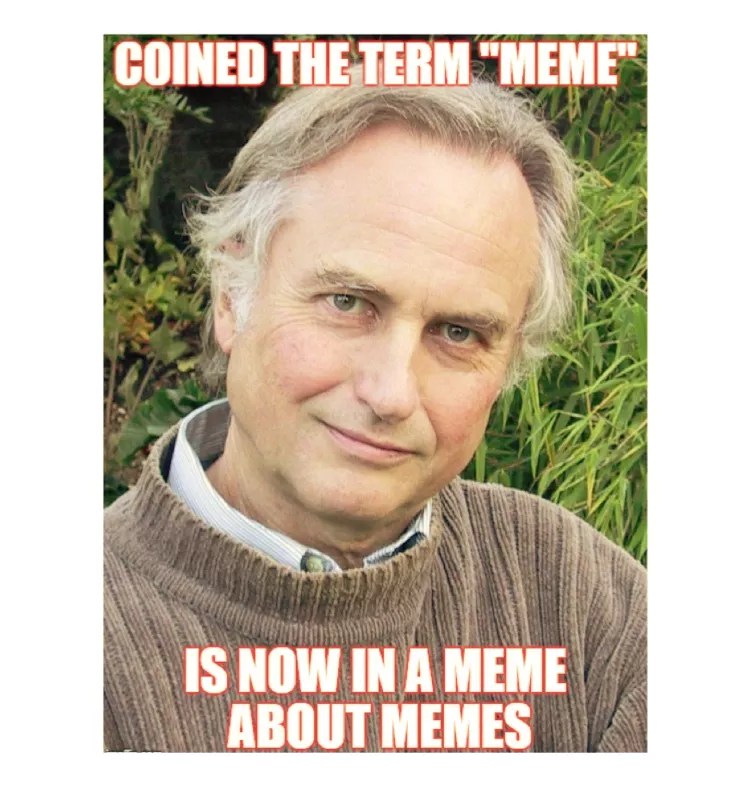
An anti-meme is the opposite of a meme, a term coined by evolutionary biologist Richard Dawkins to describe any idea that spreads through a culture.
An anti-meme resists spreading. Anti-memes are real, by the way. Dirty secrets, passwords, strings of random numbers. That includes the memory-thieving variety.
The smartphone should be an SCP if it isn’t already. Think how many phone numbers you forgot.
So much of this book has blown my mind. The degree to which memory determines what we think of as existence, the SCP from another universe changing everyone’s reality, the SCP that they have to “contain” OUTSIDE a hermetically sealed box.
There’s even a kind of afterlife that consists of self-aware memories. Craziness.
Most if not all of this book can be found on the SCP Foundation Wiki or in video format on YouTube, but I paid for the book, cuz I think this guy deserves it. Very imaginative stuff!
Maybe this will whet your appetite:
We Need to Talk About Fifty-five (SCP Orientation)
The past may be behind us, but the pain remains. Even if you try to ignore it. I recently watched Ida, from Paweł Pawlikowski, the same director who gave us the incredible tragic love story Cold War. Both movies explore very painful eras in Poland’s history.
One thing Ida made abundantly clear to me was that the violence and scapegoating during World War II left some very deep scars in Europe.
Ida is about a young woman in a convent who learns she is a Jew just as she is about to take her vows. No only is she a Jew but she was left with the nuns during a wave of anti-Semitism in the 40s that left her an orphan.
She meets her last living relative, as well as the people who took her to the convent and now live in her family’s home. She decides not to take them to court over the land, but in exchange, they have to tell what happened to her parents and brother. I won’t go into detail, but it was dark.
What must it be like for those who get caught up in it, once life returns to normal. How do they live with themselves? The people Ida finds living in her lost family’s home took part in terrible crimes, but they were not inhuman.
It got me thinking about fascism. What is it? Why does it keep coming back? Umberto Eco’s 14 Characteristics are a pretty good rule of thumb for diagnosing it, but what causes it?
To me it’s a cultural autoimmune disease, where the body attacks its own tissue. I think it’s triggered when the dominant culture loses faith in the utopian dreams of yesteryear.
If it takes hold, society cannibalizes itself, starting at the bottom and gobbling up every tribe until it’s eaten itself up.
It must be pretty exciting at first. You’re gonna help make heaven on earth and damn anybody who gets in the way. You get carried away and sacrifice your soul for the cause.
But at some point you have to return to “normal” life. In the heat of one of those what they call “historical moments,” people will commit acts they never dreamed of committing. Some can live with their memories just fine, but most humans aren’t naturally that mean. They have to be lured or goaded into it.
Diseases like fascism always burn out eventually – people have to do business and raise their kids – but they inflict a lot of pain not just on the scapegoats of a society but upon those who take part in it.
I like that Schwartzenegger doesn’t just write these guys off. He sees them as people who can change. Hopefully, before they ruin a bunch of lives including their own.
I’ve loved Halloween ever since I can remember. I think I enjoy it even more than Christmas. There’s something about the creativity and imagination it inspires. I also get a kick out of that little chill that comes from being scared of something you don’t really have to be afraid of. It’s cathartic.
Bauhaus – Hollow Hills
Thinking back on Halloween makes me feel like a kid again, when I guessed the number of pumpkin seeds in a jar at school and won the jack-o-lantern, went trick-or-treating dressed as a pirate, came home and ate candied apples, went through the haunted house and felt the dead man’s eyes and guts (grapes and macaroni).
Plastic vampire teeth and those little wax harmonicas that used to drive my dad batty. Sitting in the dark with my best friend and a flashlight, telling ghost stories.
Roky Erickson – Creature With the Atom Brain
Now that I’ve grown up it isn’t quite the same. I don’t dress up for Halloween the way I did as a kid. My wife went to a Halloween party the other night dressed as a princess. I wore a T-shirt that looks like there’s a frog inside, trying to get out. I think that confuses the fairy tale a little, but nobody noticed.
I mainly just get in the mood by playing really cool scary songs and there’s a lot to choose from It seems to bring out the best in so many musicians.
Here’s a YouTube playlist of stuff I like to listen to on Halloween, things I really like. No “Monster Mash” here. I like things a little darker.
It just occurred to me that Reality TV doesn’t get enough credit for its role in destroying civilization. It doesn’t affect my life in any major way. I watch streaming services or find entertainment on YouTube. It’s like bad pop – easily avoidable.
But I really do think it’s hurt our society. I wish I could talk to David Foster Wallace about it he saw the danger of entertainment addiction before anybody.
I feel like Reality TV gave us all the idea we ought to care what other people thought about us by making stars out of regular folks. People who work in show biz know pretending to be who you’re not can make you crazy.
Now we do it on social media all day long and no surprise, we’re all nuts.
I’m not sure when I first became aware of Reality TV as a concept. Probably with The Real World on MTV my last two years of college, ’88 and ’89 I think. I remember liking Jon. I just thought it was another type of game show.
The craze for these shows started when I wasn’t paying attention. I was a busy reporter and too busy for much TV. I mostly had cable when I had it because I couldn’t have it when I was a kid. Missed the coolest MTV years.
Reality TV slowly started to creep into my awareness. I heard it was proliferating because it was cheap to make. I started to notice a few. I started watching junk TV to kill time when I got off work.
I was mesmerized for a while. My guilty pleasures were world’s biggest explosion videos and car chases. I was like, run bad guy! Make ’em work for it! I could feel my IQ dropping, but I could go on like that for hours.
Before long Reality TV just became what TV was. I didn’t really mind. They were easy entertainment. It didn’t matter if you missed episodes I watched Ice Road Truckers, Orange County Choppers, The Deadliest Catch.
If I knew the narratives and personalities were fake, but I wouldn’t have said wrong. It was only entertainment. I rolled my eyes at some of the “plots” but thought, eh, it’s just entertainment. Doesn’t hurt anybody. Now I’m not so sure.
I watched John & Kate Plus 8 for a while until it turned out their happy family was actually kind of a mess. That taught me a lesson, I had convinced myself I kinda knew the people, when of course I didn’t. The show told me who they were and I accepted that as real.
Now we’ve had scandals involving some “Reality Star” or other. I barely pay attention. The Quiverful family thing going bad seemed like karma.
This kind of cheap entertainment was probably inevitable when we started having so many channels on cable, and now streaming services, YouTube and multiplayer games to compete with for eyeballs.
I think it really messed up the average American’s bullshit detector. People identify with these characters and believe they’re friends. All because of scripts that somebody wrote. It’s no wonder a charismatic Reality Star convinced so many people he could run the country.
I’ve come to the conclusion that all political movements are utopian, whether they think they are or not. It was a strange thought, but the more I chewed on it, the more right it seemed.
I used to associate utopianism with Marxism or hippies living in the woods. But now I realize I’ve had my own versions of utopianism, with varying degrees of commitment. I’m in between at the moment, but I’ve had at least three.
Combustible Edison – Utopia
Damien Walter, a very interesting sci fi critic, got me thinking along these lines when he stated “Space Opera is the mythos of liberal democracy.” It surprised me, but I can’t really argue. It applies to most space operas I can think of: Star Wars, Peter Hamilton’s Commonwealth series.
He published a video essay about science fiction writer Ursula K. LeGuin’s vision, which is clearly utopian from a left-leaning direction. I avoided her books when I was young, because I suspected as much.
He made a similar essay about Isaac Asimov’s Foundation series is about pursuit of utopia. Asimov, my childhood hero, promoter of reason and science. I never would’ve thought of him that way. But you don’t make an empire, real or imaginary, without giving it a vision.
Without realizing it, I developed two related versions of utopianism as a young man: liberal (science reason and Enlightenment values will get us there) and libertarian (science, industry and bold men will get us there).
Both of those competed for space with the utopian visions I got from my religion, all of which amounted to Jesus comes back, gets rid of evil and fixes everything. Heaven on earth or heaven in heaven. I could go either way.
America and Utopia
America was settled by a wide variety of utopian movements, most of them religious or quasi-religious. “Yay! A blank slate where we can establish God’s kingdom on earth away from all those corrupt kings and queens and popes.” (Blank slate except for natives, of course) .
Nationalist visions like the American Dream and Manifest Destiny kept those cats in something like a herd for a while. The problem is, they depended on the frontier.
Now that the frontier is gone there’s no place to run when someone else’s utopian vision threatens to eliminate yours. Now no one can agree on what the hell America even is, least of all us Americans.
The Eagles – The Last Resort. I know we’re supposed to hate the fucking Eagles because of The Dude, but this song and in fact the entire album Hotel California is a great study of the disillusionment people are beginning to feel after “manifesting destiny” only to realize paradise never arrived.
What’s wrong with utopianism?
I’m not utopian anymore, or maybe it’s a matter of degree – I still come across ideas that make me feel hopeful and others that make me feel less so. I want to believe in a better world, but I’m not so quick to attach my identity to any of them. I’m not about cults or gurus.
What do I think about utopianism in general? There’s a positive side. They’re great at motivating people. Everyone wants to be part of something larger than themselves. They can give us multigenerational projects like pyramids and cathedrals and potentially, saving humanity from itself.
Utopianism’s power also makes it dangerous. That’s kind of the story of the 20th century isn’t it? Nations and empires trying to impose their utopian visions on the world. The suffering was immense.
The main problem with utopian projects is they depend on getting rid of people – or at the least, disempowering them. People are in the way and people who aren’t invited. Because you can’t make a utopia for everyone, when resources are limited.
How’s your world gonna be perfect if you let everybody in? Make your utopia small enough and you can almost pull it off. Versailles was a utopia for the people inside it – until it wasn’t.
That’s what dystopia is: being on the losing end of someone else’s utopia.
There will always be people getting in the way. Get rid of the so-called bad guys in big batches or one at a time, but sooner or later you’ll be the one in utopia’s way.
Why we need utopian thinkers
Changing the status quo involves risk. But we still need the passion that comes from those idealistic visions. There are too many problems for any of those already-failed ideas to fix without at least integrating some fresh ones.
If everyone becomes a doomer and decides to just take what he can get till the world blows up, the world will blow up. Maybe the human race can find some better stories to tell about itself, ones that will make us work together for a change.
Edward Ka Spel – “O From the Great Sea.” What’s Ka Spel telling us? It’s obviously a horror story from the point of view of the monster. But what kind of monster? “Go back to the mirror, look again!”
A while back I wrote about the Angry God as an answer to the problem of evil. But I proposed a worse answer to why bad things happen to good people: there’s an all-powerfu god and he’s being cruel on purpose.
Which immediately made me think of the Edward Ka Spel song “O From the Great Sea,” about a god that dishes out suffering and seems contemptuous of the pitiful humans who can’t figure out why it’s so cruel. “Go back to the mirror, look again!”
Obviously a horror story from the monster’s point of view, but as long as we’re doing that, what if you were that monster? What would make you behave like “O”? What would put you in that mental state if you were something as powerful as a god? I want to go with nihilism.
As civilizations evolve, people kill and revive and alter their gods, merge them or separate them into parts, put words in their mouths. What if these entities have been running on our meatware for so long, they’ve become self-aware? The original AI?
Maybe “O” is what happens to a society that thinks it killed god, but only pushed him to the corner, where he reassembled himself like Tom Cruise in Interview with the Vampire.
Maybe “O” figured out what he is and resents his lot. Maybe he lashes out from revenge or disgust. Maybe he feels he’s been around too long and he’s bored. He’s like a kid torturing bugs: nothing personal.
Maybe “O” is having an existential crisis. He ‘s seen this civilization thing run its course just too many times and can’t take one more cycle. Maybe he’s suicidal. Maybe he’s teaching those people cruelty so they’ll kill each other off and he won’t be resurrected.
Or maybe he just really wants us to look in the mirror.
Legendary Pink Dots – A Message From Our Sponsor. Pondering the problem of evil and the possibility that God doesn’t interfere because of his personal ethics.
How God’s punishment can feel like love: It’s an old principle. God destroyed the Israelites periodically to teach them a lesson but he still loved them and they were still his people.
Jesus loved me because he I loved everyone I’d been singing “Jesus loves me” since I was four. But God? I was not so sure. God to me meant God the Father, the vengeful angry one. but he loved us too in his way.
It seemed to make sense. Why would God bother punishing you if he’d already cut you loose? He might destroy you but he wouldn’t punish you. It’s really a kind of Stockholm Syndrome but it worked on me for a very long time.
Julian Cope – St. Julian. Another answer to the problem of evil: Maybe God doesn’t fix things because he’s oblivious or maybe incompetent?
But it is one answer to the problem of evil. Why do bad things happen to good people? Maybe it’s a form of discipline. Of a person or of a nation.
Bad times will come as bad things do. Maybe you know why you deserved it and maybe you don’t. But if he could do that, maybe he could do the opposite if you followed the path, send something good your way, or maybe it served some larger purpose.
God still loved David after what he did, after all. Didn’t work out too well for his baby with Bathsheba, but it was something. We got a Solomon out of it. I believed that for a while when I was a young Christian.
When I did something I knew was wrong, the next bad thing that happened to me had to be payback. If things went OK for too long I got nervous. When was the other shoe going to drop? How much trouble was I in?
So the disaster was a relief when it came. I paid a high price, but I’m still on the path. I was terrified of leaving the path.
But when you can’t see a pattern anymore, “The Lord works in mysterious ways” stops sounding like a good excuse. Sometimes there’s no possible lesson that would make sense, punishment is out of proportion or it’s indescriminate.
Then you look for reasons. You don’t want to be an atheist and piss off Mom and Dad, plus thaat would REALLY piss off God. Pascal’s Wager, you know.
God isn’t real is the theory of last resort.
Could be you settle on Deism. So there is a God who set it all in motion, but he doesn’t intervene. God makes the machine and lets it run. I could live with that, kinda. At least I didn’t have to claim the “A-word” as an identity. But it wasn’t very satisfying, plus, what the hell kind of fucked up machine is this?
It occurs to me there’s a worse possibility. Maybe there is a Supreme Being, but he’s essentially the Joker in space. Maybe he’s active in the world, but considers us play things. Maybe you had a tragedy because God just has a more complicated sense of humor than you do.
If there’s an all powerful god who makes us suffer for his own amusement, that would be the worst case scenario wouldn’t it?
What would this look like from that cruel god’s point of view? There is a song by Legendary Pink Dots singer and songwriter Edward Ka Spel that got me thinking on this topic. I’ll get into that in the next post. Good topic for Halloween season.
Negativland – Freedom is Waiting. This conveys an interesting message. Are we letting corporations define our most important words?
Speaking of important words, you think you know the meaning of until you try to define them, what the hell is freedom? We all throw the word around like its meaning is obvious, but is it really?
There are so many definitions. Free as in you don’t have to pay for it. Free as in nobody can tell you know. Free as in not in prison. Free as in not subject to a hostile power. Free to think and express yourself…
And questions: Which of the above can you lose and still call yourself “free”? Should a corporation be free in the same way a person is free?
Billy Strings – Watch It Fall. “Don’t you love the things that you got used to, when you used to feel so free” kinda hits home.
Does power equate to freedom, and not having it, it’s impossible? Ability to accumulate wealth at the expense of others, is that freedom? Could you be happy in heaven while your brother was in hell? Does believing you could make you free?
Is defining social norms to your specifications count as freedom? Or is it freedom to be able to reject those norms?
What is freedom? Maybe we should follow Socrates’ example and mull it over a bit before we go around advertising for it.
So when my Unitarian church said nobody was lined up to do a sermon this week, I raised my hand and went “me me me me!” I could talk about Socrates!
Only to realize I’d bitten off more than I could chew. I’ve only read a few of Plato’s Dialogues and watched a handful of videos. I had to cram and write at the same time.
It went OK. And I learned a few things.
I was surprised to learn how much of a role the Oracle of Delphi and the temple of Apollo played in his life. For another, just how rooted his rationalism was in his religious faith.
Socrates’ guiding principles were right there on that temple at Delphi. One column had inscriptions that read, “know thyself,” “nothing in excess” and “surety brings ruin.”
Socrates was shocked when he learned the Oracle had told his friend “No one is wiser than Socrates.” Seemingly a clear statement, when they were typically riddles.
Instead of gloating, Socrates’ treated it as yet another riddle to be solved. The meaning appeared obvious, and yet that warning: surety brings ruin.
Socrates was knew he wasn’t wise. There were so many questions he couldn’t answer, but he believed Apollo could never lie. So he began searching for anyone wiser than himself to prove he wasn’t wise, so he could go to the Oracle and ask what Apollo meant.
But time and time again, people who claimed or were thought to be wise, revealed under Socrates’ questioning that they had no idea what they were talking about. Which we all know landed Socrates in a lot of trouble after he pricked too many tender egos.
Another thing I didn’t realize was how many chances Socrates had to get out of it. He could have chosen exile and could have escaped. Instead he drank hemlock to show his dedication to Apollo. He cared about his mission that much.
Socrates’ method outlived him and changed the world. To me that shows that it doesn’t really matter if a god is real in a material sense. If enough people think it exists, they’ll make very discernable changes to the material world on its behalf. So it might as well exist.


 Late Boomer's Den
You must be logged in to post a comment.